
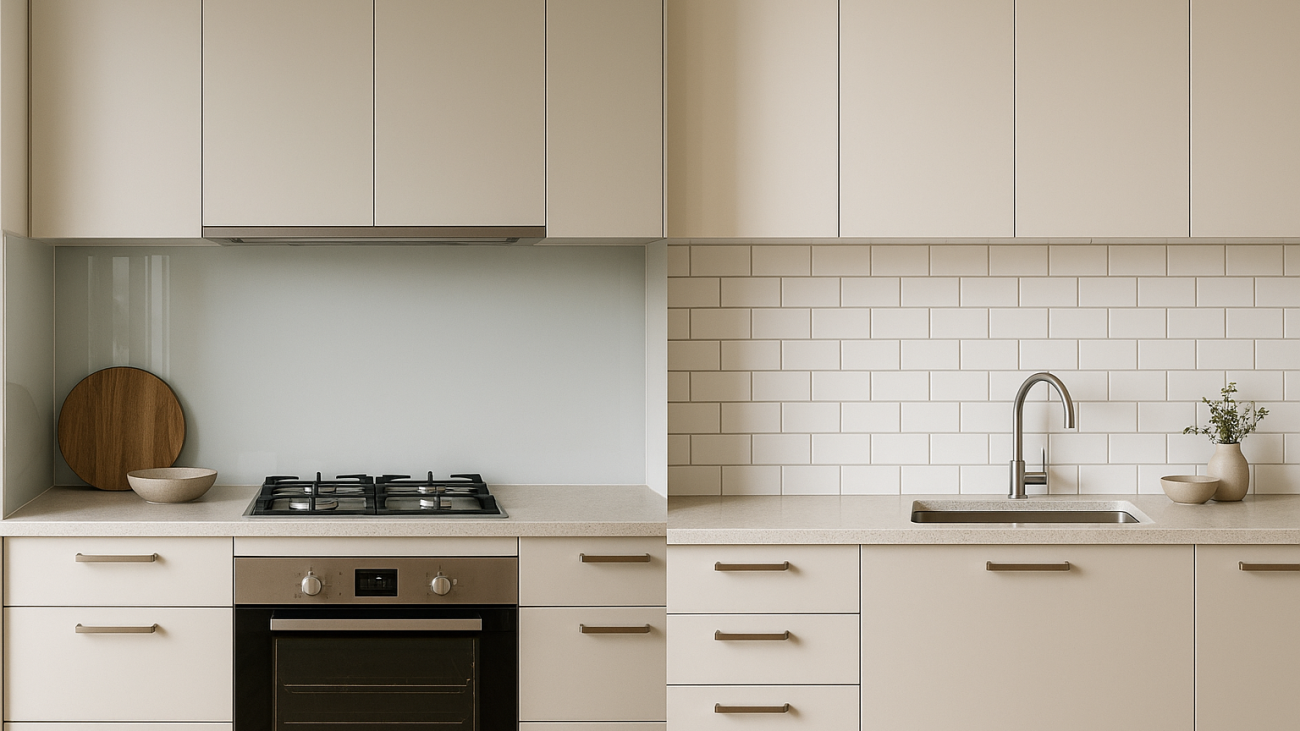
Glass vs tile splashback: the practical choice for real Kitchens
You notice your splashback every day. It cops heat, steam, oil, sauce splatter, and fingerprints. It also sits right at eye level, so if the finish is off, you’ll see it.
If you’re weighing up glass vs tile splashback, you’re already in the right mindset. Both are proven kitchen splashback materials. The best option depends on how you cook, how much cleaning you want to do, and whether you prefer a clean, single-surface look or a more detailed, textured finish.
This guide is written for homeowners comparing options before they commit to a kitchen renovation or new build in South East Queensland.
What is splashback (and what does it need to do)?
A splashback (also called a backsplash) is the protective wall surface behind your benchtop and cooktop. A good splashback should:
- handle heat and everyday cooking mess
- clean up quickly without special products
- suit your cabinet colour and benchtop pattern
- be installed safely around power points and appliances
If you cook most nights, cleaning speed and stain resistance matter as much as colour.
Glass vs tile splashback: side-by-side comparison
Here’s the straight comparison most renovators want.
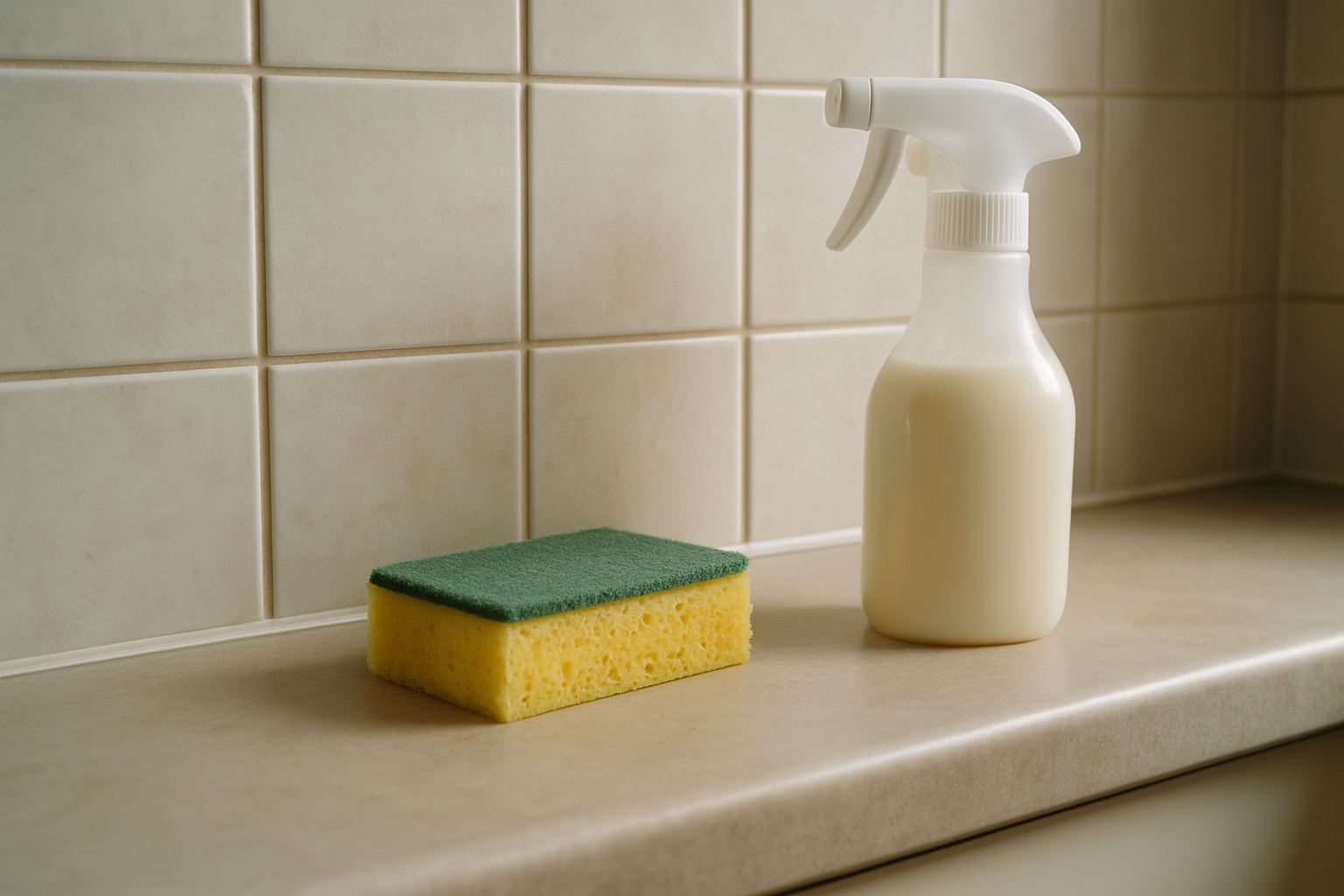
Cleaning and daily upkeep
Glass splashback
- Fastest to wipe down because it’s one smooth surface.
- No grout lines, so there’s no grout discolouring.
- Shows smears and fingerprints more than some matte tiles.
Tile splashback
- Tile faces clean easily.
- Grout is the ongoing work. It can darken over time behind the cooktop.
- Mid-tone grout is often the most forgiving choice for busy homes.
If your main question is “What is the best kitchen splashback for easy cleaning?”, glass usually wins.
Look and design flexibility
Glass gives a clean, Modern finish. It suits:
- minimalist kitchens
- bold colour choices (solid colour, subtle tint, or a matched tone)
- designs where you want the benchtop or cabinetry to be the hero
Tile gives more variety in texture and pattern. It suits:
- coastal or Hamptons-inspired kitchens (subway tiles, stacked patterns)
- heritage and classic looks
- feature walls (herringbone, kit-kat, handmade-look ceramics)
Tiles also let you blend colours and finishes without committing to one solid panel colour.
Joins, cut-outs, and tricky walls
Both splashback materials need careful planning around:
- power points
- windows
- rangehood duct covers
- tight corners and returns
Glass is made to measure, with neat cut-outs. The key is accurate site measuring after cabinetry is installed.
Tile is more flexible on uneven walls because the installer can adjust as they lay it, but the finished look depends heavily on alignment and grout lines.
Durability and damage
Glass
- Uses toughened (safety) glass for kitchen applications.
- Resists staining well.
- Can scratch if you use abrasive pads or powders.
- If a panel is damaged, replacement usually means replacing that whole panel.
Tile
- Individual tiles can chip.
- Small repairs can be easier because you can replace a few tiles.
- Grout can crack if there’s movement, and it needs maintenance.
If you have kids, pets, and a high-traffic kitchen, both options work. The practical difference is whether you prefer to maintain grout (tile) or keep a glossy surface looking smear-free (glass).
Kitchen splashback height: what’s standard in Australia?
Splashback height in Australia often comes down to your cabinet plan.
Standard splashback height
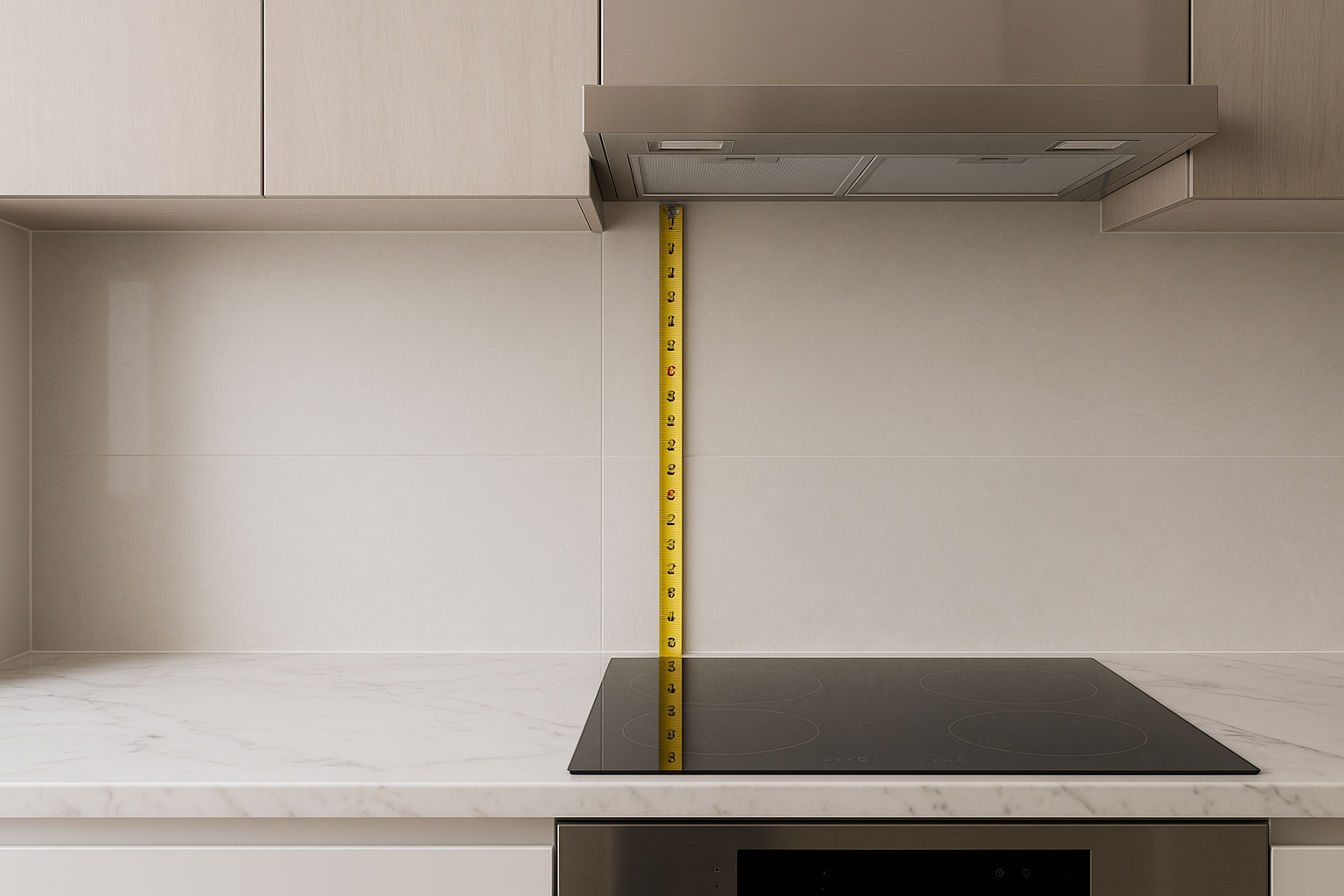
A common standard splashback height is around 600 mm from the benchtop to the underside of overhead cabinets. Many homeowners refer to this as the default kitchen splashback height because it suits most layouts.
Full-height splashback options
Your kitchen design may call for a taller splashback, such as:
- benchtop to the underside of overhead cabinets, then continuing behind a rangehood bulkhead
- benchtop to the window sill (common where the sink sits under a window)
- benchtop to ceiling on a feature wall
A taller splashback is often the practical choice behind the cooktop. It reduces paint maintenance and makes cleaning easier.
If you’re unsure what works in your space, bring it back to use: where does the mess actually land in your kitchen?
How large can a splashback be?
This question comes up constantly with glass.
How large can a glass splashback be?
Glass splashbacks are made to measure. The maximum panel size depends on:
- glass thickness and supplier specifications
- the layout (long straight runs vs corners)
- cut-outs (power points, taps, windows)
- safe handling and installation on site
For longer walls, splitting into multiple panels with tidy joins often looks better and reduces risk during installation.
Can tiles run in one piece?
Tiles don’t have a “maximum size” in the same way, but very large-format tiles can be harder to install on walls that aren’t perfectly flat. Fewer grout lines look cleaner, but they demand good prep and careful setting.
Which splashback material suits your kitchen style and routine?
Use these real-world filters.
Choose glass if:
- you want the fastest clean-up
- you prefer minimal joins and a smooth finish
- you want a clean backdrop for a patterned benchtop
- you don’t want to maintain grout
Choose tile if:
- you want texture, shape, and pattern as a design feature
- you like the look of grout lines (and you’re ready to look after them)
- you want flexibility to mix colours or create a feature panel
- you want the option to repair small areas later
Common selection mistakes (and how to avoid them)
1) Choosing bright white grout behind a heavy-use cooktop
If you cook with oils and spices, white grout shows it. Pick a grout tone that suits your reality, not just the showroom.
2) Not planning power points early
Power point placement affects the whole look. A glass panel needs precise cut-outs, and tile layouts look best when power points align with the grid.
3) Matching the splashback to everything
If your benchtop has movement (veining or speckle), a quieter splashback often looks more timeless. If the benchtop is plain, tile texture can add depth.
4) Getting the height wrong for your wall
A too-short splashback behind a cooktop leaves you cleaning painted plasterboard. A too-tall splashback can feel heavy if the colour is strong. Aim for a height that matches how the wall is used.
What we recommend for Gold Coast and South East QLD homes
Coastal homes often benefit from surfaces that stay easy to clean and look crisp in natural light.
- If you want low-maintenance day to day, glass is hard to beat.
- If you want a softer, layered look, tiles work beautifully with the right grout and layout.
If you’re planning a full renovation, the splashback should be chosen alongside cabinetry, benchtop, handles, and lighting. That’s where a 3D design view helps you avoid a mismatch you only see after install.
For a deeper read on kitchen splashback materials, see our guide: Kitchen splash backs: an in-depth guide and the key considerations before you choose.
Ready to choose your splashback with a designer’s help?
If you’re comparing glass vs tile splashback as part of a kitchen renovation on the Gold Coast or across South East QLD, we can help you lock in the right finish and the right height before anything is ordered.
Pinnacle Kitchens QLD designs, manufactures, and installs custom kitchens locally, with in-house licensed installers. You’ll see your selections in a 3D rendered design so the splashback works with your benchtop, cabinetry, and lighting.
Call or enquire through our website to book a kitchen design consult. Ask us to review:
- your splashback height and layout (especially behind the cooktop)
- glass panel sizing and joins, or tile layout and grout choices
- power point placement so it looks intentional
If you’re still planning the bigger picture, these guides help:
- 2026 tips for kitchen renovations on the Gold Coast
- Kitchen renovation cost on the Gold Coast (without pricing): what drives the budget + how to avoid blowouts
Quick FAQs: glass and tile splashbacks
What are your splashbacks made of?
Splashbacks are commonly made of toughened glass, ceramic or porcelain tiles, stainless steel, acrylic, or stone slabs. Glass and tile are the two most common options for family kitchens.
What is the standard splashback height?
Around 600 mm is a common standard splashback height in Australia, measured from benchtop to the underside of overhead cabinets.
How large can a splashback be?
It depends on the material. Glass panels are made to measure and are often split into multiple panels for long runs. Tile layouts can run across large walls, but the wall prep and tile size affect how clean the finish looks.
What is the best kitchen splashback for busy families?
If you want the quickest wipe-down and no grout maintenance, choose glass. If you want a textured, patterned finish and you’re comfortable maintaining grout, choose tile.