
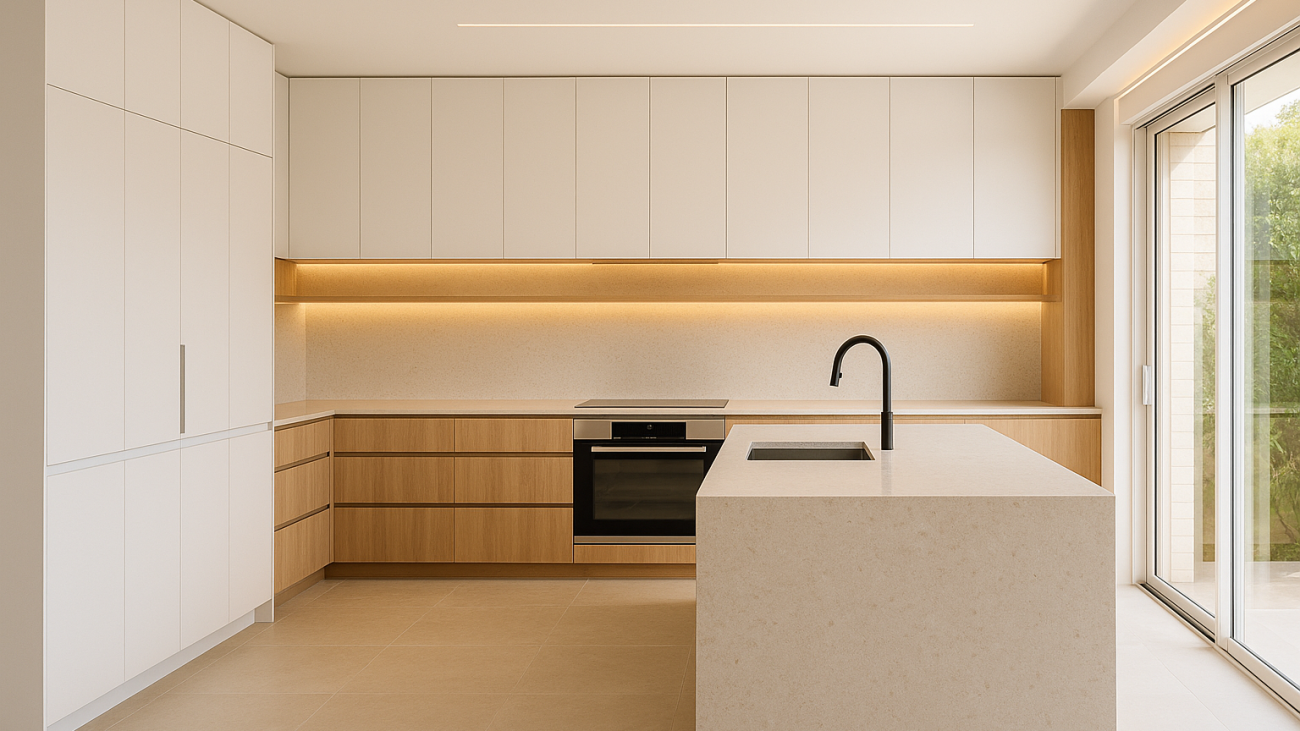
Modern Architectural Kitchen Design in Nerang: Practical Choices That Hold Up
If you’ve been searching for a modern architectural kitchen in Nerang, you’re probably chasing a very specific feel: calm, clean lines, and cabinetry that looks built-in rather than “dropped in”. The tricky part is making it work for real life—school bags on the bench, weeknight cooking, sandy feet after the beach, and a kitchen that needs to reset fast after everyone’s eaten.
Around Nerang and nearby suburbs like Carrara, Highland Park, Merrimac and Ashmore, two renovation scenarios come up again and again:
- Renovated older homes where walls, floors and ceilings aren’t perfectly level, window heights are fixed, and plumbing can be in awkward spots (sometimes right where you’d prefer a drawer bank).
- Newer estates and open-plan builds where the kitchen is in full view from the entry and living area, and the island ends up doing a lot of work—prep, storage, seating, serving.
This guide breaks down design choices that create an architectural finish without sacrificing function. You’ll also see where DIY kitchens can work, where they can get frustrating, and what to lock in early so your renovation stays buildable.
What “modern architectural” means in a kitchen
A modern kitchen can be simple and stylish. An architectural kitchen goes a step further: it looks intentional from every angle, and it still holds together when you’re living in it.
Key traits you can recognise:
- Strong alignment: doors, drawers, panels and appliances line up cleanly.
- Consistent detailing: one handle style (or handle-free), one tapware finish, repeatable joinery lines.
- Clear negative space: less visual clutter on benches and walls.
- Proportion and balance: tall cabinets and overheads sit where they make sense, not just where they fit.
If you want that boutique kitchen feel, start with the bones: layout, cabinetry design, lighting, and ventilation. Benchtop colour comes after.
One caveat: the more “minimal” the look, the more obvious the details become. Tiny changes in door gaps, panel thickness or appliance placement can read as messy—especially in older Nerang homes where walls can be out of plumb and you’re working around existing openings.
Start with workflow: a layout that suits how you cook
Before you choose finishes, get clear on your daily routine.
Ask yourself:
- Do you cook most nights, or mostly reheat?
- Do you entertain in the kitchen, or prefer guests out of the work zone?
- Does one person cook, or do you often have two people in the space?
A practical kitchen design is organised into zones:
- Storage zone: fridge + pantry + everyday items.
- Prep zone: main bench space + bins + knives/boards.
- Cooking zone: cooktop/oven + pots, pans, oils and utensils.
- Clean-up zone: sink + dishwasher + bins + dish storage.
For Gold Coast open-plan living, decide early whether the kitchen is a quiet work area or a social hub. That one choice affects seating placement, appliance noise (dishwasher and rangehood matter more than people expect), and how much you’re comfortable having visible from the lounge.
Island, peninsula, or galley?
Islands look great in kitchen displays, but they only work if you have enough clearance—and if they don’t become a speed bump through the middle of the room.
Choose an island if:
- You have space for comfortable walkways around it (including room to open drawers while someone walks past).
- You want seating that doesn’t interrupt cooking.
- You want a central prep bench with storage below.
Choose a peninsula if:
- The kitchen is narrower (common when renovating older layouts around Nerang).
- You want definition between kitchen and living without blocking movement.
- You want casual seating without needing full walk-around access.
Choose a galley if:
- You want maximum bench and storage in a compact footprint.
- You prefer a strong “work corridor” for cooking.
- You can control through-traffic (so people aren’t walking between the cooktop and sink).
If you’re comparing kitchen layouts Nerang homeowners often end up with, the best ones usually do one thing well: they keep traffic out of the prep and cooking zone. That matters in open-plan homes where people naturally cut through the kitchen to get to the outdoor area.
Practical entertaining tip: if you can, keep the fridge and drinks accessible without guests needing to stand in your cooking zone. It sounds minor, but it changes how the room feels on a busy weekend.
Cabinetry that looks architectural (and stays that way)
This is where a modern architectural kitchen earns its keep. Great cabinetry isn’t just the door style—it’s the build quality, the hardware, and the install accuracy.
In older homes, it’s also about planning for real-world constraints: slabs that aren’t perfectly flat, walls that aren’t square, and ceilings that vary across a run. Good joinery design allows for those conditions so you don’t end up with odd filler strips right at eye level.
A useful reality check: if you’re renovating and keeping the same footprint, sometimes the cleanest architectural outcome comes from simplifying the plan rather than adding more cabinets. Fewer changes can mean better alignment, fewer junctions, and a calmer look.
Door style: flat-panel is the foundation
Flat-panel (slab) doors are the go-to for modern architectural kitchens because they keep the visual plane clean.
For a boutique look:
- Keep profiles simple.
- Avoid mixing too many door styles in one room.
- Match panels and fillers so they look planned, not patched.
If you’re choosing a very matte finish, remember it can show hand marks in high-touch areas. That doesn’t mean “don’t do it”—just be deliberate about where you’ll touch most (fridge area, bin pull-out, pantry, dishwasher) and whether you want a slightly more forgiving finish there.
Handle-free or handles?
Handle-free kitchens suit architectural design, but they need proper planning.
Common approaches:
- Finger-pull (J-pull): easy to use, consistent look.
- Integrated pull rail: a clean line across drawers, good for long runs.
- Minimal handles: still architectural if they’re consistent and well placed.
Local living note: if you’re in and out with wet hands (pool, backyard, kids rinsing off sandy feet), test the grip. Some handleless profiles are better mid-cooking than others, and some show marks faster.
Hardware matters more than most people expect
Soft-close drawers and hinges aren’t a “nice extra”. They help protect alignment over time, particularly on wide drawers that carry a lot of weight.
Ask about:
- Drawer runner quality (especially for wide pot drawers).
- Hinge adjustability (useful for maintaining even gaps as a home settles over time).
- Internal drawer systems for cutlery, spices and waste.
In South East QLD conditions, durability is also about day-to-day wear: frequent entertaining, people coming in from outside, and more cleaning than you’d do in a closed-off kitchen. Hardware that stays smooth and aligned keeps the whole kitchen feeling “tight” for longer.
If you’re researching kitchen cabinet design in Nerang, focus on the parts you touch every day: drawers, hinges, bins, and internal storage.
Storage that keeps benches clear (the architectural secret)
A modern architectural kitchen falls apart visually if everyday items live on the benchtop.
Use storage that hides the mess:
- Full-height pantry (cabinetry to the ceiling): less dust ledge, more useable storage.
- Deep drawers for plates and bowls: quicker than overhead cupboards for daily dishes.
- Appliance cupboard for toaster, kettle and coffee gear.
- Pull-out bin system beside the sink: makes the clean-up zone quicker.
- Tray divider near the oven: baking trays stop sliding and stacking badly.
Design rule: if you don’t allocate a home for it, it ends up on the bench.
Local living note: indoor–outdoor homes often track sand and grit through. Kickboards and lower doors take the brunt, so it’s worth choosing a finish that can handle regular wiping. If your entry path passes the kitchen (common in open-plan layouts), planning a simple “drop zone” drawer for keys, hats and school notes helps keep the prep area clear.
Benchtops and splashbacks: clean lines, easy cleaning
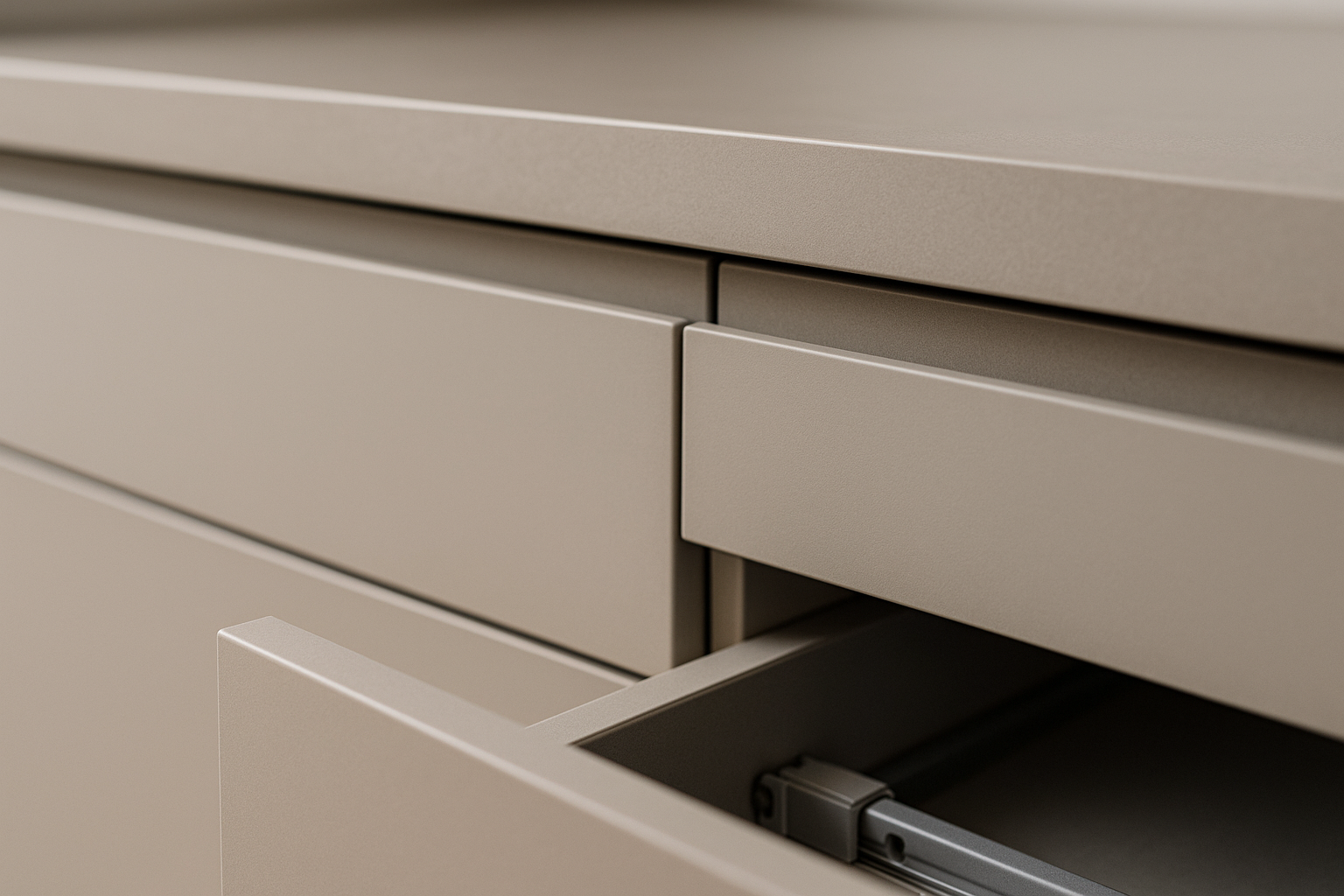
Clean cabinet lines come from good detailing, accurate manufacture, and careful installation.
Architectural kitchens look calm because surfaces don’t compete—and because they’re easy to bring back to “zero” after a busy day.
Benchtop guidance
Choose based on how you live:
- If you cook daily, prioritise heat, scratch and stain resistance.
- If you want a softer, quieter look, choose low-movement patterns rather than busy veining.
- If you want the island to read as a single “block”, consider a waterfall end panel (with a realistic chat about where stools, toes and vacuum cleaners will bump into it).
A practical caveat for entertaining households: if the island is your serving bench, pick a finish you’re comfortable wiping down often. Some very dark or high-gloss tops can show smears quickly under bright Gold Coast daylight.
Also think about edges. A sharp square edge looks crisp, but if your kitchen is a high-traffic zone (kids doing homework at the island, guests leaning in), a slightly softened edge profile can be more forgiving without changing the style.
Splashback choices that suit architectural design
A good splashback looks like part of the plan, not an afterthought.
Strong options:
- Full-height splashback in a simple finish.
- Large-format tiles with minimal grout lines.
- Glass or sheet splashback for easy wipe-down.
If you’re weighing up grout, cleaning, and how different materials read in daylight, see: Choosing your kitchen splash back.
Lighting: the difference between “flat” and “architectural”
Lighting is where many DIY kitchens fall short. You need layers:
- Task lighting: under-cabinet LEDs over prep areas.
- General lighting: ceiling lights that reduce shadows.
- Feature lighting: pendants over an island (kept simple and proportional).
Avoid relying on pendants alone. They look good, but they don’t light the chopping board.
For open-plan homes on the Gold Coast, also think about:
- Glare and reflections (big windows + bright afternoons can exaggerate every fingerprint).
- Sightlines—you want the kitchen to look good from the living area, not only when you’re standing at the sink.
- Noise control—hard, open spaces can echo. A quieter rangehood and dishwasher help, and softer finishes nearby (rugs, window coverings) can take the edge off.
Ventilation matters here too. In humid weather, decent extraction helps keep cooking smells from lingering through open-plan areas and can reduce moisture build-up around overheads and window frames.
Materials and finishes that suit Gold Coast living
For kitchen renovations in Nerang, many homeowners want modern style without signing up to constant upkeep.
Durability considerations that matter locally:
- Humidity and airflow: decent extraction and ventilation help protect finishes over time.
- Frequent entertaining: island ends, sink areas and bar seating wear faster than you think.
- Indoor–outdoor living: wet swimmers and damp towels happen; choose finishes you can wipe down without babying them.
- Sand/grit tracking in: lower doors and kickboards get scuffed first.
Practical finish choices:
- Matte cabinet finishes for a softer look (with the caveat that some ultra-matte surfaces can show rub marks if you’re tough on them).
- Hard-wearing kickboards (the part your shoes and vacuum hit).
- Quality edgebanding so doors resist chipping at corners.
- Tapware finishes matched to your cleaning habits—some finishes don’t love abrasive cleaners, and that’s worth knowing before you commit.
If your kitchen connects straight to the patio or pool area, it’s usually worth prioritising surfaces that can handle frequent wipe-downs without looking tired.
DIY kitchen renovation vs custom joinery: what to DIY, what to leave
Search results make DIY kitchen renovations look straightforward. Some parts are. Others are where people lose time and money—often through small measurement issues that become very obvious once cabinetry is installed.
Good DIY wins
DIY can work well for:
- Painting walls and trims.
- Changing handles.
- Replacing a freestanding appliance with the same size.
- Simple open shelving (kept minimal, level, and properly anchored).
Where DIY kitchens often struggle
Be cautious with:
- Cabinet alignment across long runs (especially in older homes where walls wander).
- Integrated appliances (they need accurate clearances and ventilation planning).
- Panel-ready fridges and dishwashers (door weight, hinge systems and service access matter).
- A kitchen cabinet remodel that keeps old cabinet boxes but changes everything else—door gaps and levels can be hard to make look “new”.
Plumbing, electrical work, waterproofing and structural changes belong with licensed trades.
If you like the hands-on side, you can still stay involved by setting priorities (storage vs seating vs display), collecting reference images, and narrowing your appliance shortlist. Then leave cabinetry, site measure and installation to people who do it daily.
A practical process for a boutique kitchen design in Nerang
If you want a boutique kitchen that looks architectural, the process matters as much as the style.
A reliable workflow looks like this:
- Initial design consult: you share needs, appliance sizes and style direction.
- Layout planning: zones, clearances, seating and storage are resolved early.
- 3D render: you can check proportions, finishes and how it will sit in your space.
- Check measure: a final site measure before manufacture.
- Manufacture and install: cabinetry built consistently and installed with care.
For more on what’s involved locally, read Building kitchens on the Gold Coast.
In-home measure/design consult checklist (Gold Coast renovation realities)
Bring these along—or have them ready on your phone—so the design accounts for the things that commonly trip up renovations in this area:
- Your appliance list (model numbers if chosen): cooktop size, oven type, fridge dimensions, rangehood requirements.
- Existing slab and floor levels: note any obvious fall, lippage at tile edges, or transitions to living areas (older homes can have surprises here).
- Window and door positions: sill heights, sliding door clearance, and whether handles will clash with cabinetry or a taller tap.
- Older plumbing runs: where waste and water currently sit, and whether moving the sink/dishwasher is realistic without opening up more of the slab or walls.
- Power and lighting constraints: existing downlight positions, where you’ll want outlets (appliance cupboard, island, charging), and any limitations you already know about.
- Ventilation pathway: where the rangehood can realistically vent to, especially in older homes with limited ceiling space.
- Traffic flow notes: where people walk through the kitchen now (to the backyard, garage, hallway), and what you want to change.
Good design doesn’t ignore these constraints—it uses them to make smarter decisions early, before anything is ordered.
Practical modern architectural kitchen ideas you can use now
These are small decisions that make a big visual difference:
- Run overheads to the ceiling to avoid a dust ledge.
- Use one consistent drawer-height pattern across a run.
- Conceal the rangehood (where practical) for a cleaner wall line.
- Keep open shelves limited and give them breathing space.
- Plan power points early (island outlets, appliance cupboard, charging drawer).
- Choose one metal finish (tap, handles, sink accessories, pendants).
- Prioritise cleanable surfaces in open-plan living—less texture where cooking splatter and fingerprints land.
If you want a few more modern kitchen designs and ideas to compare, see Modern kitchen designs and ideas.
Thinking about a modern architectural kitchen in Nerang? Let’s make it clear and buildable
If you’re at the “collecting ideas” stage, we can help you turn inspiration into a layout and cabinetry plan that fits your home—whether you’re working with an older, character-style footprint or a newer open-plan space.
Talk with The Pinnacle Kitchen Company about a custom design for your Nerang kitchen renovation. We design, manufacture, and install kitchens across South East QLD, with 3D renders so you can check the result before it’s built.
If you’d like to spread the cost, ask about 48 months interest-free (T’s & C’s apply).
CTA: Book a design consult and bring your appliance list, rough measurements, and 3–5 reference images. We’ll map out the layout, storage, and finishes so your kitchen looks architectural and works day-to-day.
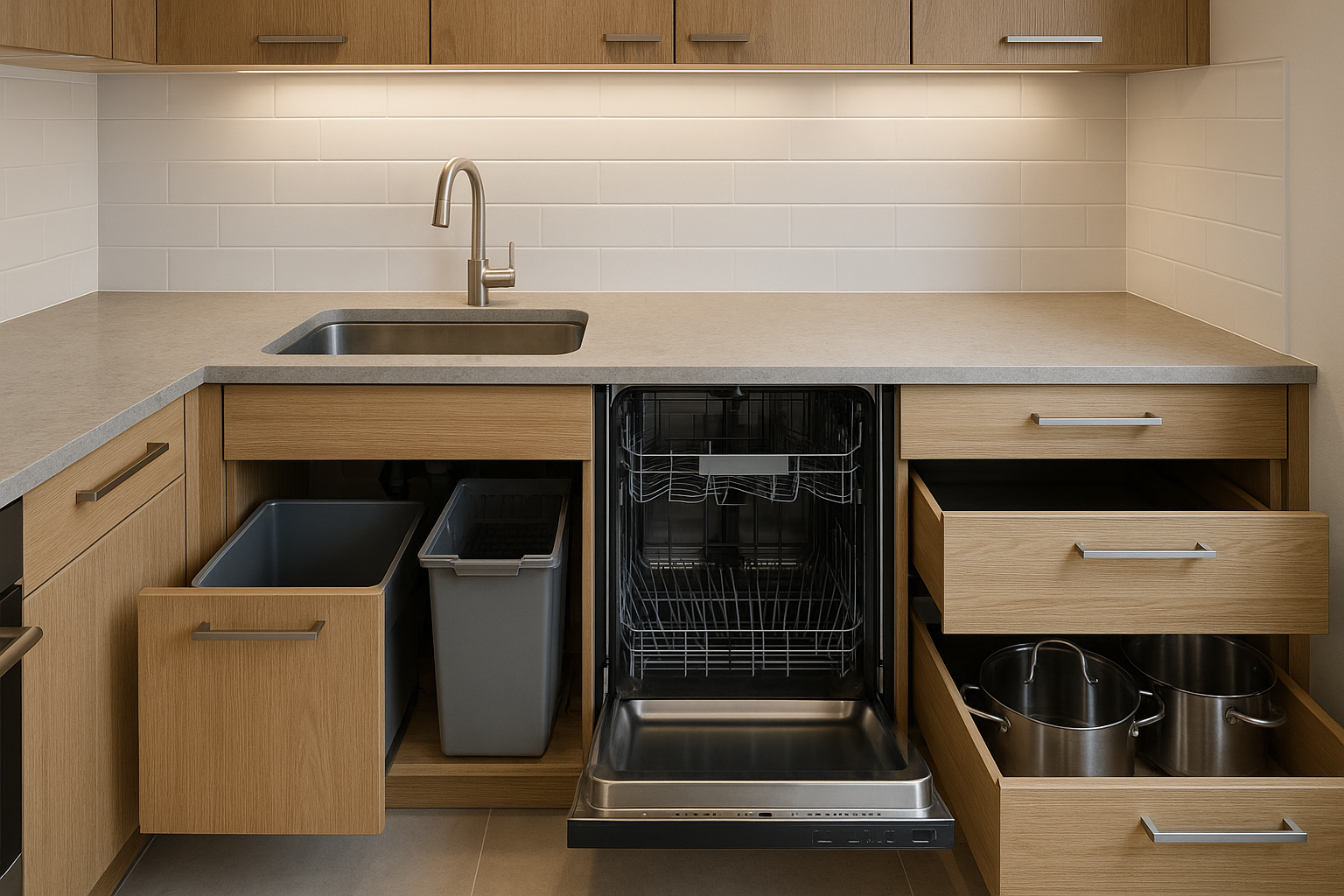
Design your kitchen in zones so cooking and clean-up stay organised.
Quick FAQs
How much space do I need around an island?
Enough so someone can walk behind a cook safely and drawers can open without conflict. Your exact clearance depends on layout, appliance locations, and doorways. If your kitchen is also a main walkway (common in open-plan homes), prioritise clear paths past the fridge and pantry first—then shape the island to suit.
Are handleless kitchens hard to clean?
Generally, they’re easy to wipe down, but the pull method matters. Integrated rails are practical day-to-day. Some finger-pull profiles show marks more quickly in high-use family areas, especially around the bin and pantry.
What’s the best storage upgrade for a family kitchen?
Deep drawers for plates and containers, plus a pull-out bin next to the sink. It improves daily use immediately and helps keep benches clear.
Do I need to replace my floors during a kitchen renovation?
Not always, but plan it early. Cabinet heights, appliance clearances and kickboard lines can change if flooring thickness changes. In renovations, it’s also worth checking how the new floor height will meet existing rooms so you don’t create awkward lips, gaps or “step” transitions.
Can you match my kitchen to the rest of the house style?
Yes. Architectural kitchens look best when they suit the home’s lines, colours and natural light—not just a showroom photo. In renovated older homes, that can mean pairing clean modern cabinetry with warmer tones or textures so the kitchen doesn’t feel like it belongs to a different house.