
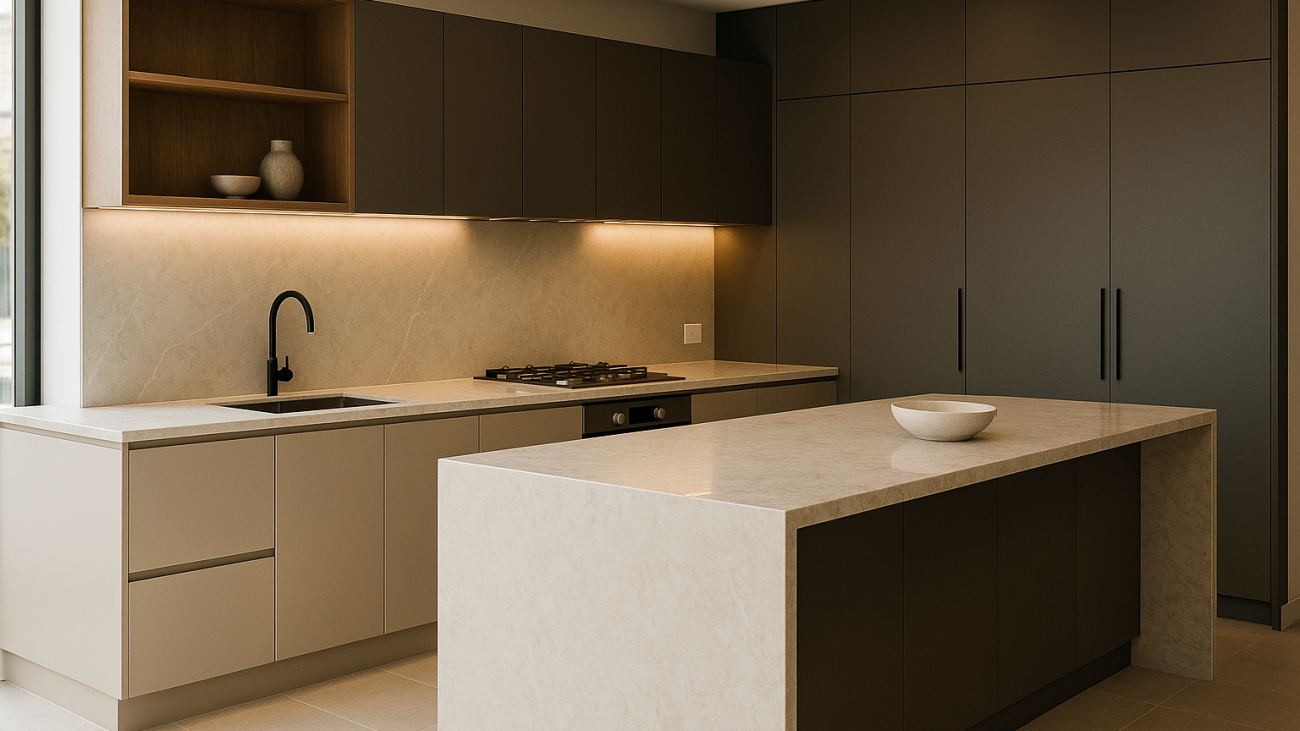
Kitchen displays: how to read a showroom like a designer (and choose what will work at home)
Kitchen displays are full of ideas you can borrow. They’re also staged to look calm, spacious, and “finished”. The trick is knowing what to copy, what to question, and what to measure.
If you’re visiting a kitchen showroom on the Gold Coast (or planning one), use this guide to make the visit genuinely useful. You’ll walk out with decisions you can trust, not just a camera roll.
Start with the job your kitchen needs to do
Before you compare colours or handles, get clear on how you live.
Ask yourself:
- Do you cook most nights, or mostly assemble and reheat?
- Do you entertain often, or is this a family workhorse?
- What frustrates you in your current kitchen: storage, bench space, traffic flow, lighting?
Write down three non-negotiables. Examples:
- A full-height pantry (cabinetry that runs to the ceiling)
- Two bins at the sink
- A clear island for lunchboxes and serving
This keeps you focused while you look at kitchen showroom displays.
Read the layout first (style comes later)
A display kitchen can look perfect and still be wrong for your room.
Check the work zones
Look at each display and map the main zones:
- Prep zone: bench space near the sink, knife drawer, bins, chopping board spot
- Cooking zone: cooktop, pots and pans storage, oil and spices close by
- Cleaning zone: sink, dishwasher, bin placement, space to stack dishes
- Serving zone: island or bench area where food lands and people gather
A good kitchen design keeps the prep zone efficient. You shouldn’t need to cross the room to wash veg, grab a pan, then return to the cooktop.
Confirm the clearances you’ll need at home
Displays are often shown in generous spaces. For your kitchen, confirm:
- Walkway space around islands and peninsulas
- Appliance door swings (dishwasher, oven, fridge)
- Where two people pass each other during busy times
Tip: open doors and drawers in the display at the same time. If it feels tight in a showroom, it will feel tighter at home.
Don’t get distracted by styling—test the storage
Storage is where good kitchen designs win or lose.
Use this storage checklist as you walk through the displays:
Drawers vs cupboards
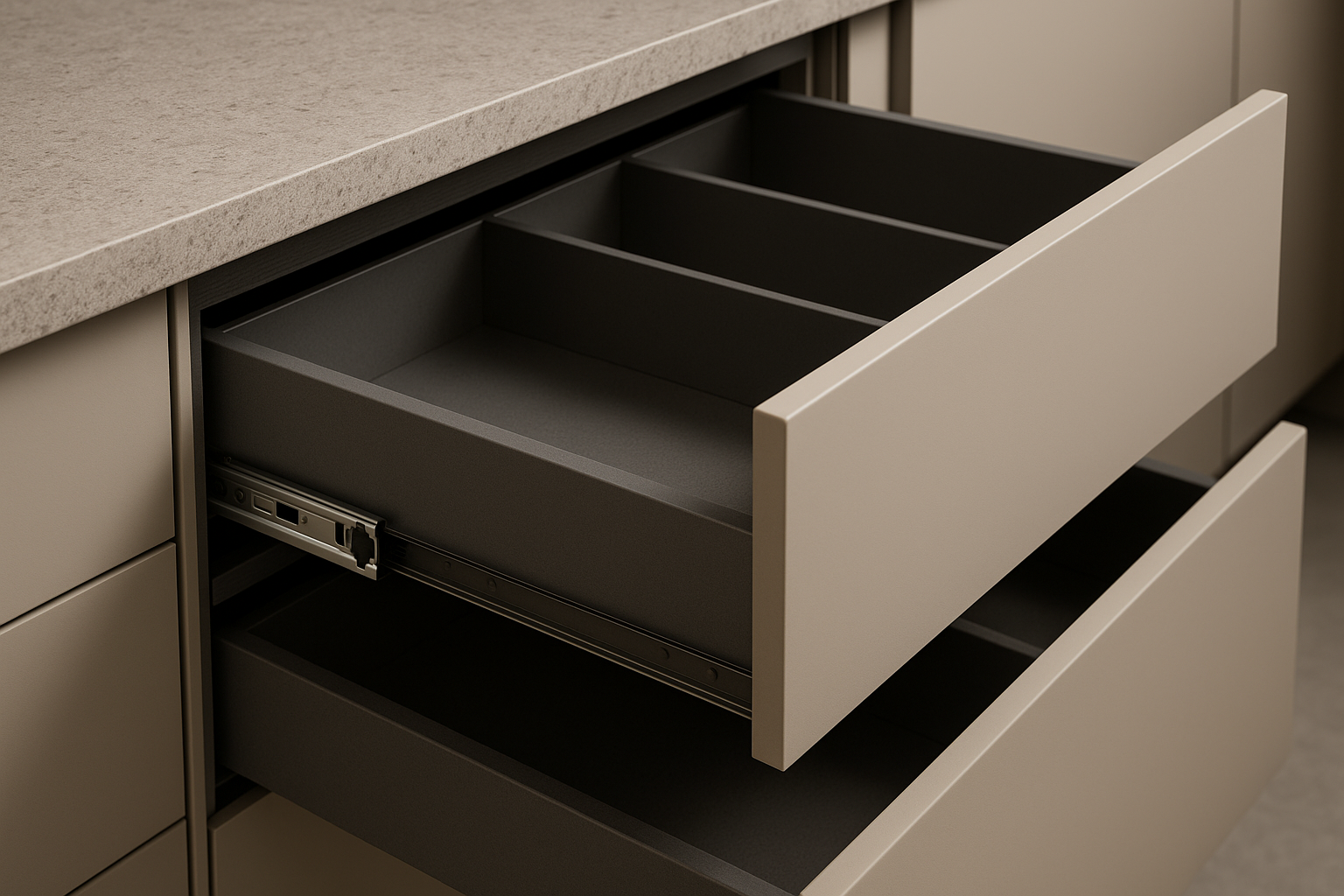
- Choose drawers for everyday items: plates, bowls, cookware, containers.
- Use cupboards for bulky items you access less often.
Deep pan drawers with quality runners feel stable at full load. You’ll notice it straight away.
Corner storage
Corner cupboards look tidy in a display, but they can be awkward in real life.
Choose a corner solution that matches what you store:
- Pull-out corner systems for cookware
- Wide drawers nearby instead of a hard-to-reach corner void
Pantry design you can live with
A tall pantry looks great, but ask how it’s set up inside.
Look for:
- Adjustable shelves for changing needs
- Pull-out drawers inside the pantry for snacks and small items
- A spot for appliances you use often
If you’re exploring kitchen design ideas from displays, the pantry is one of the best things to copy.
Check the build quality in plain sight
You don’t need to be a cabinetmaker to assess quality. You just need to look closely and touch the moving parts.
In a kitchen showroom display, check:
- Door and drawer gaps: even spacing is a sign of careful assembly and adjustment
- Hinges and runners: smooth, quiet movement; stable when fully open
- Edges and joins: neat edge finishing and clean corners
- Panels and end finishes: finished sides where you’ll see them at home (island ends, fridge surrounds)
If you’re comparing diy kitchens or planning a diy kitchen renovation, this is the part to study. Many DIY issues show up here: uneven gaps, poor alignment, and edges that swell after moisture exposure.
Choose finishes based on cleaning, wear, and light
Displays often use colours and textures that photograph well. Your kitchen has to handle fingerprints, splashes, and daily traffic.
Cabinet door finishes
Match the finish to your household:
- If you want easy cleaning, choose smooth finishes that wipe clean fast.
- If you love darker colours, check them under bright light for fingerprints.
- If you want timber look, confirm the finish and grain direction, and how it handles wear.
Benchtops
A display benchtop can look flawless because it’s not being used.
Bring the decision back to real use:
- If you bake and prep daily, prioritise stain resistance and easy cleanup.
- If you love a thin, crisp profile, confirm the edge detail and durability.
- If you want waterfall ends on an island, confirm where joins will land.
Splashback choices
Splashbacks are one of the fastest ways to date a kitchen, or make it hard to clean.
If you want a deeper guide, read: Choosing your kitchen splash back. It will help you balance looks, grout lines, and long-term maintenance.
Lighting: the part displays get right (and homes often miss)
Good lighting makes even simple kitchens feel expensive, because it improves how the space works.
In displays, look for three layers:
- Task lighting: under-cabinet lights over prep areas
- General lighting: ceiling lights that reduce shadows
- Feature lighting: pendants over the island (kept out of your line of sight)
Also check power points:
- Where will the toaster and kettle live?
- Do you need a charging drawer or an appliance cupboard?
If the display has great lighting, take photos of the ceiling plan and under-cabinet areas, not just the doors and benchtops.
Appliances and integration: copy the function, not the brand
A display kitchen often uses integrated appliances to look tidy. The idea is worth stealing even if your appliance list differs.
Look for:
- A fridge space that allows airflow and door swing
- A dishwasher placed close to the sink
- An oven location that keeps hot trays away from kids’ traffic lines
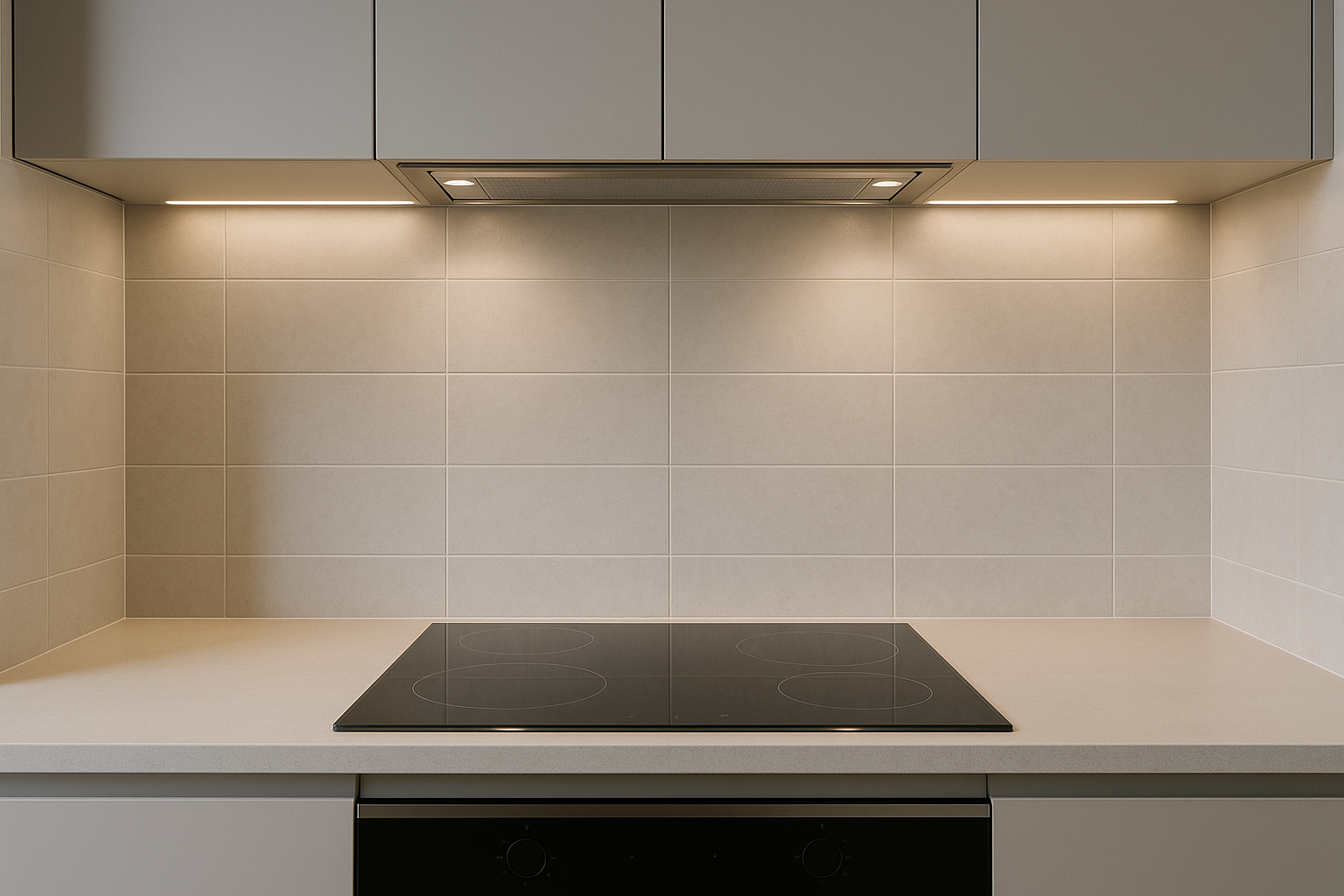
- Rangehood coverage that matches the cooktop width
If you’re planning a kitchen DIY or diy kitchen renovations, don’t lock in cabinetry before you lock in appliance dimensions. A few millimetres matters.
Bring your own plan (and leave with decisions)
A showroom visit works best when you arrive prepared.
Bring:
- Your room measurements (even rough)
- Photos of your current kitchen
- A list of appliances (or at least sizes)
- Notes on what you cook and store
Then use the displays to make specific choices:
- Door style and colour
- Benchtop look and edge profile
- Storage features you want to copy
- Tapware and sink style
For more inspiration before you visit, see: Modern kitchen designs and ideas.
Gold Coast renovation reality check (so the plan holds up)
Kitchens in South East QLD often need practical planning around airflow, light, and the pace of family life.
If you’re renovating, confirm early:
- Who measures the space for final cabinetry sizes
- What site work is needed before installation (plumbing, electrical, patching)
- The order of trades and how long you’ll be without a kitchen
This is also where many diy kitchen cabinets or diy kitchen cupboards projects get messy. The build is only part of it. Scheduling and sequencing is the hard part.
For a local perspective, read: Building kitchens on the Gold Coast.
How Pinnacle Kitchens helps you go from display to finished kitchen
A display is a starting point. Your finished kitchen needs to fit your room, your storage, and your routine.
At Pinnacle Kitchens, we design, manufacture, and install custom kitchens in South East QLD. You’ll see your kitchen in 3D renders during the design stage, so you can confirm layout and finishes before anything is made.
If you’re comparing kitchen designs and want clear answers on materials, hardware, and installation, start here:
Ready to turn kitchen display ideas into a plan that fits your home?
If you’ve been saving kitchen design ideas and you’re ready to make decisions, book a design consult with Pinnacle Kitchens. Bring your measurements, inspiration photos, and appliance list.
We’ll help you:
- Lock in a layout that suits how you cook
- Choose finishes that handle daily use
- Map storage so everything has a home
- Confirm the steps from measure to manufacture to install
Ask about 48 months interest-free (T’s & C’s apply) if you want to spread the cost.
If you want to see how a completed project comes together, view: A look at a recently finished kitchen in Brisbane East.
Quick answers (FAQ)
Are kitchen showroom displays realistic for everyday use?
Yes, if you treat them as a sample of layout and finishes, then confirm the exact specifications for your quote. Check storage, clearances, and hardware feel, not just the styling.
What’s the fastest way to compare kitchen displays in different showrooms?
Use the same checklist each time: layout flow, drawer quality, pantry setup, lighting, splashback practicality, and appliance placement. Take photos of inside drawers and pantry storage, not only the front view.
What should I avoid copying from a display kitchen?
Avoid copying a layout without checking your room measurements and door swings. Avoid high-maintenance finishes if you already know cleaning time is tight.
Can Pinnacle Kitchens match a look I’ve seen in a display?
Yes. Bring photos and note what you like (door profile, colour, benchtop look, handles). The design work is translating that look into a layout that suits your space and storage needs.
Is a DIY kitchen renovation worth it?
It can be, if you can coordinate measurements, trades, and sequencing. If you want one accountable team from design through installation, a custom kitchen company is the safer path for most homes.