
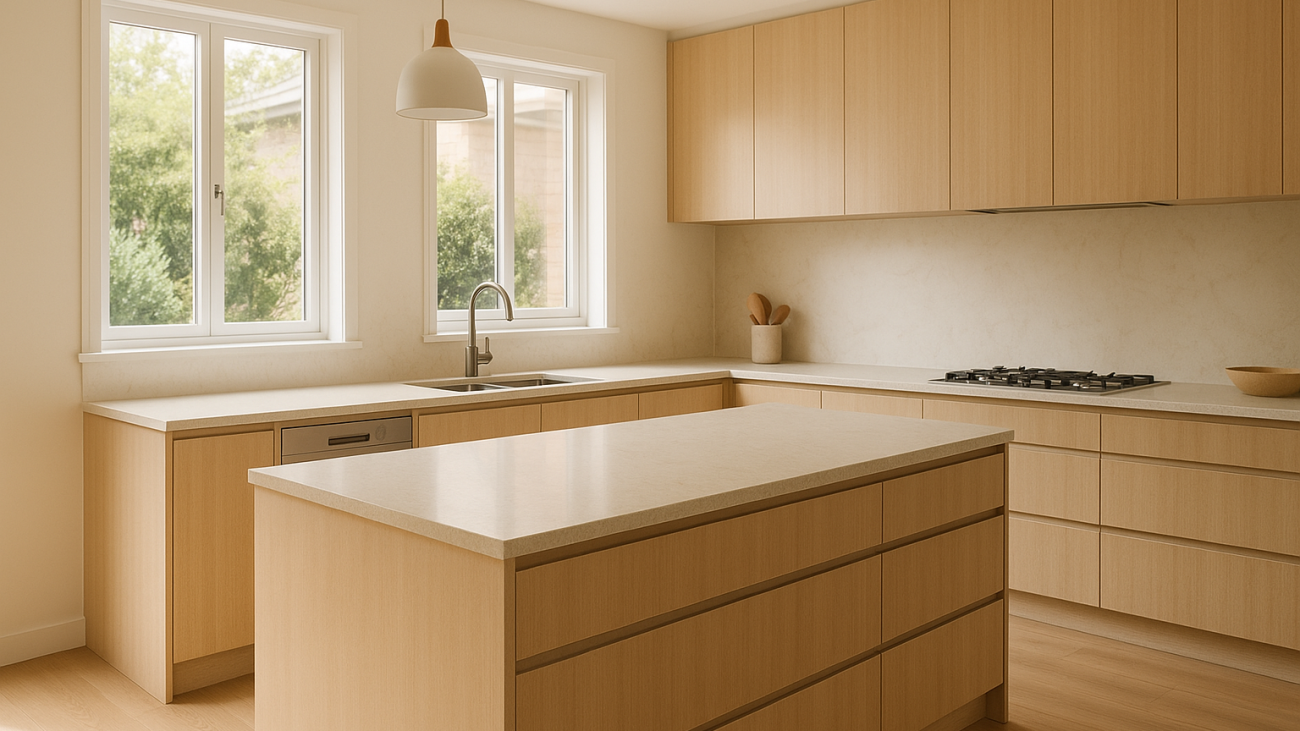
Kitchen design that works: practical decisions that make daily life easier
If your current kitchen feels crowded, messy, or hard to cook in, the fix is rarely “more cupboards”. It’s usually one or two design choices that don’t match how you live.
This guide is for homeowners planning a kitchen renovation or a new build in South East Queensland. It focuses on the decisions that affect daily use: layout, storage, materials, lighting, and the small details that stop a kitchen feeling finished.
You’ll also see where a DIY kitchen renovation can work, and where DIY Kitchens often come unstuck.
Start with your non-negotiables (before you pick colours)
A kitchen looks good for visitors, but it needs to work for you on a Tuesday night.
Write down your top five “must-haves”. Examples:
- You cook most nights and need a larger prep zone
- Two people cook at once and keep bumping into each other
- You want seating for kids’ breakfasts, but not in the main walkway
- You need a full-height pantry (cabinetry that runs to the ceiling)
- You want bins hidden, easy to reach, and not blocking drawers
Then list your deal-breakers:
- No corner cupboards you can’t reach
- No glossy doors if fingerprints drive you mad
- No oven door opening into the main walkway
This simple list keeps your kitchen design choices consistent when you hit the fun part.
Layout rules that make a kitchen feel calm
A strong layout reduces steps, keeps bench space clear, and prevents traffic jams.
Build around the “work zones”
Forget fancy theory. Use three zones:
- Prep zone: clear bench + drawers for knives, boards, bowls, wraps, oils
- Cook zone: cooktop/oven + pots and pans storage nearby
- Clean-up zone: sink + dishwasher + bins + cleaning storage
If these zones are split up, you spend your time walking and shuffling things.
Give yourself landing space
You need bench space where items naturally land:
- Next to the fridge for groceries
- Beside the cooktop for trays and stirring spoons
- Near the sink for dirty dishes and draining
If there’s nowhere to put things, the kitchen always looks messy.
Plan the walkway before the island
An island is useful, but only if people can move around it without squeezing.
Common layout errors we see:
- Dishwasher door blocks the main walkway
- Stools sit where everyone needs to walk past
- The island gets used as a dumping zone because storage is elsewhere
If you want an island, decide what it is for:
- Prep (best with bins and drawers nearby)
- Seating (best away from the cook zone)
- Both (works, but needs careful spacing)
Storage that stays organised (not just “more storage”)
The best kitchen designs make it easy to put things away fast.
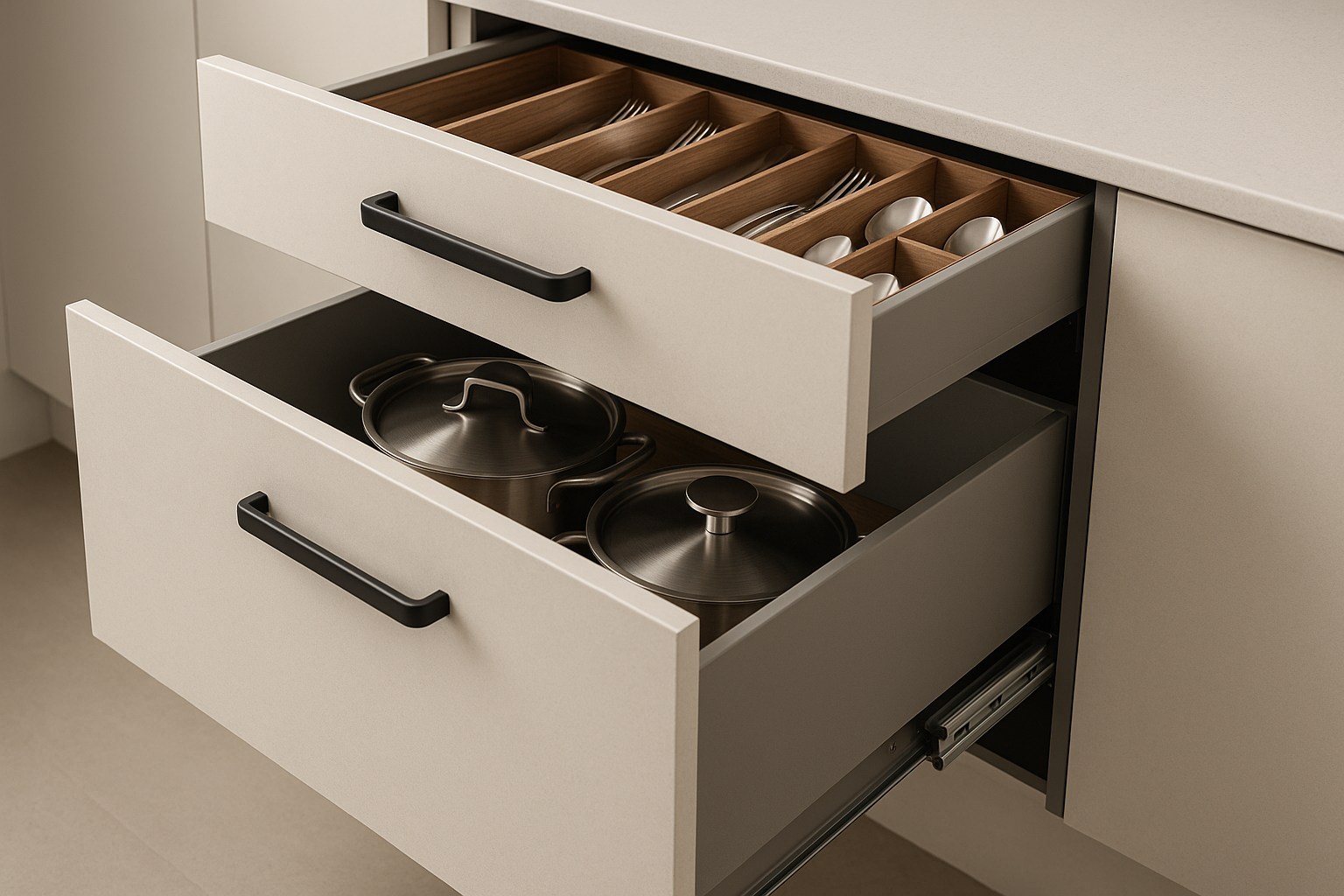
Choose drawers for base cabinets
For most homes, base drawers beat base cupboards.
Drawers work because:
- You can see everything from above
- You don’t need to crouch and reach into the back
- You can separate items by task (prep, baking, lunch boxes)
Keep cupboards where they suit the job:
- Under the sink (plumbing space)
- For tall items (vases, large appliances)
Design your pantry around what you buy
A pantry should match your shopping habits.
If you buy in bulk or have a busy household, plan:
- A full-height pantry for tall items and large packets
- Drawers for snacks and lunch supplies
- A dedicated zone for appliances (mixer, air fryer) so benchtops stay clear
If you want a clean look, consider an appliance cupboard (a cabinet that hides small appliances, often with internal power).
Put bins where the mess happens
Bins belong where you scrape plates and prep food.
A practical setup:
- Pull-out bins near the sink
- Recycling and general waste separated
- Space for compost if you use it
This one detail changes how tidy the kitchen stays.
Materials and finishes: pick for wear, not showroom lighting
A kitchen needs to handle heat, moisture, oils, cleaning sprays, and daily knocks.
Cabinet doors: what suits your household?
- Matt finishes: good for fingerprints and glare, easy to live with
- Gloss finishes: brighter look, shows marks more easily
- Timber-look: warm and forgiving, works well in coastal and family homes
Ask what substrate and edging you’re getting. Door quality is about what it’s made from, not just the colour.
Benchtops: choose based on how you cook
A simple way to decide:
- If you want easy care: quality laminate or engineered options designed for kitchens
- If you cook hard and want heat and scratch resistance: porcelain is a strong choice
- If you want natural character: stone looks great, but needs care and correct sealing
Your designer should talk through join lines, overhangs, and how the sink and cooktop are cut in. Those details affect how the benchtop performs long-term.
Splashback: make cleaning easy
Splashbacks take daily grease, steam, and sauce splatters.
If you like simple cleaning, consider:
- Full-height glass or solid surfaces with minimal grout lines
- Larger-format tiles to reduce grout cleaning
If you’re comparing options, read our guide: Choosing your kitchen splash back.
Lighting: the difference between “nice” and genuinely usable
Many kitchens look fine in daylight, then feel dull at night.
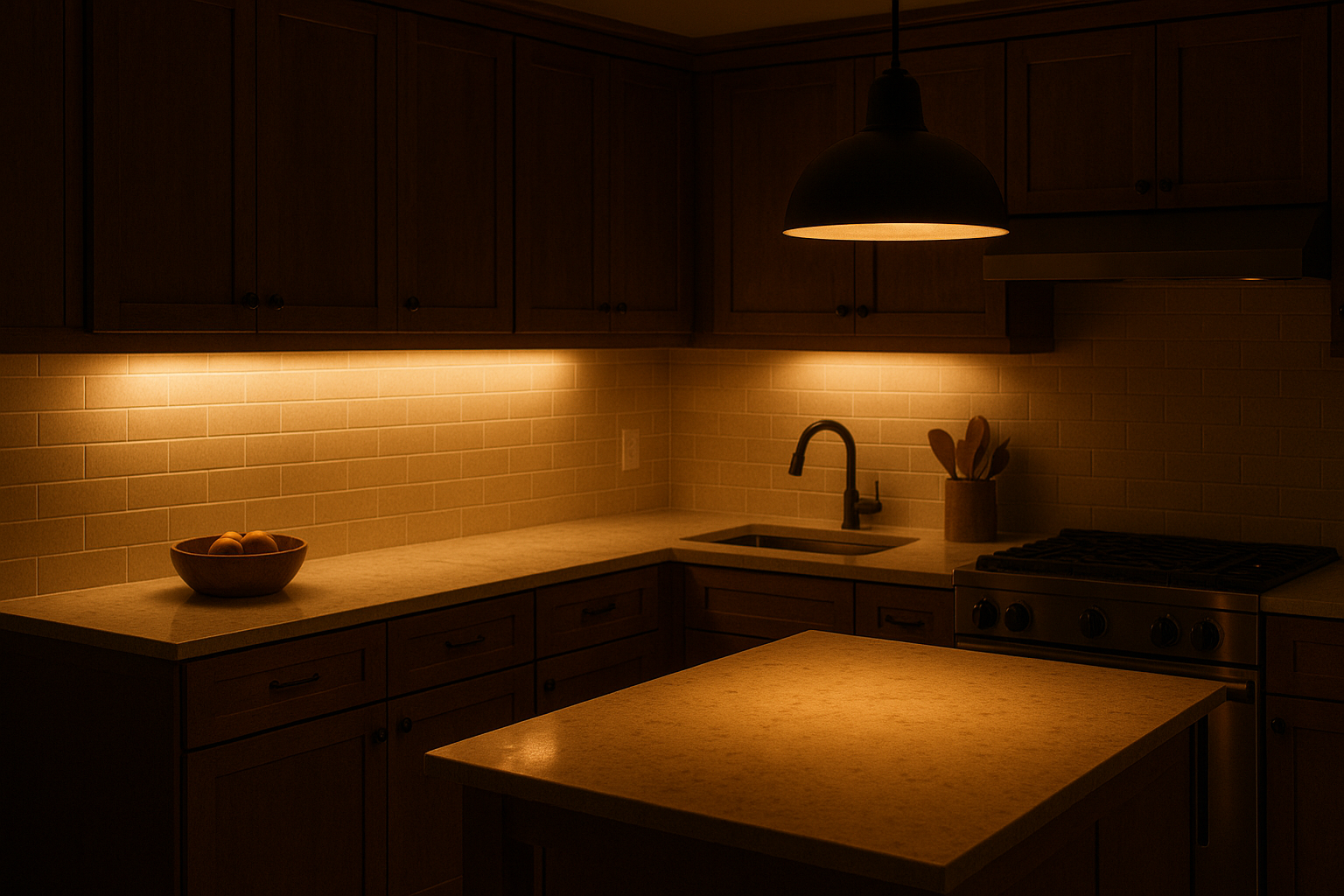
Use three layers:
- Task lighting: under-cabinet LEDs to light the benchtop where you chop
- General lighting: downlights or ceiling lights for overall brightness
- Feature lighting: pendants over an island, used for atmosphere, not as the only light
Choose a warm-to-neutral colour temperature that suits your finishes. Strong task lighting also makes cleaning and food prep safer.
Power and appliances: design around real clearances
Appliance choices affect cabinetry sizes, door swings, and service locations.
Before plans are final, confirm:
- Fridge width, depth, and door swing (especially for French doors)
- Oven size and where trays can land
- Rangehood type and ducting path
n- Dishwasher location so it opens without blocking key drawers
If you want integrated appliances, plan for it early. It changes panel sizes and ventilation.
DIY kitchen renovation vs professional design and installation
DIY kitchens can be appealing if you enjoy hands-on projects. Some parts are perfect for DIY.
DIY-friendly updates:
- Replacing handles
- Painting walls and trim
- Upgrading tapware (with the right trade support)
- Changing lighting fittings (with a licensed electrician)
Where DIY kitchen renovations often cost more later:
- Cabinet measurements that are out by a few millimetres
- Benchtop templating and cut-outs
- Waterproofing and services coordination
- Poor appliance clearances that force last-minute changes
- Doors and drawers that don’t line up cleanly
If you want a kitchen that looks sharp and works properly, a designer kitchen design process pays off. You get decisions made in the right order, clear drawings, and an installation team accountable for the finish.
A practical kitchen design checklist to use before you sign off
Take this list to your design meeting or showroom visit.
Layout
- Can two people pass each other without squeezing?
- Where do groceries land when you walk in?
- Does the dishwasher block anything when open?
Storage
- Are the everyday items in drawers close to where you use them?
- Is there a clear home for bins, cleaning, and lunch-box supplies?
- Are overhead cupboards reachable, or are they just dead space?
Materials
- Will your door finish show fingerprints in your household?
- Is the benchtop suited to heat, spills, and cutting habits?
- Are edges, panels, and end finishes specified clearly?
Details
- Enough power points where appliances actually sit?
- Task lighting over prep benches?
- A plan for ventilation and rangehood performance?
Kitchen design ideas that suit South East QLD homes
You don’t need a “trend kitchen”. You need choices that suit your home and climate.
Popular, practical directions we design for QLD living:
- Warm neutrals with timber accents for a relaxed look
- Matt cabinetry for low maintenance
- Large-format splashback surfaces for easy cleaning
- Drawer-heavy layouts for quick organisation
- Mixed lighting so the kitchen works day and night
For style inspiration you can actually live with, see Modern kitchen designs and ideas.
Want a kitchen plan you can trust?
If you’re at the “collecting kitchen design ideas” stage, the fastest way to get clarity is a proper design consult and a scaled plan.
Pinnacle Kitchens designs, manufactures, and installs custom kitchens in South East Queensland, with 3D rendered drawings so you can see the layout before anything is built. We also offer 48 months interest-free (T’s & C’s apply) for approved customers.
Book a design consult or visit our showroom to review layouts, door finishes, hardware, and benchtop options in person. Start here: Why Pinnacle Kitchens?.
If you’re researching locally, you’ll also find helpful background here: Building kitchens on the Gold Coast.
FAQs
What is the best kitchen layout for everyday cooking?
The best layout matches how you cook, clean and move through the space. Keep the sink, cooktop and fridge easy to reach, and add clear bench space beside each. Put your prep zone at the centre of the plan, with bins and drawers close.
How much space do you need around an island?
Allow comfortable clearance so people can walk past and doors can open without collisions. Your final spacing depends on appliance positions, door swings, and where seating sits. A site measure and scaled design drawing will confirm what works in your room.
Are drawers better than cupboards in a kitchen?
Yes for most base cabinetry. Drawers are easier to use, hold more, and keep items organised. Keep some cupboards for plumbing (under-sink) and tall items.
What benchtop material is easiest to live with?
Easy-care choices include quality laminates and engineered options made for kitchens. Porcelain performs well for heat and scratch resistance. Natural stone has great character, but needs more care and correct sealing.
Is a DIY kitchen renovation a good idea?
DIY is great for cosmetic updates like handles, paint, and minor accessories. Full DIY kitchen renovations often run into issues with measurements, appliance clearances, and trades timing. If you want a clean finish and dependable installation, use a professional design and licensed installers.
What should I bring to a kitchen design appointment?
Bring rough room dimensions, photos, your appliance wish list, and your top pain points. Include details like “900 mm cooker”, “double sink”, “walk-in pantry”, or “bins near prep area”. It helps your designer make the plan work from the start.