
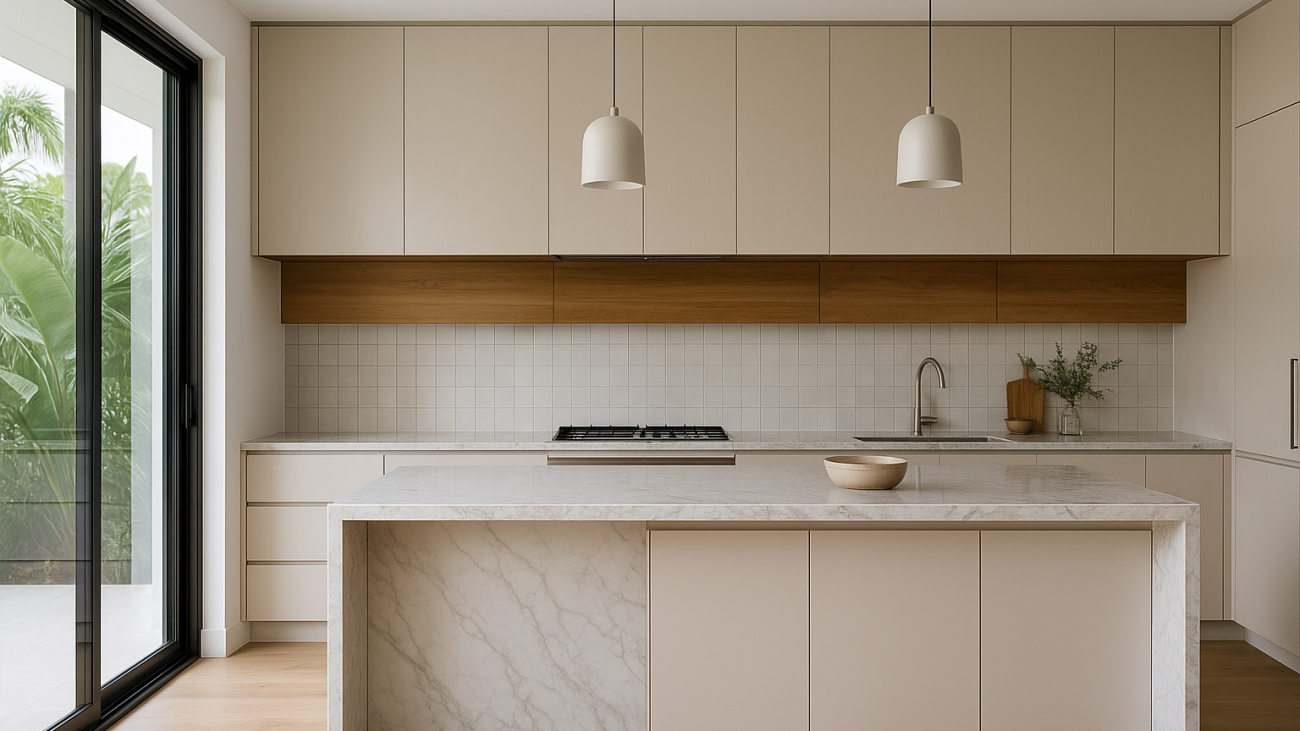
Well-Designed Kitchen in Nerang: Practical Choices That Make Daily Life Easier
A well-designed kitchen isn’t judged by the colour of the cabinets. You feel it on a weeknight when you’re cooking, the bins are easy to reach, there’s room to prep, and nothing blocks the fridge.
If you’re researching well-designed kitchen Nerang options, you’re probably weighing up style, cost, and timing—whether you renovate now or stage it over time. This guide stays practical: layout, storage, cabinet design, finishes, and the decisions that stop a new kitchen from looking great but working poorly.
Nerang is a central Gold Coast suburb with a mix of established family homes and plenty of renovations. That often means you’re designing around real constraints—existing walls you’d rather not move, older floors that aren’t perfectly level, and a kitchen that needs to cope with school lunches, weeknight dinners, and weekend entertaining.
On the Gold Coast, kitchens also tend to work harder than people expect. You’re in and out with sandy feet, sports gear, beach bags, and the occasional BBQ add-on. That’s where practical choices like easy-clean surfaces, strong ventilation, and durable materials stop being “nice to have” and start being daily quality-of-life upgrades.
Start with how you actually use the kitchen
Before you save more kitchen design ideas, pin down your routines. Your best layout depends on them.
Ask yourself:
- Do you cook most nights, or mainly reheat and assemble?
- Do two people cook together?
- Do you need a homework spot or a coffee station?
- Where do bags, keys, and shopping land when you walk in?
These answers shape the “zones” of your kitchen design: unpack, store, prep, cook, serve, clean.
A helpful caveat: trends don’t fix friction. If the fridge is too far from the pantry, the bin is on the wrong side of the bench, or you’re constantly crossing paths at the sink, you’ll notice it long after the novelty wears off.
If you’re not sure where to start, do a quick “one-day audit”. Make a note of the top three things that annoy you in your current kitchen (even small ones, like nowhere to put the air fryer). Those pain points usually map directly to layout and storage decisions.
Layout rules that keep a kitchen feeling calm
Most kitchen renovations in Nerang come down to a few layout pressure points. Sort these early and the rest gets easier.
1) Protect the work zone from through-traffic
If people cut through the cooking area to reach the backyard, laundry, or living room, the kitchen feels stressful—especially when there’s a hot pan on the go.
Good layouts create a clear path around the cooktop and sink, not through them. That’s where a boutique kitchen design earns its keep: the plan is built around your actual floorplan and traffic patterns, not a generic template.
If you’re in a Gold Coast household that cooks often (and you’re in and out with the BBQ), give ventilation proper attention early. A rangehood only helps if it’s correctly sized, positioned at the right height, and properly ducted to the outside. Recirculating units can suit some situations, but if you do a lot of frying or strong-spice cooking, ducting is usually the difference between “it’s fine” and lingering smells.
Practical note for older homes: ceiling space, roof lines, and existing services can limit duct runs. It’s worth checking this early—before you lock in cabinet heights and overhead designs.
2) Put the bin where prep happens
A common miss in kitchen design is placing bins near the pantry “because it fits”. Put waste where you prep.
A pull-out bin under or near the main prep bench saves steps and keeps mess contained. If you separate general waste and recycling, plan the bin size around your actual routine—many households find recycling fills faster than expected.
If you compost, think about where the caddy lives and how far it is from the sink. If it’s awkward, it won’t get used.
3) Plan for door and drawer conflicts
A fridge door, dishwasher, and corner drawers can fight each other.
During design, open everything on paper (and in 3D). You want drawers that clear handles, appliance doors that don’t block walkways, and corners that don’t become dead space.
Also consider where people stand. If the dishwasher drops open into the main traffic lane, unloading becomes a daily frustration. If the oven door opens into a narrow path, it’s more than annoying—it’s a safety issue.
Quick decision guidance: if you’re choosing between a wider walkway and an extra bank of drawers, the walkway usually wins. Storage is important, but a cramped kitchen feels busy even when it looks tidy.
4) Choose island vs peninsula based on space, not trends
Islands are popular in modern kitchen designs, but they aren’t always the best option.
Choose an island if:
- you have safe, comfortable walkways
- you want seating that doesn’t block cooking
- you want a central prep zone
Choose a peninsula if:
- the room is tighter
- you need more storage along one run
- you want seating without a “floating” island taking over the space
In many established Nerang homes, a peninsula can be the more practical choice—especially if you’re keeping the existing footprint and want to preserve clear access to doors, hallways, or an outdoor area.
Another practical check: think about where you’ll put stools when no one is sitting on them. If stool legs constantly catch the walkway, it’s a sign the seating zone needs a rethink.
Storage that matches real Kitchens (not display kitchens)
Kitchen displays look clean because they aren’t holding your appliances, lunchboxes, air fryers, drink bottles, and half a dozen reusable containers.
For boutique kitchens that work long term, match storage to what you own. This matters in family homes and renovation-heavy streets where you may be trying to squeeze more function into the same floor area.
A practical storage plan
- Drawers over cupboards for most base cabinets: you see everything and access is easier.
- Deep drawers for pots, pans, and small appliances.
- A landing zone near the fridge: a clear bench for groceries and the “where do I put this?” moment.
- Full-height pantry (cabinetry that runs to the ceiling): reduces dust shelves and uses vertical space.
- Dedicated tray storage near the oven: baking trays and chopping boards stay upright.
If you’re comparing kitchen cabinet design in Nerang, look for a designer who talks about storage in categories (food, cookware, small appliances, cleaning) rather than just “more cupboards”. The goal isn’t maximum cabinetry—it’s less clutter on the bench.
Practical tip for Gold Coast kitchens: plan a spot for sandy items—beach bags, hats, dog leads, lunch gear—so they don’t migrate onto the benchtop. Even a single easy-to-clean drawer near an entry point can make the kitchen feel calmer.
One more grounded idea: plan a proper “appliance home”. If the toaster, kettle and coffee machine are always out, consider a section of bench with easy power access, or a cupboard space that actually allows heat-producing items to be used safely (some households prefer to keep them out rather than constantly lifting them in and out).
Cabinet materials and hardware: where quality shows up
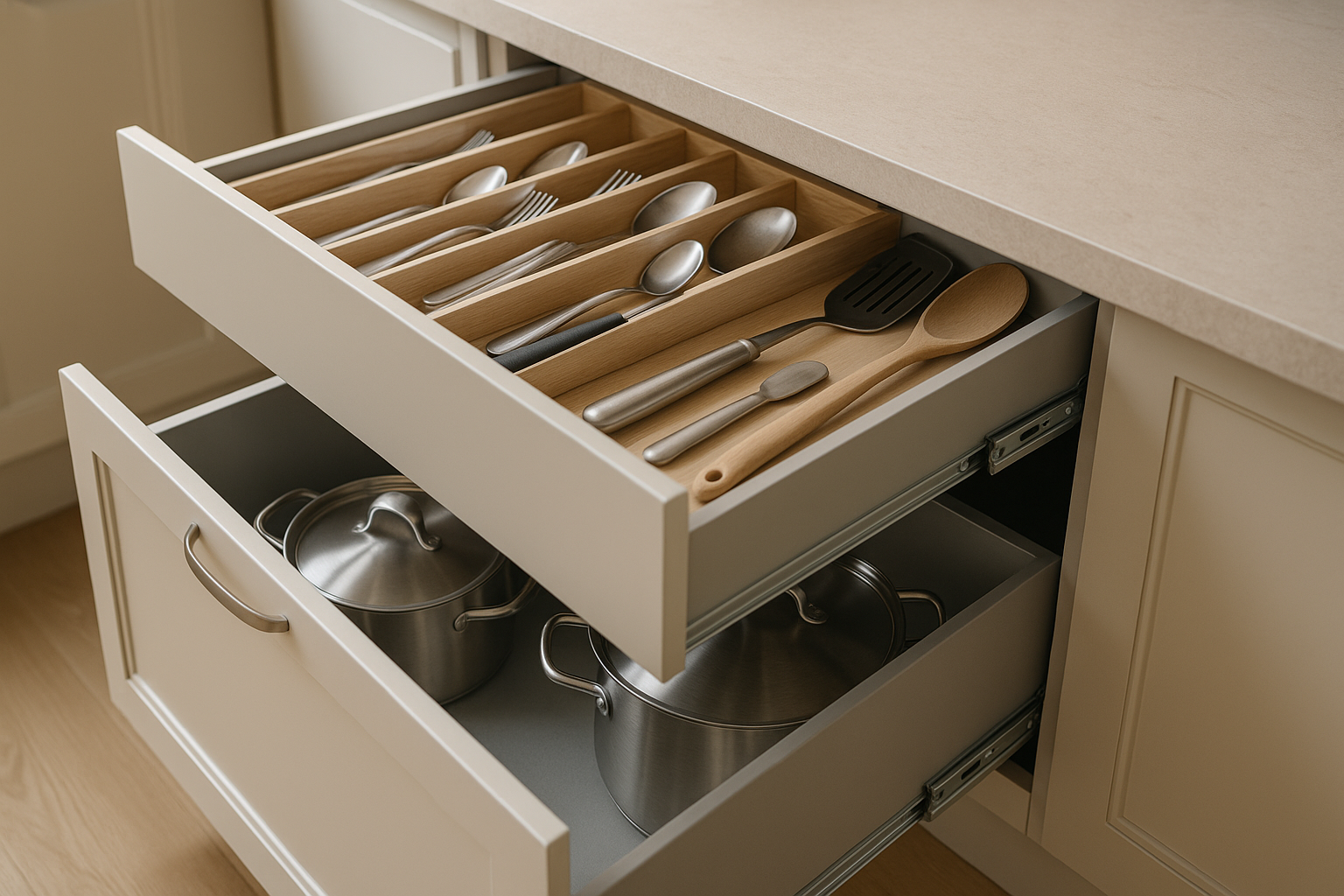
Cabinetry is what you touch every day. It needs to hold alignment, resist moisture, and still feel good after years of opening and closing.
Key choices to discuss in your kitchen cabinet remodel:
- Cabinet construction and edging: neat, well-sealed edges help resist swelling and chips (especially around sinks and dishwashers).
- Door finish: choose based on fingerprints, cleaning, and how much sun the room gets.
- Hinges and drawer runners: pick reputable hardware and the right load rating for heavy drawers.
If you have kids or you cook constantly, prioritise hardware and internal storage first. Door profiles can be simple and still look sharp.
A useful caveat: “soft close” is common now, but the feel and longevity often come down to correct installation and adjustment, not just the product label. Ask how runners and hinges will be set up, and whether the installer will return for final tweaks once everything has settled.
Local lifestyle detail that matters: if your kitchen gets blasted with afternoon sun (common in open-plan layouts), ask how your chosen finish handles UV and heat over time. Some colours and finishes will show wear faster in bright light.
Benchtops: choose for wear, not just looks
A great benchtop suits how you live.
Consider:
- Heat and scratch habits: do you put hot trays down, or always use trivets?
- Cleaning tolerance: do you want wipe-and-go, or are you happy to maintain a surface?
- Edge profile and overhangs: especially on island seating.
For Gold Coast kitchens, easy-clean surfaces are usually worth prioritising. Salt air, sunscreen residue, and everyday grit can make high-maintenance finishes feel like extra work.
A modern architectural kitchen in Nerang often uses a clean, thin edge profile or a waterfall end. Those looks work best when the layout already works—and when the edges and overhangs suit how the space is used (especially with kids on stools). If you’re adding seating, check knee space and where stool legs will land so it doesn’t feel cramped.
Decision guidance: if you’re unsure, choose the benchtop for the way you’ll treat it on your busiest day, not your best day.
Splashbacks that stay easy to clean
Your splashback lives in the mess zone. Choose it based on cooking style and the time you’re realistically going to spend cleaning.
Practical options many homeowners like:
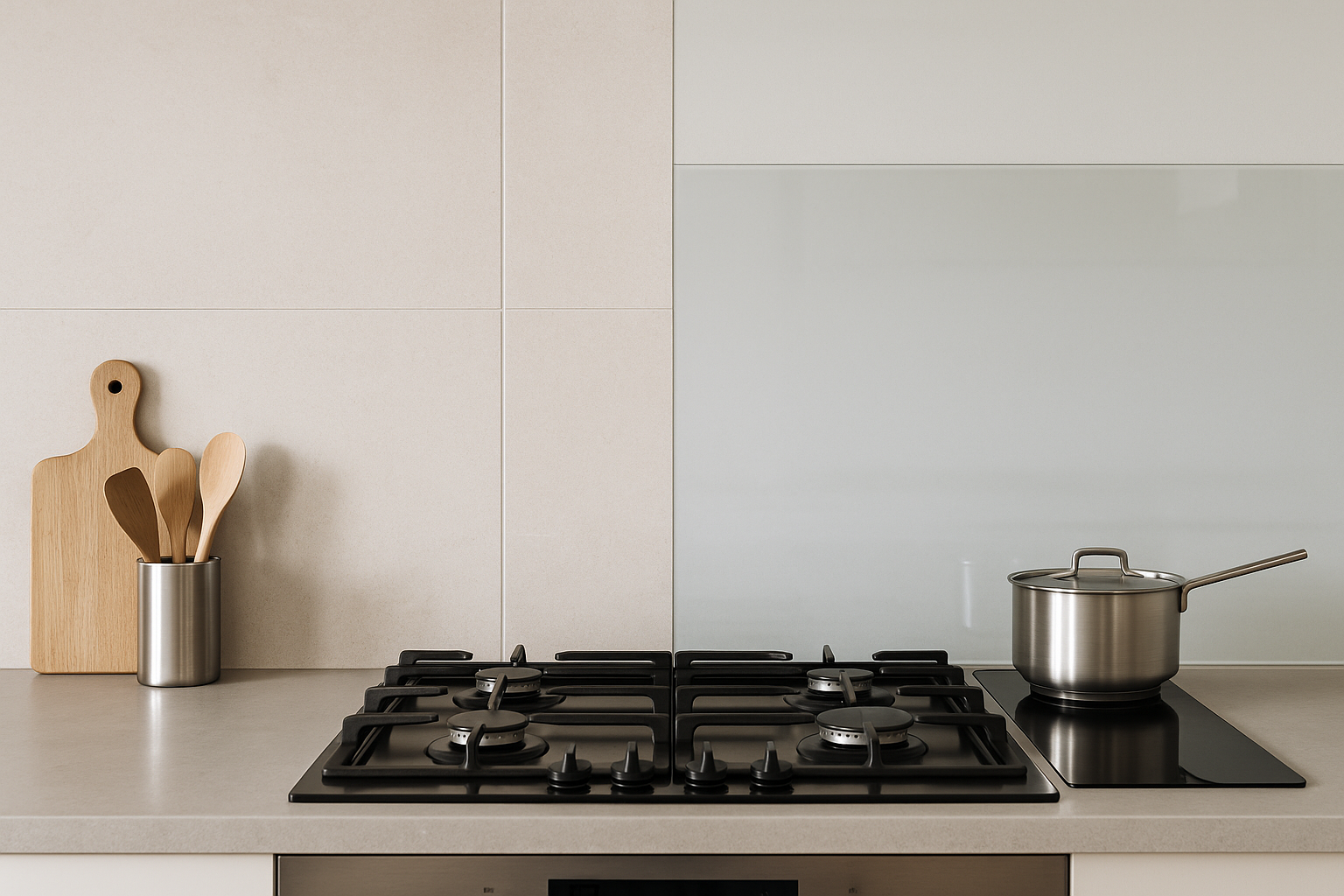
- Large-format tiles: fewer grout lines to scrub.
- Glass splashbacks: smooth and easy to wipe.
- Stone splashback sections: a continuous look with the benchtop (check suitability behind high heat).
If you cook frequently or do a lot of high-heat frying, factor in how often you’ll wipe the area. A finish that looks perfect in a showroom can be a pain if it shows every splash.
Practical caveat: pale grout can look great on day one, but it will ask more of you over time—especially behind a cooktop. If you love tiled splashbacks, talk through grout colour and maintenance, not just tile choice.
If you want help choosing, see our guide on how to choose a kitchen splashback that’s easy to live with: https://thepinnaclekitchen.com.au/blog/choosing-your-kitchen-splash-back/
Lighting: the difference between “nice” and functional
Good lighting is one of the fastest ways to make a kitchen feel finished—and it’s often overlooked until the end.
Plan three layers:
- Task lighting: bright light on prep zones (often under-cabinet LEDs).
- General lighting: ceiling lights for overall coverage.
- Feature lighting: pendants over an island or dining area.
Avoid relying on pendants alone. They look great, but they can leave chopping boards in shadow.
Practical note: in older homes (common around Nerang), it’s worth checking where existing wiring and switching sits early. Small decisions—like separate switches for task lighting, or adding a light over the sink—make the kitchen easier to use every day.
If you’re planning a coffee station or appliance zone, allow for power points and lighting at the same time. It’s much easier to plan than to retrofit later.
Styling choices that still feel good in five years
A boutique kitchen doesn’t need loud features to look considered. Small, consistent decisions make it feel intentional.
Ideas that age well:
- Keep the palette tight (two main finishes plus one accent).
- Repeat one metal finish (tapware, handles, lighting) for visual calm.
- Choose handle style based on use: slimline pulls are easy to grip; handleless looks clean but needs careful planning.
If your household is active (kids, sport, dogs, sandy feet), darker matte finishes can hide some marks—but they can also show salt smears and fingerprints depending on the product. Ask to see real samples in natural light, and think about what you’ll clean with day-to-day (microfibre, dish soap, spray cleaner).
Practical tip: don’t choose everything under showroom lighting. If you can, view samples near a window at home. Gold Coast daylight can be harsh, and it changes how whites, greys, and timber tones read.
For more modern kitchen design ideas that suit real homes, read: https://thepinnaclekitchen.com.au/blog/modern-kitchen-designs-and-ideas/
DIY kitchen renovation vs professional build: what to take on (and what not to)
A lot of homeowners search DIY kitchens because they want control and cost certainty. Some DIY kitchen renovation tasks are sensible. Others create expensive fixes later.
DIY tasks that often work well:
- removing old cabinet doors and fixtures (safely)
- painting walls and patching plaster
- choosing appliances and mapping your wish list
- organising your kitchen DIY plan: measurements, photos, and what must stay
Tasks that suit experienced cabinet makers and licensed trades:
- cabinetry manufacture and install (alignment matters)
- benchtop templating and install
- plumbing and electrical changes
- integrating appliances (dishwasher, oven towers, rangehood ducting)
If you’re looking at DIY kitchen cupboards, remember: small errors compound. A few millimetres out can affect drawer gaps, door swings, and benchtop joins.
Also keep in mind that many Gold Coast homes have quirks—out-of-square corners, bowed walls, older slab levels, or services that aren’t where you’d expect. An on-site measure-up helps prevent “it looked fine on paper” problems.
A sensible compromise some homeowners choose: handle your own demolition and painting, then leave measurements, cabinetry and trades coordination to the professionals. It can keep you involved without risking the parts that are hardest to correct.
What the process should look like for kitchen renovations in Nerang
A clear process lowers stress and reduces surprises.
A typical path for a well-designed kitchen:
- Initial consult: discuss layout, storage, and style direction.
- Site measure: confirm walls, floors, services, and levels.
- Design and selections: cabinetry, benchtop, splashback, appliances, lighting.
- 3D renders: check proportions and how it all sits together.
- Final sign-off: confirm details before manufacture.
- Manufacture and install: cabinetry installed and adjusted, then benchtops and finishing.
Local accountability matters here. For Gold Coast kitchens—whether you’re in Nerang or nearby Carrara, Ashmore, Benowa, Southport, or Robina—it helps when the team can do on-site measure-ups, manage installation properly, and coordinate with the usual licensed trades (electrical, plumbing, plaster, flooring). That coordination is often what keeps a renovation moving without drawn-out gaps.
Useful caveat: lead times can shift depending on materials, appliances, and trade availability. If timing matters (holidays, hosting, new baby, rental turnover), talk about what can be ordered early and what depends on final site measurements.
If you’re comparing providers, this article helps explain what to expect locally: https://thepinnaclekitchen.com.au/blog/building-gold-coast-kitchens/
A quick checklist: signs your kitchen design is on track
Use this as a final sense-check before you lock it in.
- You have one clear main prep zone with bench space.
- The bin is close to where you prep.
- The pantry is near the fridge (unpack zone works).
- The dishwasher opens without blocking the main path.
- Drawers clear doorways and handles.
- Storage is planned for your actual items.
- Lighting covers prep benches without shadows.
Add this if you entertain often: check you’ve got a clear “serve and gather” area that doesn’t force guests into the cooking zone. It’s one of the simplest ways to make a kitchen feel relaxed.
If you’re a BBQ household, also consider where platters, tongs, foil, and serving boards will live. A dedicated drawer near the outdoor-facing door saves back-and-forth and keeps bench chaos down.
Ready to plan a well-designed kitchen in Nerang?
If you want a kitchen that looks sharp and works hard, we can help you map the layout, storage, cabinet finishes, and appliance integration from the start.
Talk to Pinnacle Kitchens about a boutique kitchen design in Nerang. We design, manufacture in South East QLD, and install with our in-house licensed team. You’ll also see your kitchen in 3D renders before it’s built.
If finance is part of your planning, ask about 48 months interest-free (T’s & C’s apply).
Learn more about how we work here: https://thepinnaclekitchen.com.au/blog/why-pinnacle-kitchens/
FAQs
What is the most important decision in kitchen design?
Layout. If your zones and clearances work, the kitchen feels easy to use every day. Finishes should support that layout, not fight it.
Do I need a designer for kitchen renovations in Nerang?
If you want a smoother build and cabinetry that fits correctly, design support matters. A designer will resolve clearances, storage, appliance fit, and service locations before anything is manufactured.
What’s a good starting point for kitchen design ideas?
Start with your pain points: storage that doesn’t work, not enough prep space, awkward traffic flow, poor lighting. Then build your wish list around fixes.
Are kitchen displays a reliable guide?
They’re useful for seeing colours and finishes in person. Treat them as inspiration, then tailor the layout and storage to your home and your routines.
Should I replace cabinets or do a cabinet remodel?
If the layout is wrong, replacing cabinetry is often the cleanest fix because storage and workflow can be redesigned. If the layout works and cabinets are sound, a cabinet remodel (doors, panels, hardware) can refresh the look.
One caveat: some older kitchens hide issues (water damage, swollen panels, uneven floors) that only show up once things are pulled apart. A site check will confirm what’s worth keeping and what’s likely to cause trouble later.