
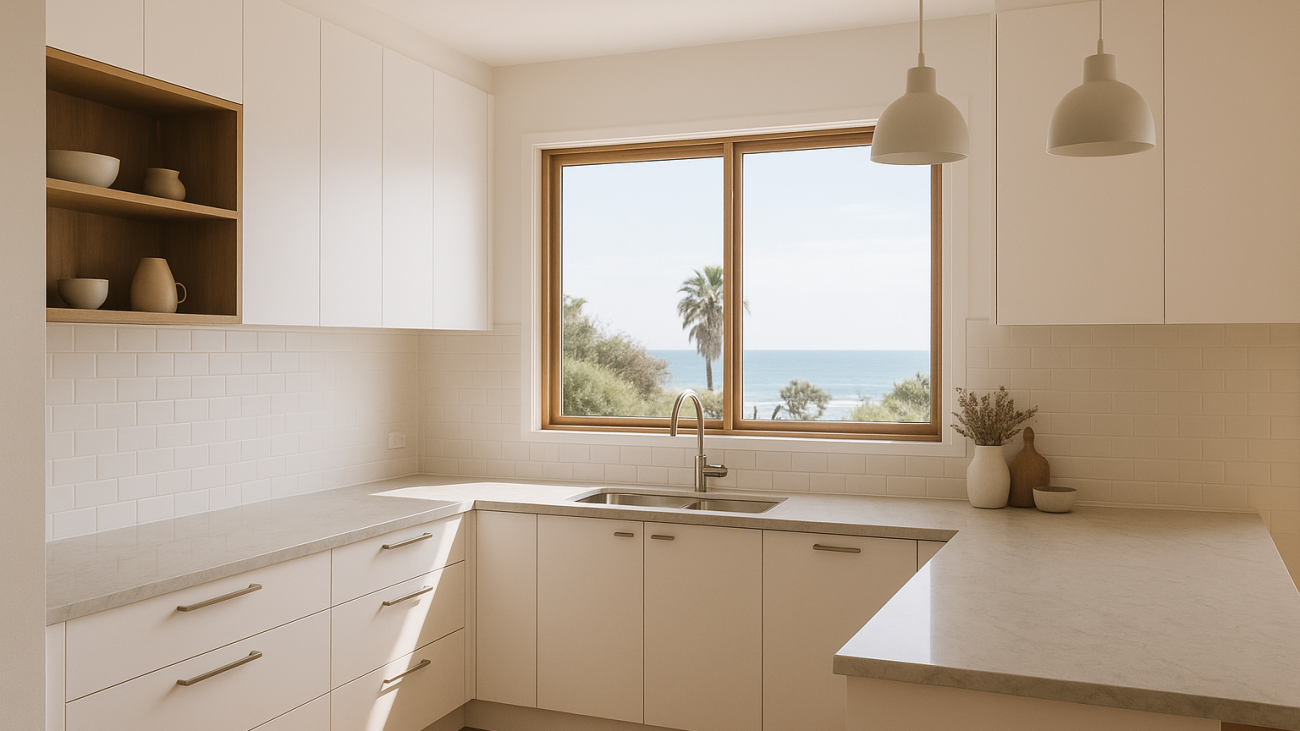
Kitchens Palm Beach: practical design choices for coastal living
A Palm Beach kitchen should look good and handle coastal wear. On the southern Gold Coast, that means constant indoor–outdoor traffic, plus humidity, salty air, UV and sand.
This guide focuses on what matters once you live with the kitchen: layout, storage, materials, finishes, ventilation, and small build details that reduce swelling, rust and cleaning.
Start with your “real life” brief
Good kitchens start with routines, not style words. Get clear on how you’ll use the space day to day before choosing colours and handles.
Ask yourself:
- Do you cook most nights, or mostly assemble/reheat? Regular cooking needs better extraction, more prep space, and heat-safe landing zones.
- How many people are in the kitchen at peak time? Family traffic and entertaining will quickly test your clearances.
- Where does the mess land first? Bags, towels, bottles, keys and chargers need a planned home.
Write down three non-negotiables, such as:
- A pantry you can actually see into
- A bin system close to prep (but not in the way)
- A landing zone near the fridge for groceries and lunches
Want ideas that keep function front and centre? See our guide to Modern kitchen designs and ideas.
What coastal living does to kitchens in Palm Beach
Coastal design is less about a “beachy look” and more about choosing materials that hold up. In Palm Beach, QLD and nearby southern Gold Coast suburbs, these issues show up fast:
- Humidity can swell low-grade boards and weaken adhesives (especially near sinks and dishwashers).
- Salt air speeds up corrosion on handles, hinges, runners, screws and tapware.
- Sand and grit scratch floors, kickboards and door bottoms.
- Strong UV through big glazing can fade or yellow some finishes.
- Indoor–outdoor flow increases dirt and moisture because the kitchen becomes a thoroughfare.
The aim: specify materials and construction details that stay stable, resist corrosion, and clean easily.
Layouts that suit Palm Beach homes
The right layout supports your daily flow, especially if you open straight to a deck, pool or alfresco. Plan using workflow zones.
Workflow zones (an easy way to plan)
- Prep zone: clear bench, boards/knives, bin close by
- Cook zone: cooktop/oven, oils/spices, heat-safe landing space
- Clean zone: sink, dishwasher, bins, cleaning storage
- Serve/entertain zone: island seating, pass-through, or a bench near the alfresco opening
Keep prep/cook/clean close together. Avoid making people walk through the cook zone to get outside.
Work triangle and clearances
The work triangle still helps in open-plan kitchens. Aim to position fridge, sink and cooktop to reduce wasted steps.
Practical guidance (your room sets the final numbers):
- Main walkways: aim for 1000–1200 mm where possible.
- In front of appliances: allow space for fridge, oven and dishwasher doors without blocking the main path.
- Island seating: keep stools out of main traffic lines where you can.
Renovation note: many older Gold Coast homes are out of level. A proper site measure matters, along with checking window heights, door swings, and fridge door clearance.
Galley kitchens (best for narrow rooms)
Galley kitchens suit long, narrow spaces and can be very efficient.
They work well if you want:
- Storage on both sides
- A clear run from fridge → sink → cooktop
Keep the walkway comfortable. If one side faces an external door, avoid placing open shelving where it will collect wind-driven grit.
L-shape kitchens (flexible and family-friendly)
L-shapes suit open-plan homes and make zoning easier.
Upgrades that help:
- Wide drawer stacks for pots, plates and pantry items
- Full-height cabinetry to the ceiling to reduce dust ledges
- A dedicated appliance zone to keep the main bench clear
If you’re connecting to an alfresco, plan a practical serving spot near the opening so guests don’t crowd the cooktop.
Island kitchens (great for entertaining, if planned well)
Islands are excellent for family life and entertaining, but only when they fit the room.
Plan your island around:
- Walkway space on all working sides
- Power for appliances and charging
- Waste (bin placement) near prep
- Seating that doesn’t block cooking
- A real prep run, not just a decorative slab
If the island becomes the main corridor to stacker doors, the kitchen will feel stressful at peak times.
U-shape kitchens (maximum storage, watch the corners)
U-shapes can be great for workflow and storage, but can feel tight if corners and appliances aren’t handled well.
If you choose a U-shape:
- Keep corners usable (corner storage, or a tidy “dead corner” solution)
- Put drawers in main zones, not cupboards
- Avoid placing the dishwasher where it blocks the main walkway when open
If the kitchen opens straight to an alfresco, make sure there’s a clear path to the door.
Coastal durability: hardware, corrosion and humidity
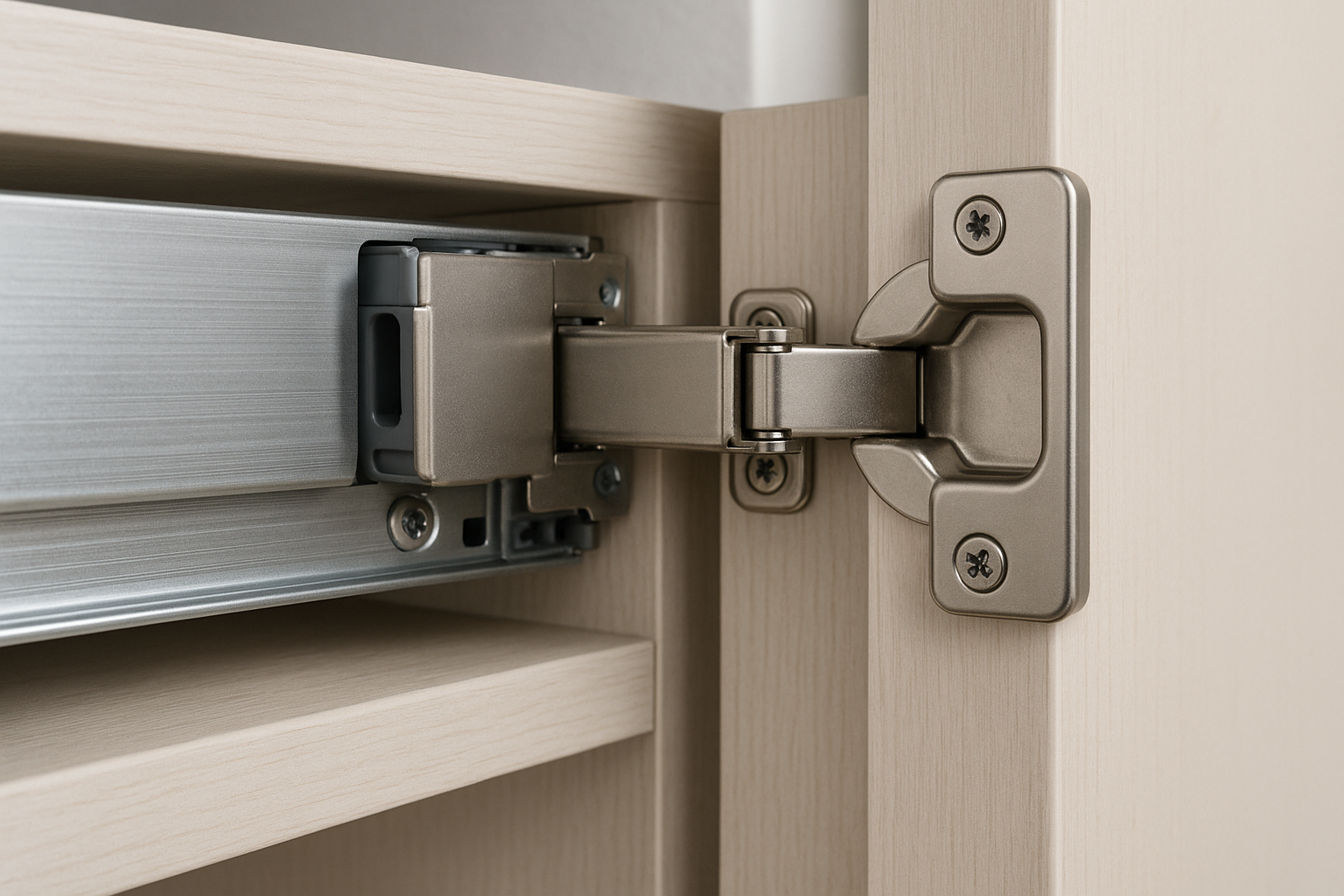
A beachside kitchen should be specified like it’s going to work harder, because it will.
Salt air corrosion: what to protect
Salt-laden air can accelerate rusting and pitting, especially on:
- Handles and knobs near doors and windows
- Hinges and drawer runners
- Sink accessories and tapware
- Screws and fixings near openings and external walls
If you keep doors open most days, ask what grade of hardware is being used and where. Expect some upkeep too: wipe exposed metal with fresh water and a soft cloth after salty weeks.
316-grade stainless: where it’s worth it
You don’t need 316 stainless everywhere. It’s most worth considering for exposed items near openings, such as:
- Screws/fixings for handles and end panels near doors
- Handles close to stacker and sliding doors
- Exposed brackets or trims that get wiped often
Rule of thumb: if it’s exposed to outside airflow and touched daily, upgrade it.
Humidity-resistant cabinetry: build it like it lives near the beach
Humidity is often the bigger long-term issue.
Look for:
- Moisture-resistant board in high-risk areas (sink, dishwasher, fridge water points)
- Quality edge-banding (thicker and properly adhered)
- Sealed cut-outs and exposed edges (sink, dishwasher, bin cabinet)
- Sealed kickboards and joins that don’t trap grime and moisture
If an edge swells, it rarely goes back to normal.
Materials that cope with coastal wear
Coastal conditions reward practical choices. Prioritise easy-clean surfaces that stay stable, especially on lower cabinetry.
Cabinet finishes: 2-pack polyurethane vs HPL laminate
Both can work well. The right choice depends on your household and how hard the kitchen will be used.
2-pack polyurethane
- Pros: smooth look, big colour range, premium finish
- Practical notes: can show chips and scratches more than laminate; repairs are possible but colour matching can be tricky
- Best for: homeowners who want a refined finish and can be a bit careful around edges
HPL laminate
- Pros: tough, easy-clean, handles knocks well
- Practical notes: edge detailing matters in humidity; sealing and edge-banding are key near sinks
- Best for: busy family kitchens and holiday homes needing low-maintenance durability
If your kitchen gets strong sun through big sliders, consider mid-tone matt finishes. They usually hide day-to-day marks better than high-gloss dark colours.
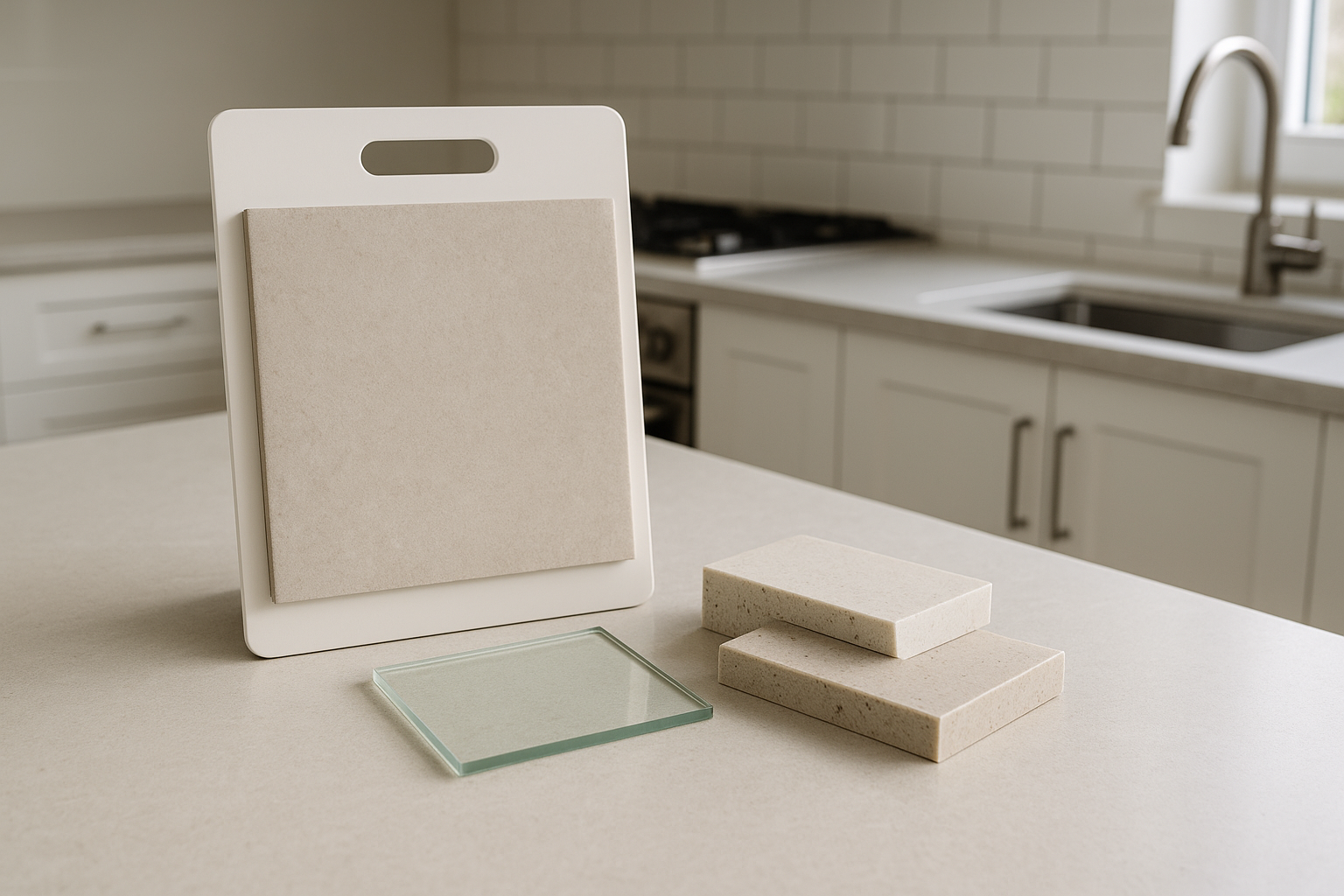
Benchtops: engineered stone, porcelain and natural stone
Choose a benchtop based on how you cook and how much maintenance you want.
Engineered stone
A popular all-rounder:
- Consistent colours and patterns
- Strong everyday durability
- Easy cleaning
Use cutting boards and avoid placing hot pans straight on the surface.
Porcelain
A strong “wipe-and-go” option:
- Excellent heat and stain resistance
- Crisp modern look (including stone-look designs)
- Low-maintenance cleaning
Discuss thickness and edge detailing early so the look matches your home.
Natural stone (and sealing)
Natural stone can look beautiful, but it is more maintenance.
- Many stones are more porous than porcelain or engineered options.
- Sealing helps reduce stains, but doesn’t make it bulletproof.
General guidance:
- Resealing is often recommended every 12–24 months (depends on stone and use).
- Clean spills quickly and use stone-safe cleaners.
In humid areas, leaving wet items on porous stone is a common cause of marks.
Splashback materials for coastal kitchens
Splashbacks set the tone, but they also take heat, steam and splatter.
Easy-clean options:
- Glass: smooth, minimal joins
- Tiles: versatile; larger formats reduce grout
- Porcelain slab: minimal joins, hard-wearing
- Stone: premium look; may need sealing
Practical rules:
- If you like small tiles, choose a grout colour you can live with.
- If you want quick wipe-downs, go larger format, glass or a slab.
- If you cook often, avoid surfaces that need special products.
For a deeper comparison, see Choosing your kitchen splash back.
Storage that stops bench clutter (and handles sand-and-life)
Storage is what makes a kitchen feel calm. In Palm Beach homes, it also needs to cope with constant in-and-out traffic and sandy gear.
Proven upgrades:
- Deep drawers for pots, pans and plates
- A proper pantry (walk-in or full-height cabinet)
- Pull-out bins near the main prep zone
- Tray storage for boards and baking trays
- Corner systems only where needed
- Broom cupboard for mops, brooms and a stick vac
- Landing zone for keys, bags, chargers or mail
Open shelves look great, but only if you’re happy wiping them regularly. Keep them away from breezeways and heavy cooking areas.
Lighting: task, ambient and feature (placed properly)
Most kitchens need layered lighting. One bright ceiling light rarely works.
Plan for:
- Task lighting: under-cabinet lighting over prep zones
- Ambient lighting: downlights positioned to reduce bench shadows
- Feature lighting: pendants over an island for mood
- Toe-kick lighting (optional): useful at night and defines cabinetry lines
Tip: confirm lighting positions early. Also avoid placing downlights where your body blocks light onto the benchtop.
Ventilation and rangehood extraction
In open-plan homes, smells travel. In humid coastal homes, moisture can linger.
Ducted vs recirculating rangehoods
- Ducted rangehoods: vent air outside and are usually better for odour and moisture.
- Recirculating rangehoods: filter and return air to the room; useful when ducting isn’t possible, but typically less effective.
If you’re ducting through a bulkhead or external wall, keep the run as short and straight as possible.
Make-up air (why it matters)
Strong extraction needs replacement air.
- Without make-up air, performance drops and noise often increases.
- Good planning can reduce condensation during heavy cooking.
If you fry often or cook with strong aromas, don’t underspec the rangehood.
Indoor–outdoor living: Palm Beach reality
Indoor–outdoor living is a big part of Palm Beach homes. It’s great for lifestyle, but the kitchen wears faster.
Plan for:
- Breeze and sand management: a drop zone near the main path, plus a broom cupboard
- Door placement and island position: avoid traffic through the cook zone
- Durable flooring transitions to alfresco areas
- sensible thresholds to reduce water ingress
- slip resistance suitable for wet feet
- correct trims so joins stay neat
If your kitchen is the thoroughfare, prioritise durable lower cabinet finishes and coastal-friendly hardware.
Palm Beach checklist (quick sense-check)
Use this to compare providers and inclusions.
Materials
- Moisture-resistant board in wet/high-risk zones (sink, dishwasher, fridge water points)
- Fully sealed cut-outs and exposed edges
- A finish that suits your household (laminate for knocks; 2-pack for a refined look)
Ventilation
- Prefer ducted extraction where possible
- Plan the duct run (shorter and straighter usually performs better)
- Allow for make-up air so the rangehood can perform
Hardware
- Coastal-appropriate hinges/runners and corrosion-resistant fixings near openings
- Consider 316 stainless for exposed pieces near stacker doors and salty breezeways
DIY kitchens vs custom kitchens
DIY kitchens can suit some projects. Coastal conditions tend to expose weak spots quickly, especially around sealing, fit and hardware.
DIY kitchens can work if
- Your room is square and consistent
- You’re confident measuring and installing
- You’re happy with a standard modular look
Custom cabinetry is usually better if
- Walls or floors are out of level (common in renovations)
- You want full-height cabinetry and a fitted finish
- You need smarter storage, not just more cupboards
- You want clear design guidance and an installation plan
Focus on what you’ll notice every day: door alignment, drawer feel, storage access and cleaning.
Keeping quality high while staying cost-aware
Most people looking for “affordable kitchens” want value, not shortcuts.
Spend where it lasts:
- Good drawer runners and hinges
- A layout that reduces wasted steps
- Benchtops and splashbacks that suit how you cook
- Coastal-friendly build details (sealing, edge-banding, moisture-resistant board where needed)
Save money by simplifying:
- Keep the door profile simple
- Limit the number of finishes
- Avoid awkward cabinet sizes
- Choose standard internal fittings unless you’ll use them daily
If you might stage the renovation, plan service locations early. Retrofitting later is harder and often more expensive.
Comparing Gold Coast and Tweed Coast kitchen providers
Many homeowners start with kitchens Palm Beach searches, then widen to Gold Coast and Tweed Coast providers. Compare capability and accountability, not just price.
Key questions:
- Do you get a proper site measure?
- Who installs it, and are they licensed?
- Are drawings clear enough to avoid surprises?
- What hardware and board products are specified (and where)?
For more on local build processes, read Building kitchens on the Gold Coast and our overview of Kitchens Gold Coast.
A quick note on “seo palm beach” searches
Some people type “seo palm beach” when they mean “services in Palm Beach”, then refine from there. If that’s how you landed here, use this page as a practical checklist of what to ask before you commit.
How Pinnacle Kitchens QLD helps
Pinnacle designs, manufactures and installs custom kitchens across the Gold Coast and South East QLD.
You can expect:
- Design consult based on how you cook and live
- 3D renders so you can see the kitchen before it’s made
- Local manufacturing
- Professional in-house licensed installers and clear installation standards
For more on the process, read Why Pinnacle Kitchens?.
Ready to plan your Palm Beach kitchen?
Book a design consult with Pinnacle Kitchens QLD for layout advice, finish selections, storage planning, and a clear path to installation.
If finance is part of your planning, ask about 48 months interest-free (T’s & C’s apply).
More ideas here: New kitchen renovation ideas to consider.
FAQs
What benchtop suits a coastal kitchen?
Porcelain and engineered stone are popular because they’re easy to clean and handle everyday wear. If you choose natural stone, plan for sealing and regular resealing to reduce staining risk.
Do I need 316 stainless near the beach?
Not for everything. 316-grade stainless is most useful for exposed handles, fixings and hardware near doors and windows where salt exposure is higher.
What cabinetry is best for humidity?
Moisture-resistant board in high-risk areas, plus quality edge-banding and proper sealing to cut-outs and exposed edges. Those details do most of the work in humid summers.
What’s the easiest splashback to keep clean?
Glass, large-format tiles, and porcelain slab splashbacks are usually easiest because they have fewer joins and less grout.
Is a ducted rangehood worth it in open-plan homes?
Usually, yes. Ducted extraction removes moisture and odours outside, which helps in open-plan and indoor–outdoor layouts. Plan for make-up air so it performs properly.
Are minimalist kitchens practical for families?
Yes, if storage is planned well. Full-height cabinetry, deep drawers, and an appliance zone help keep benches clear.
How long should I allow for a kitchen renovation decision process?
Allow time for design revisions, finish selections, and confirming appliances and plumbing locations. Locking in appliance sizes and service points early reduces costly changes.
Do I need custom cabinetry if my room is old or out of square?
Often, yes. Many renovation rooms have uneven walls and floors. Custom cabinetry with a proper site measure and professional installation usually delivers the fitted finish people expect.