
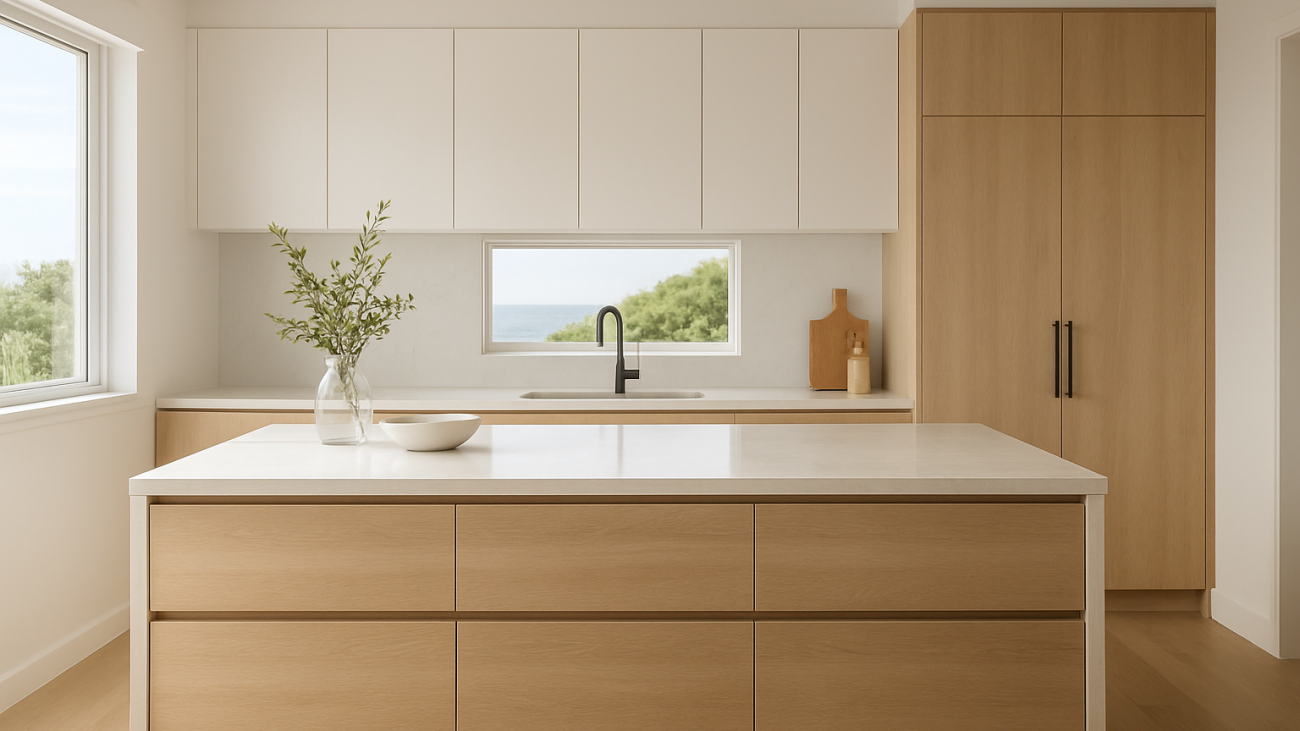
Tweed Kitchens: practical design choices that suit coastal living
If your kitchen sits at the centre of a busy home, the design needs to work hard. In Tweed and the Tweed Coast, that often means sandy feet, open doors, salty air, and a kitchen that shifts between weekday dinners and weekend entertaining.
This guide walks you through the choices that matter most in Tweed kitchens: layout, storage, materials, and the finishes that stay easy to live with. If you’re also comparing Gold Coast kitchens (including kitchens Palm Beach), the same decision-making applies.
Start with how you actually use the kitchen
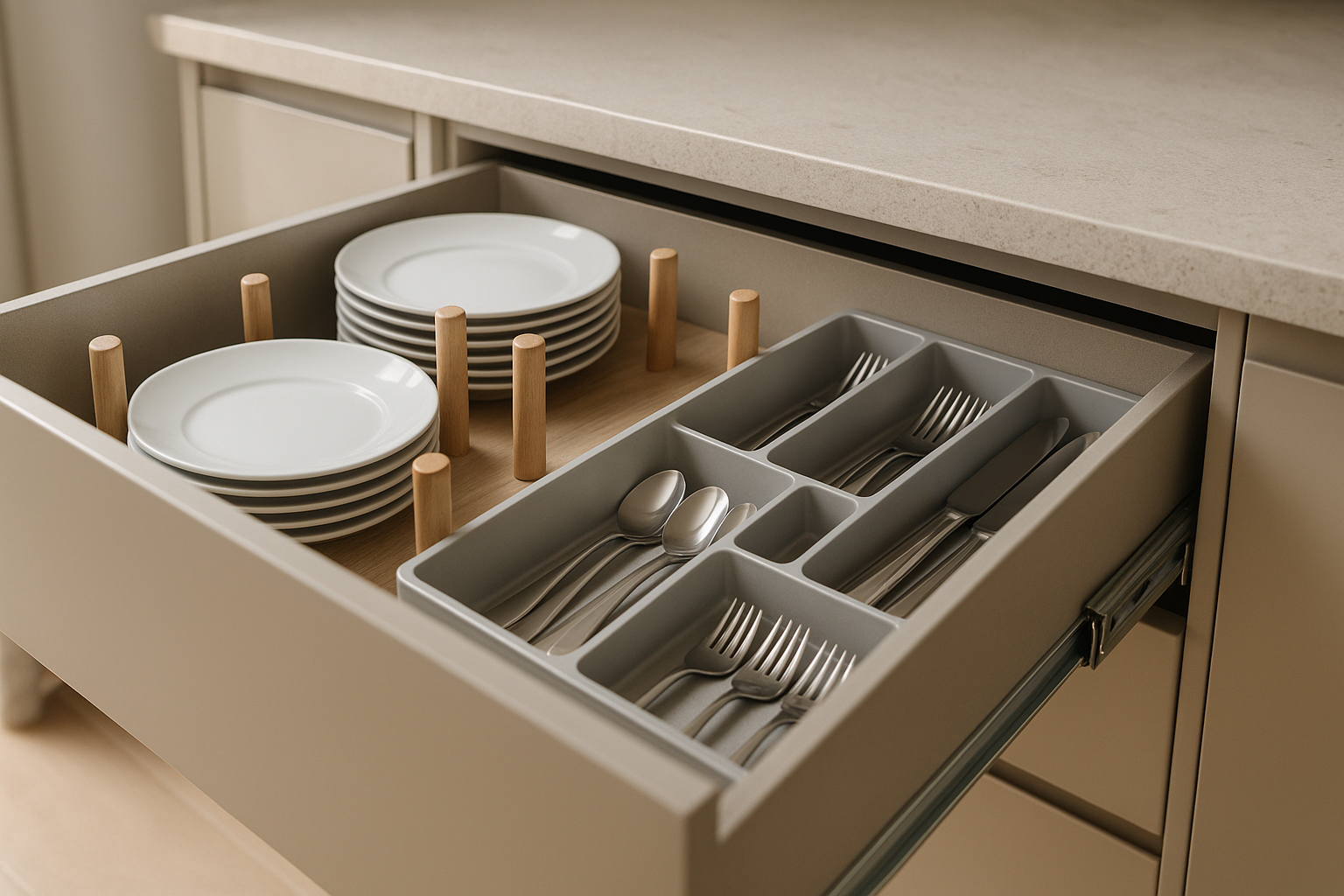
Drawers beat cupboards for everyday access and organisation.
A good-looking kitchen that’s awkward to cook in becomes frustrating fast. Before colours and handles, get clear on these:
- How often you cook: most nights, or mostly quick meals?
- Who’s in the space: kids, multiple cooks, regular guests?
- What clutters your bench: small appliances, lunch boxes, coffee gear?
- Your cleaning tolerance: wipe-and-go, or happy to maintain more detailed finishes?
Write it down. Your answers drive the layout and storage, which drive everything else.
Layout rules that suit real homes (not showrooms)
Most layout issues come down to traffic and landing space. These are the practical checks we run through in design.
1) Protect the main walkway
If people cut through your kitchen to get outside, keep the cooking zone out of the traffic line.
- Keep oven and cooktop clear of the main path.
- Place the fridge where it’s easy to access without blocking the cook.
2) Give yourself landing zones
Every key appliance needs a place to put things down.
- Fridge landing: a clear benchtop spot nearby for groceries.
- Cooktop landing: space for stirring spoons, hot pans, chopping boards.
- Sink/dishwasher landing: room for dirty dishes and drying.
If you only fix one thing in an older kitchen, fix this.
3) Size the island for use, not just looks
An island can be your prep bench, serving zone, homework station, and storage bank.
Choose the island shape and seating based on how you’ll use it:
- Prep-first homes: prioritise bench depth and drawers.
- Entertaining homes: allow space to serve without leaning over the cook.
- Families: make sure stools don’t block the main walkway.
Storage that keeps benchtops clear (and stress down)
Minimalist kitchens look calm because the storage is doing the heavy lifting.
Drawers are your best friend
Use drawers for the things you reach for daily:
- pots and pans
- plates and bowls
- containers
- pantry staples near the prep zone
Deep drawers reduce bending and rummaging. They also make “everything has a place” realistic.
Plan a full-height pantry
A full-height pantry (cabinetry that runs to the ceiling) gives you volume without eating up extra floor space.
For busy kitchens, add:
- pull-out shelves where suitable
- a zone for snacks and lunch items at kid-friendly height
- a spot for the bin system near prep
Make appliances disappear (without losing access)
If your benchtop is always crowded, plan one of these:
- appliance cabinet with internal power (for toaster, coffee machine)
- butler’s pantry if space allows
- a dedicated microwave tower at a safe, practical height
Materials and finishes for coastal conditions
Coastal homes ask a bit more from cabinetry and finishes. You want surfaces that wipe clean and hardware that keeps feeling solid.
Cabinetry: choose durability you can feel
Ask about:
- cabinet board quality and edging (edges are where wear shows first)
- hinges and drawer runners (soft-close is the daily comfort upgrade)
- moisture management around sinks and dishwashers
A kitchen can look the same on day one and perform very differently by year five.
Benchtops: pick the surface that matches your habits
The right benchtop is the one that suits your real cooking and cleaning.
- If you cook most nights, prioritise stain resistance and easy wiping.
- If you bake often, prioritise heat and scratch tolerance.
Bring your top two options into the light and look at them in your home. Coastal daylight changes colours fast.
Splashbacks: make cleaning part of the decision
A splashback is a practical surface first, a design feature second.
If you want a deeper run-through, read: choosing your kitchen splash back.
Quick guide:
- Tiles: classic look, but grout means more cleaning.
- Glass or full-height smooth surfaces: quick wipe-down, strong for heavy cooking zones.
Style direction: minimalist, coastal, boutique—without being precious
A lot of Tweed kitchens sit between relaxed coastal and clean modern.
Minimalist kitchens that still feel warm
Minimal doesn’t mean cold. These choices keep it grounded:
- matte or satin cabinetry (less glare, hides fingerprints better)
- timber accents in a limited, repeatable way (shelves, panels, stools)
- simple handle choices that feel good in hand
For modern inspiration that still suits daily life, see: modern kitchen designs and ideas.
Boutique kitchens: where to spend for impact
If you like boutique kitchens, spend where it’s seen and used:
- feature lighting over an island
- a standout splashback
- a strong benchtop edge detail
- quality hardware you touch every day
Keep the rest calm and consistent so it doesn’t date quickly.
“Affordable kitchens” without the regrets
Affordability should come from smart choices, not fragile finishes.
To keep a kitchen at a competitive price while protecting quality:
- Choose a simple cabinet door profile (clean lines cost less to manufacture).
- Reduce awkward corners and complicated angles.
- Use fewer materials, repeated well (one benchtop, one main cabinet colour).
- Spend on drawers and storage, not extra display shelves you never use.
If you’re comparing new kitchens Gold Coast options against Tweed Coast kitchens, ask each company the same questions: what’s included, who installs, and what hardware and board specs are standard.
DIY kitchens vs custom design and install
DIY kitchens can suit a laundry or a simple straight-line kitchen if you have time and patience.
For main kitchens, the hard parts are:
- accurate measuring in older homes (walls are rarely straight)
- aligning plumbing and electrical with the cabinet plan
- achieving tight, even gaps at the end panels and fillers
If you want a finished look with fewer moving parts, a custom design, local manufacturing, and professional installation is the cleanest path.
What a good kitchen process looks like
You deserve clear steps and clear decisions.
A solid process includes:
- On-site consult and measure (so the design suits the real room)
- Layout planning around workflow, storage, and clearances
- 3D rendered drawings so you can see the result before committing
- Materials and finish selections matched to use and cleaning
- Manufacture and installation, coordinated with trades
If you want a broader view of timing and project flow, read: Building kitchens on the Gold Coast.
Planning to renovate? Use this Tweed kitchen checklist
Before you lock in your design, confirm these items are decided:
- Bin location (and how it opens)
- Power points for appliances (inside cabinets where needed)
- Pantry type: shelves, drawers, or pull-outs
- Lighting plan: task lighting on prep areas
- Rangehood ducting path (where it vents)
- Fridge size and door swing
- Splashback height and cleaning preference
These decisions prevent the common “we didn’t think of that” moments.
Ready to plan your Tweed kitchen with a clear design and install pathway?
If you’re researching tweed kitchens because you want a kitchen that works better day to day, we can help you make confident choices early.
The Pinnacle Kitchen Company designs, manufactures in South East QLD, and installs with in-house licensed installers. You’ll see your kitchen in 3D before it’s built, so the layout and finishes are settled upfront.
If you’d like to talk through your space and budget, reach out to Pinnacle Kitchens to book a design consult. Ask about our 48 months interest-free option (T’s & C’s apply) if you’d like to keep cash free for other parts of your renovation.
For more context on our approach, read: Why Pinnacle Kitchens?.
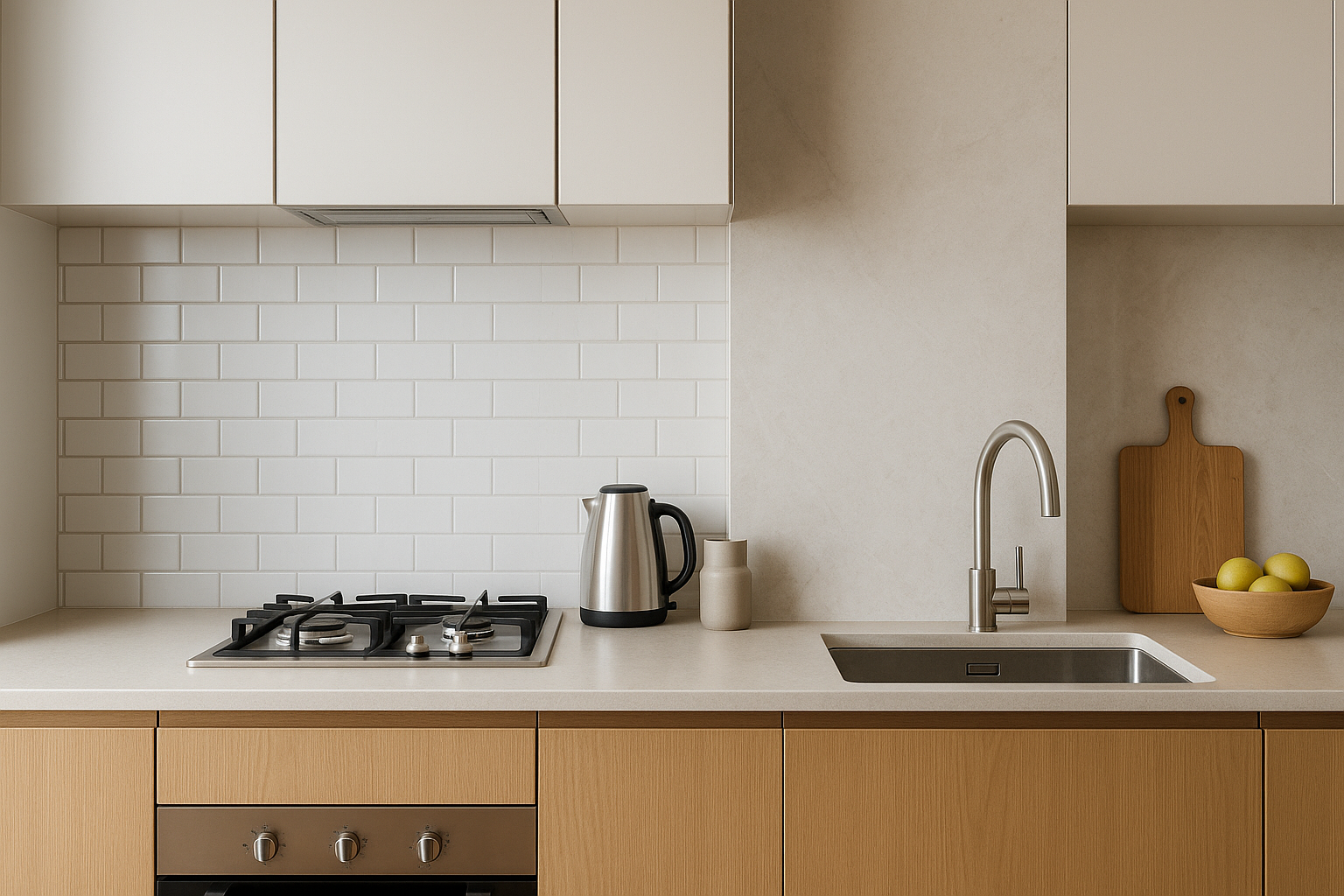
Choose a splashback based on how you cook and how often you want to clean grout lines.
FAQs
What should I prioritise in a Tweed kitchen renovation?
Start with layout and storage. Get the fridge, sink, cooktop and bins working as a tidy workflow, then lock in drawers, pantry space and benchtop landing areas. After that, choose finishes suited to coastal humidity and easy cleaning.
Are minimalist kitchens practical for families?
Yes, if the storage is planned properly. Minimalist kitchens need enough closed storage to keep benchtops clear: deep drawers for plates and cookware, a full-height pantry (cabinetry that runs to the ceiling), and a dedicated appliance space so the toaster and air fryer don’t live on the benchtop.
What materials hold up best in coastal homes?
Choose finishes that clean easily and handle daily wear: quality cabinet board with durable edging, moisture-resistant detailing where needed, and reliable hardware (hinges and drawer runners). For benchtops, pick a surface that suits your cooking habits and cleaning routine, then match the splashback to the level of splatter you actually create.
Is a DIY kitchen a good idea?
DIY kitchens suit simple layouts if you’re confident measuring, organising trades, and fixing issues on the fly. The risk is gaps, uneven walls, and services (plumbing and electrical) not lining up with flat-pack cabinetry. If you want tight finishes and fewer surprises, a measured, manufactured and installed kitchen is the safer path.
How long does a custom kitchen take from design to installation?
Timeframes vary based on selections, approvals, and site readiness. A good process includes an on-site measure, 3D design sign-off, manufacturing, then installation. Your designer should confirm lead times once your design and materials are locked in.
Can I get an affordable kitchen without it feeling basic?
Yes. Put your budget into the parts you touch every day: quality drawer runners, practical storage, and a durable benchtop. Keep costs sensible by choosing a clean door profile, limiting tricky corners, and using one or two standout features (like feature lighting or a strong splashback) instead of many small upgrades.