
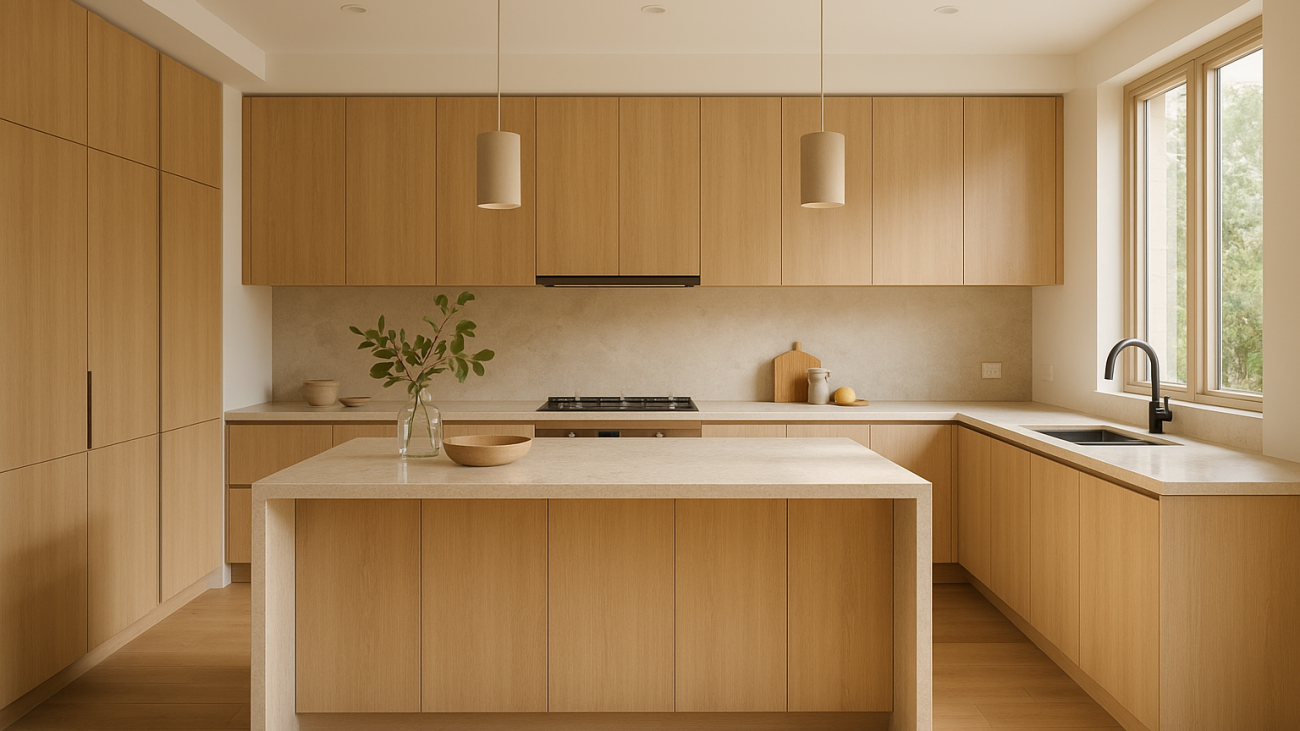
Renovating a Kitchen: A Practical DIY-First Guide (and When to Call the Pros)
If your current kitchen makes you do laps just to make a coffee, your renovation is already overdue.
Most people start with a few kitchen design ideas and a mood board. Then reality hits: power points, bin storage, clearances, splashback choices, trade bookings, and a timeline that still lets you cook dinner.
This guide is written for homeowners in the Gold Coast and South East Queensland who want straight answers on renovating a kitchen. It covers what you can do yourself, what needs licensed trades, and how to get a finished result that feels built-in, not bolted on.
Start with one decision: keep the layout, or change it
This is the fork in the road that shapes your cost, timing, and stress.
Keep the same layout if you:
- Like where the sink, cooktop, and fridge sit
- Want a simpler basic kitchen renovation
- Prefer fewer trade changes and less wall repair
Change the layout if you:
- Need a better workflow (prep area, landing space, and a real pantry)
- Have traffic cutting through the cooking zone
- Want an island or breakfast seating that actually fits
If you are shifting plumbing or major electrical runs, lock in your plan early. Layout changes have a flow-on effect to cabinetry sizes, appliance placement, and lighting.
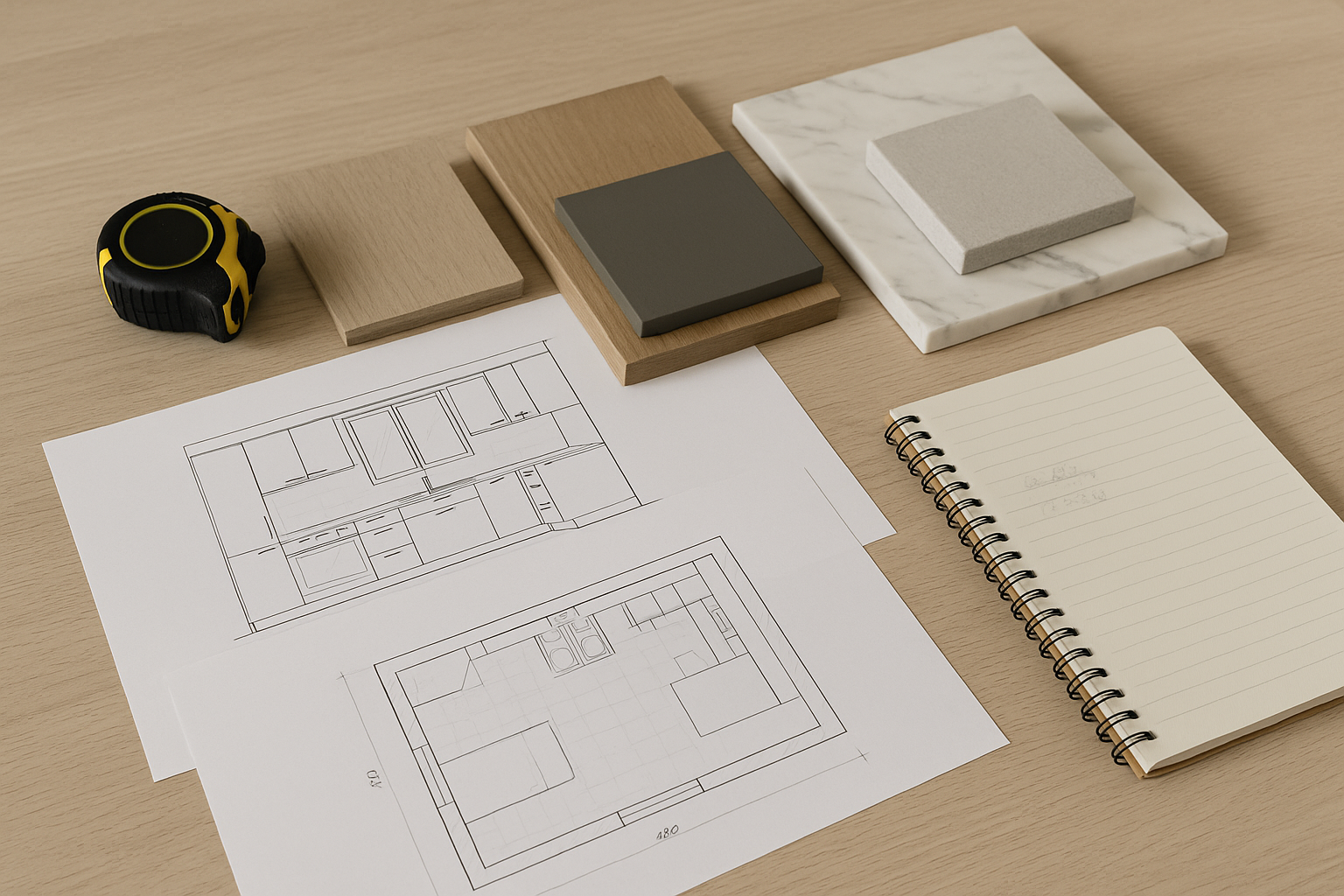
Measure properly (or accept rework later)
Kitchen renovations fail on millimetres.
Before you order anything, confirm:
- Wall lengths at bench height and ceiling height (they are rarely the same)
- Window and door positions, architraves, and skirting
- Ceiling height and any bulkheads
- Where services enter: water, waste, gas (if you have it), and power
Old homes and even newer builds can be out of square. That matters for DIY kitchen cabinets and full-height pantry runs.
If you plan on a clean “to the ceiling” look, your set-out must account for ceiling variation. This is where custom cabinetry and a professional install can save time and patching.
Kitchen design that works: zones beat “triangle” rules
Forget design rules that don’t match how you live.
Use zones instead:
- Storage zone: fridge, pantry, everyday plates and cups
- Prep zone: clear bench space near the sink, knives, chopping boards, bins
- Cooking zone: cooktop, oven, utensils, oils and spices
- Clean-up zone: sink, dishwasher, cleaning cupboard, waste and recycling
Two practical checks:
- Landing space: You need bench space next to the cooktop and next to the fridge.
- Traffic line: Keep walkways out of the cooking zone where possible.
For kitchen design ideas that suit modern Australian homes, see our guide to Modern kitchen designs and ideas.
Storage choices that change daily life
Good storage is what makes a kitchen feel calm.
Use this shortlist as your baseline:
- Deep drawers under the cooktop for pots and pans (easier than base cupboards)
- Full-height pantry (cabinetry that runs to the ceiling) for real food storage
- Bin drawer near the main prep space, not across the room
- Tray divider for boards and baking trays
- Corner solution only if you can’t redesign the run (corners cost money and still waste space)
If you cook most nights, prioritise drawers over doors. If you entertain, plan a clear “drop zone” for platters and drinks.
Materials and finishes: choose what survives real Kitchens
A kitchen gets heat, steam, spills, and constant cleaning. Pick finishes based on how you actually use the room.
Cabinet finish
- Matte doors hide fingerprints better than high gloss.
- Textured finishes look great, but check how they clean around handles.
- Durable edging matters. Doors and panels cop wear at the dishwasher, bin, and corners.
Hardware
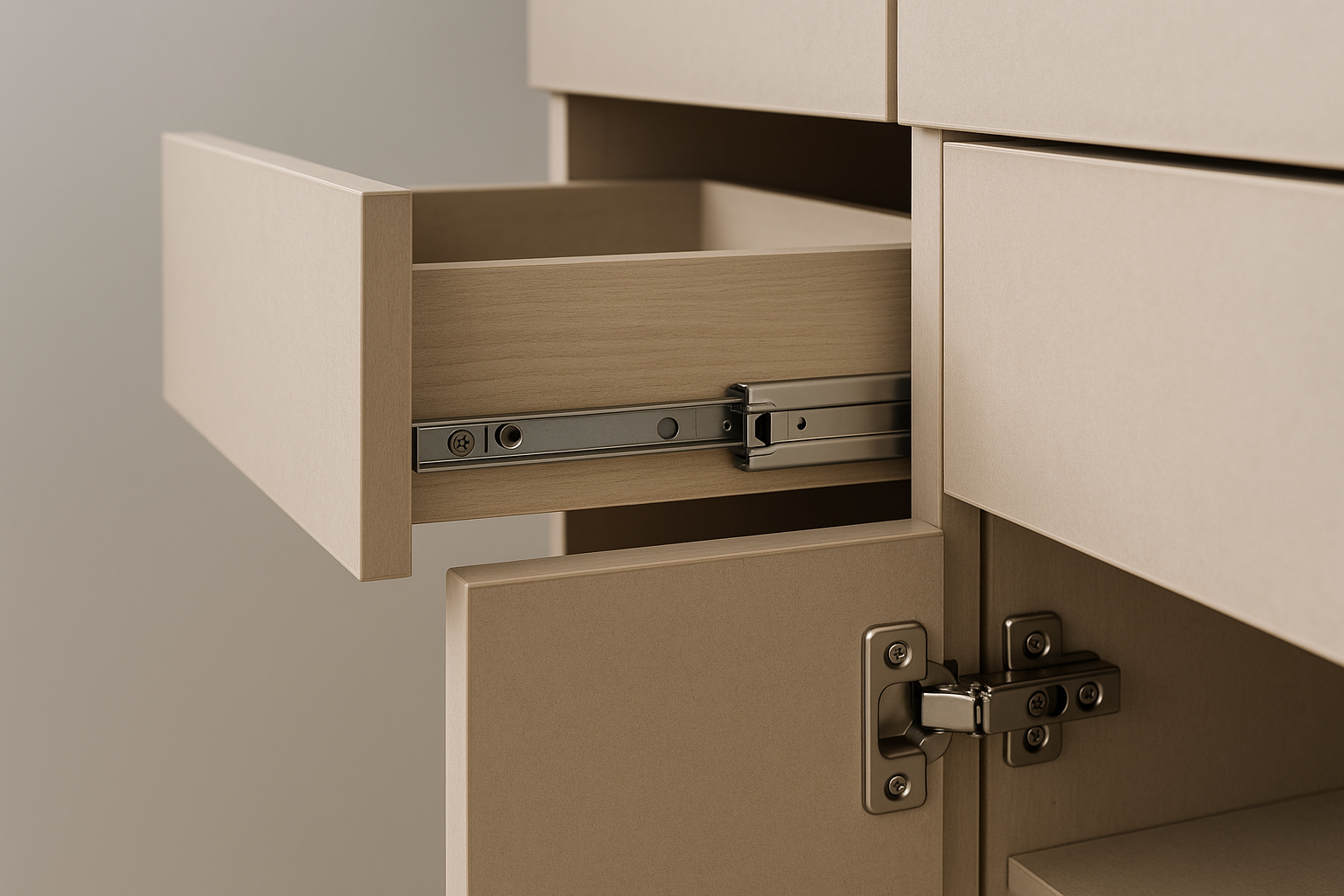
Soft-close hinges and runners are the standard many homeowners expect now. The bigger issue is correct installation and adjustment so doors don’t rub and drawers stay aligned.
Benchtops
- If you want a low-fuss surface, choose something that suits your cleaning habits.
- Confirm overhangs, seams, and how the sink is mounted (top-mount, undermount, or integrated).
Splashback
Your splashback should match how you cook.
- Glass: easy to wipe, clean lines
- Large-format tiles: fewer grout lines to scrub
- Small tiles: lots of grout maintenance near the cooktop
If you’re weighing up options, read Choosing your kitchen splash back.
The big DIY question: can I renovate my kitchen myself?
You can take on parts of a DIY kitchen renovation and still get a professional finish.
Here’s a clear split.
DIY-friendly tasks
- Removing old cabinets (carefully, and with dust control)
- Patch and paint
- Flat-pack assembly (if you’re organised and accurate)
- Fitting handles, internal accessories, and simple shelves
Tasks that need licensed trades or specialist install
- Electrical work and certification
- Plumbing work and certification
- Gas work (if applicable)
- Stone benchtop handling and installation
If you’re asking “can I fit a kitchen myself?”, the honest answer is yes for simple rooms with straight walls and floors. The risk is the set-out. A few millimetres out at the start becomes a visible gap at the end.
Many “best DIY kitchens” results come from a hybrid approach: you do the demolition and prep, then bring in a professional to install and align cabinetry and panels.
A step-by-step order that protects your timeline
Kitchen renovations stall when decisions are made too late.
Use this order:
- Lock in your brief: who cooks, how often, what you hate now, what you must keep.
- Confirm appliances early: cooktop size, oven type, rangehood model, fridge width, dishwasher height.
- Kitchen design and check measure: finalise cabinet sizes and clearances.
- Select finishes: door colour, benchtop, handles, sink, tapware, splashback.
- Book trades: align dates with cabinet install and benchtop lead time.
- Demo and make-good: patching, painting, floor prep.
- Rough-in services: plumbing and electrical before cabinets go in.
- Install cabinetry: set-out, fixing, door/drawer alignment.
- Benchtop measure then install: after cabinets are installed.
- Splashback: after benchtop, before final fit-off (depending on material).
- Fit-off: electrician and plumber finish connections and compliance.
- Final adjustments: silicone, door alignment, soft-close tuning.
This is one of the best kitchen remodelling tips to follow: don’t order cabinets before your appliance specs are confirmed. “Standard size” appliances vary between brands.
Kitchen cabinet remodel: keep the carcasses or start fresh?
A kitchen cabinet remodel can mean different things:
- Replace doors and panels only
- Keep layout but replace all cabinets and benchtops
- Full strip-out and redesign
Replacing doors can work if your cabinet boxes are solid, square, and the layout still works.
Start fresh if:
- You want drawers instead of cupboards
- You need better pantry storage
- The existing cabinet boxes are swollen, uneven, or poorly fixed
- You’re changing benchtop thickness or appliance positions
If you are planning DIY kitchen cupboards or DIY kitchen cabinets, measure twice and plan for filler panels. Real rooms are rarely perfectly square.
Lighting and power: plan for how you actually use the bench
Lighting is one of the most overlooked parts of kitchen design.
Aim for:
- Bright task light over prep areas (under-cabinet lighting works well)
- Even ambient light so the kitchen doesn’t feel harsh at night
- Power points where you use appliances: kettle, toaster, coffee machine, stick mixer
Also decide early where the bins go, and where you’ll charge devices. A kitchen DIY approach often misses these details until after the cabinets are in.
What “best diy kitchens” have in common
The best DIY kitchens aren’t defined by a brand. They share the same fundamentals:
- A layout that suits how you cook
- Drawers where you need them
- A splashback and benchtop that are easy to clean
- Accurate set-out and tidy finishing lines
- Trades booked in the right order
That’s why many homeowners mix DIY effort with professional design and installation.
If you want help: get a design that’s ready to build
If you’re renovating a kitchen and want certainty on layout, measurements, and finish selections, we can help you move from ideas to a buildable plan.
Pinnacle Kitchens designs, manufactures, and installs custom kitchens in South East QLD. We can also guide you through choices that affect day-to-day use: storage, clearances, lighting, and surfaces.
If you’re comparing local options, these may help:
- Building kitchens on the Gold Coast
- Why Pinnacle Kitchens?
- A look at a recently finished kitchen in Brisbane East
Ready to price your kitchen renovation?
Bring your rough measurements, a few inspiration images, and your appliance wish list.
Contact Pinnacle Kitchens to book a design consult and get 3D rendered drawings for your new kitchen. Ask about 48 months interest-free (T’s & C’s apply) if you’d like to spread the cost.
Quick FAQs (copy-ready)
Can I renovate my kitchen myself?
You can handle demo, painting, and some cabinet work, but plumbing and electrical must be done by licensed trades. Benchtops like stone also need specialist installation.
Can I fit a kitchen myself?
Yes for simple spaces and flat-pack cabinetry, but the finish depends on accurate set-out, wall straightness, and alignment. Professional installation often costs less than fixing gaps and misaligned doors.
What is included in a basic kitchen renovation?
Most include new cabinets, benchtops, sink and tap, splashback, appliances as required, lighting updates, and painting. Keeping the same layout reduces trade changes.
What order should the renovation happen in?
Design and appliance selection first, then demo, rough-in, cabinetry install, benchtops, splashback, and final fit-off. Confirm appliance specs before cabinets are made.
How do I choose between DIY kitchen cabinets and custom cabinetry?
DIY suits standard sizes and straight rooms. Custom is better for tight spaces, ceiling-height storage, and a cleaner built-in finish with fewer filler panels.
What are the biggest renovation mistakes?
Poor layout for traffic, not planning bins and pantry storage, under-planning power and lighting, and ordering cabinets before confirming appliance sizes.