
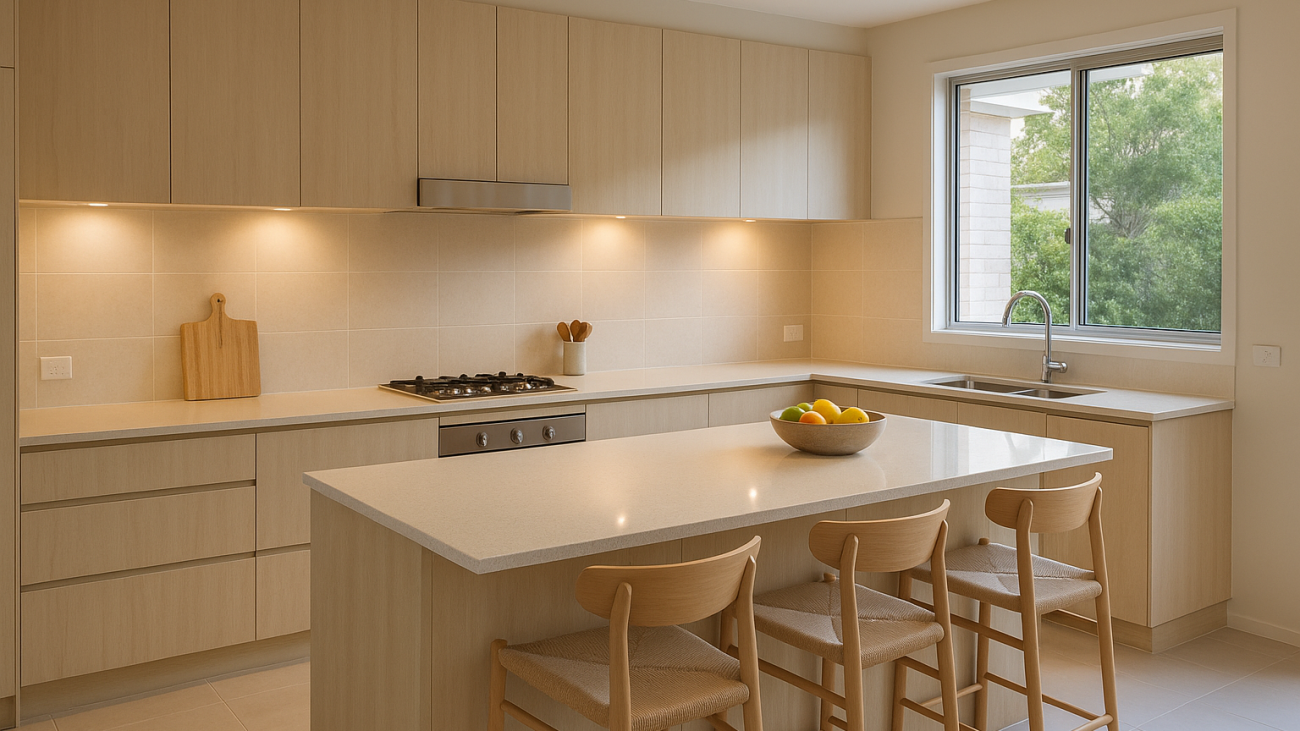
.com.au cost guide and budget planning: a straight kitchen renovation budget method for Australian homes
If you’ve been saving screenshots and collecting quotes, you’ve probably noticed one thing: kitchen prices can look wildly different for kitchens that seem similar.
That’s because “a kitchen” isn’t one item. It’s a set of linked decisions: layout, cabinetry build, hardware, benchtops, appliances, trades, and the condition of your home once the old kitchen is removed.
This .com.au cost guide and budget planning article is written for Australian homeowners who want a clear way to plan costs before they sign anything. It’s also written for Gold Coast conditions, where older homes, apartments, and open-plan living can change the scope fast.
Start with your non-negotiables (this stops budget drift)
Before colours and handles, lock in three decisions. These shape your spend more than anything else.
- What stays in place?
- Keep sink, cooktop and fridge in the same zone if your budget is tight.
- Move one key item if function demands it.
- What layout suits your life?
Your kitchen design and layout should match how you actually cook.
- If you cook most nights: plan a strong prep zone near the sink and bins.
- If you entertain: prioritise island seating, landing space near the oven, and a clear path to the dining area.
- If you have kids: set up a snack drawer and keep hot zones out of traffic.
- What appliance level are you buying?
Appliances affect cabinetry sizes, ventilation, power, and sometimes benchtop choices.
If you’re asking, “i’m planning a kitchen remodel; where can i find stylish and functional appliances?”, start by listing your must-haves (induction, double oven, integrated dishwasher, wider fridge). Then design cabinetry around those exact dimensions and clearance needs.
The cost buckets that make quotes easier to compare
For kitchen planning, treat your budget like a set of buckets. Each bucket has a role, and each has common blowout triggers.
Bucket 1: Design, measure, and documentation
A proper kitchen planning guide starts with accurate site measure and a layout that works in real life.
Look for:
- a measured plan (not “rough dimensions”)
- clear cabinet specifications
- 3D rendered drawings to check proportions and finishes
3D is not a luxury. It helps you spot problems early: fridge door swing, island spacing, and whether overheads feel heavy.
Bucket 2: Cabinetry (the backbone of the project)
Cabinetry costs vary with:
- drawer count (drawers cost more than doors, but they store better)
- pantry style: full-height pantry (cabinetry that runs to the ceiling) vs standard pantry
- hardware: soft-close hinges and quality drawer runners
- internal storage: bin systems, corner solutions, tray dividers
- finish: durable laminates vs 2-pack painted doors (painted finish that needs careful handling and curing)
If you are researching “+custom +kitchen +cost +gold +coast”, ask what is included in the cabinet build and install, not just the headline price. A custom kitchen that is locally manufactured and installed by a consistent team reduces delays and handover gaps.
Bucket 3: Benchtops
Your benchtop choice is a feel-and-function decision.
Common options:
- Laminate: cost-effective, plenty of colours, watch heat and seam placement.
- Engineered stone: strong daily durability and clean lines; confirm edge profile and cut-out details.
- Porcelain: hard-wearing and heat resistant; check thickness, joins, and support needs.
Budget triggers:
- waterfall ends
- extra-thick edges
- undermount sink cut-outs and drainer grooves
- long spans requiring extra support
Bucket 4: Splashback
Splashbacks sit in your sightline, so they should match the cabinet and benchtop colours.
Choices that affect cost:
- tiled splashback (tile size and grout choice matter for cleaning)
- glass (simple and easy to wipe)
- stone or porcelain full-height (often more expensive, fewer joins)
Bucket 5: Appliances and ventilation
This is where new kitchen planning often goes sideways, because appliances are chosen late.
Set a realistic allowance, then confirm:
- cooktop width and power requirements
- rangehood extraction method (ducted vs recirculating)
- oven and microwave tower clearances
- fridge airflow requirements and door swing
A strong kitchen planning guide always includes ventilation. It protects cabinetry finishes and keeps the space comfortable.
Bucket 6: Trades (electrical, plumbing, patching)
Trade costs depend on what moves.
Expect more spend if you:
- relocate sink or gas/electric cooking
- add more circuits for induction or extra ovens
- install new lighting zones (task, ambient, feature)
- repair walls after removing old tiles or bulkheads
Bucket 7: Flooring, painting, and the “edges” of the room
A kitchen and floor renovation can be smart if your flooring is tired or if you want a continuous finish through living areas.
Cost drivers:
- levelling compounds for uneven slabs
- transitions to adjacent rooms
- skirting and architraves that need rework
- repainting where new cabinetry changes wall lines
If you’ve searched “budget kitchen renovation nerang”, be careful with the word “budget”. The safest savings come from layout discipline and finish choices that wear well, not from rushing prep work or cutting install standards.
Bucket 8: Demolition, rubbish removal, and site protection
These are easy to forget in a DIY kitchen remodel guide.
Allow for:
- disconnecting and making services safe
- removal of old cabinetry, tiles, and appliances
- protecting floors and access ways during installation
Bucket 9: Contingency (you will use some of it)
Once the old kitchen is out, real conditions show up.
Set aside a buffer for:
- out-of-level walls and floors
- water damage in sink cabinets
- electrical upgrades needed to meet current expectations
- patching and repainting beyond the kitchen line
A practical budget planning example (so you can sanity-check your quote)
Here’s a simple way to build your budget without guessing.
Scenario: You’re planning a kitchen renovation in an open-plan Gold Coast home. You want an island, more drawers, and better storage. You keep the sink zone close to existing plumbing, and you upgrade appliances.
Your working budget can be built like this:
- Cabinetry + installation: your main spend, tied to layout and storage
- Benchtops: chosen based on durability and edge details
- Appliances + ventilation: selected early to lock sizes and power needs
- Electrical + lighting: task lighting under overheads, pendant points over island if you want them
- Splashback: chosen for cleaning and colour balance
- Flooring + painting: decided based on whether the kitchen joins other rooms
- Demolition + rubbish: planned so install days are not delayed
- Contingency: held until demolition is complete
This approach makes quotes comparable. You can see whether one quote is low because it excludes electrical changes, skips quality hardware, or assumes you will organise demolition.
Where to spend (and where to hold back) for a kitchen that lasts
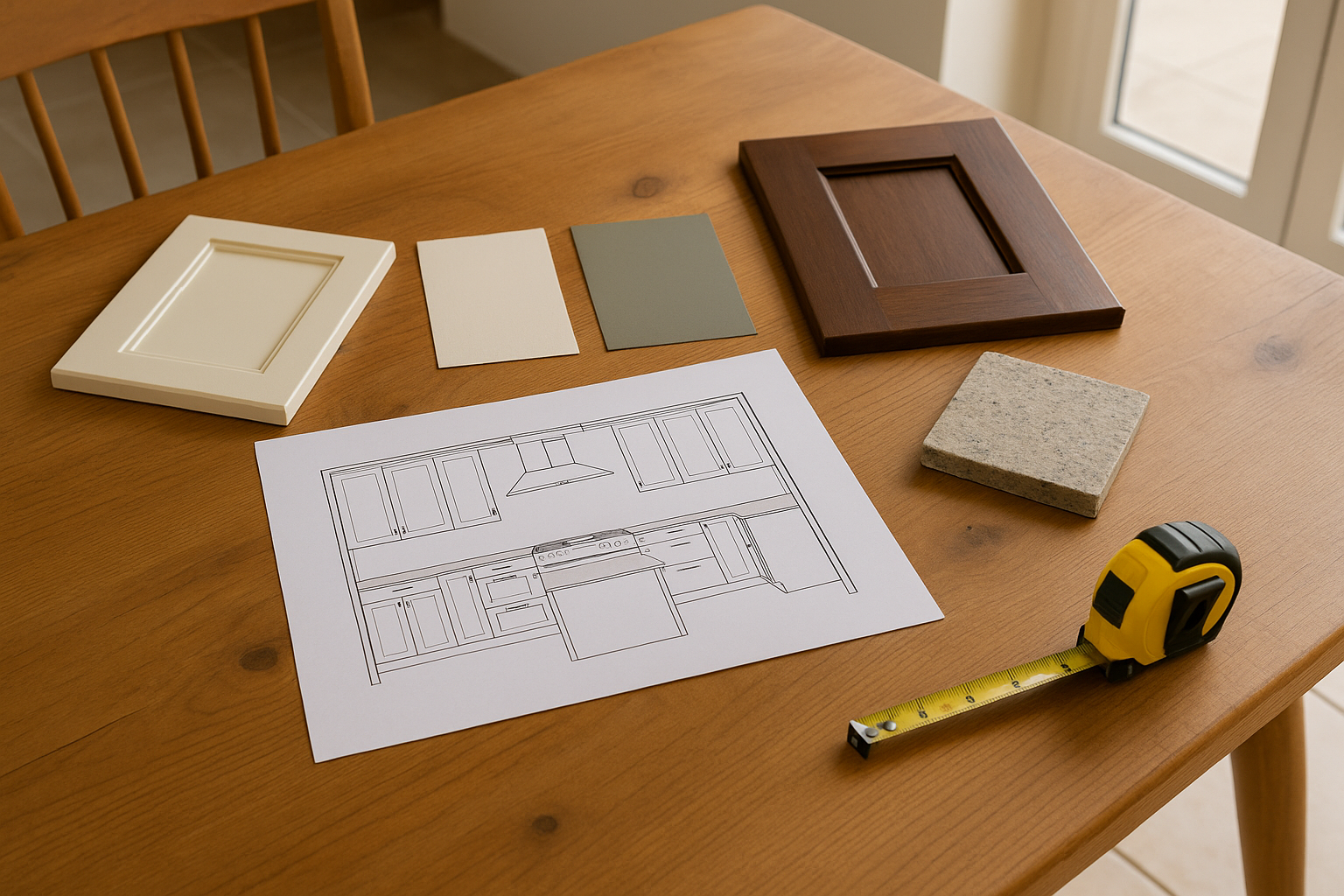
If you want a kitchen that still feels good in ten years, spend on the parts you touch daily.
Spend here
- Drawer systems for pots, pans, and plates
- Bins in the right place (near prep, not across the room)
- Durable cabinet finishes suited to your cleaning routine
- Ventilation matched to your cooktop
- Lighting: bright task light at prep and cook zones
Hold back here
- Too many “feature” elements in one kitchen (busy designs date quickly)
- Oversized islands that crush walkways and force awkward traffic
- Extra-thick benchtop edges and waterfall panels that add cost without adding function
Kitchen planning checks that prevent expensive rework
Use these checks during new kitchen planning and design sign-off:
- Walkways: Can two people pass without bumping? Avoid pinch points at fridge and oven.
- Fridge landing space: You need a clear bench spot to put groceries down.
- Bin location: Put it where you prep, not where it looks neat.
- Power points: Plan for kettle, toaster, coffee machine, charging drawer, and appliance garage if you want one.
- Door swings: Fridge, dishwasher, oven, and corner doors must not clash.
- Storage height: Daily items between shoulder and knee height. Heavy items low.
These details are the difference between a kitchen that photographs well and a kitchen that works.
Comparing companies: the .com.au checks that matter
A .com.au business website can look polished, but you still need real project clarity before you commit.
Ask these straight questions:
- Who designs the kitchen, and how many design revisions are included?
- Is the cabinetry manufactured locally, and what lead time should you plan for?
- Who installs the kitchen? Are installers in-house and licensed?
- What hardware brands and runner types are specified in the quote?
- What is included in the install: removal, plumbing/electrical coordination, rubbish, patching?
For homeowners searching “kitchen renovation before and after gold coast”, photos help, but process matters more. You want a team that measures properly, documents clearly, and installs to a consistent standard.
If you are trying to keep costs controlled: choose one “hero” upgrade
Trying to upgrade everything at once is where budgets break.
Choose one hero upgrade that changes daily use:
- a better island layout with more drawers
- a full-height pantry for storage
- a strong appliance and ventilation package
- improved lighting and power planning
Then keep the rest calm and durable.
Ready for a clear plan and a quote that matches your goals?
If you’re planning a kitchen renovation on the Gold Coast or in South East Queensland, bring your rough measurements, inspiration images, and appliance wish list. We’ll help you turn that into a working layout and a budget you can defend.
Pinnacle Kitchens designs, manufactures in South East QLD, and installs with licensed in-house installers. You’ll also see 3D rendered drawings during design so you can approve the details with confidence.
Ask us about 48 months interest-free (T’s & C’s apply) if you’d like to spread the cost while keeping the kitchen spec where it should be.
Quick FAQs (copy-ready)
How do I keep my kitchen renovation on budget?
Lock the layout early, choose appliances early, and spend on storage and hardware. Keep finishes durable and avoid adding multiple feature elements.
What’s the best layout for a family kitchen?
A layout with clear zones: prep near sink and bins, cooking with good ventilation, and a separate snack or beverage area to keep traffic out of the hot zone.
Can I renovate my kitchen and flooring at the same time?
Yes. It’s often easier to get clean transitions and a consistent finish. Plan the order of works so cabinetry install isn’t delayed.
What should be included in a kitchen quote?
Design and documentation, cabinetry specifications, hardware details, installation scope, and clear allowances for benchtops, appliances, and trades.
How do I choose finishes that won’t date quickly?
Use a calm base (cabinet colour and benchtop), then add personality with lighting, handles, and stools that are easier to update later.