
Minimalist Kitchens: practical design rules that keep your kitchen clear (not empty)
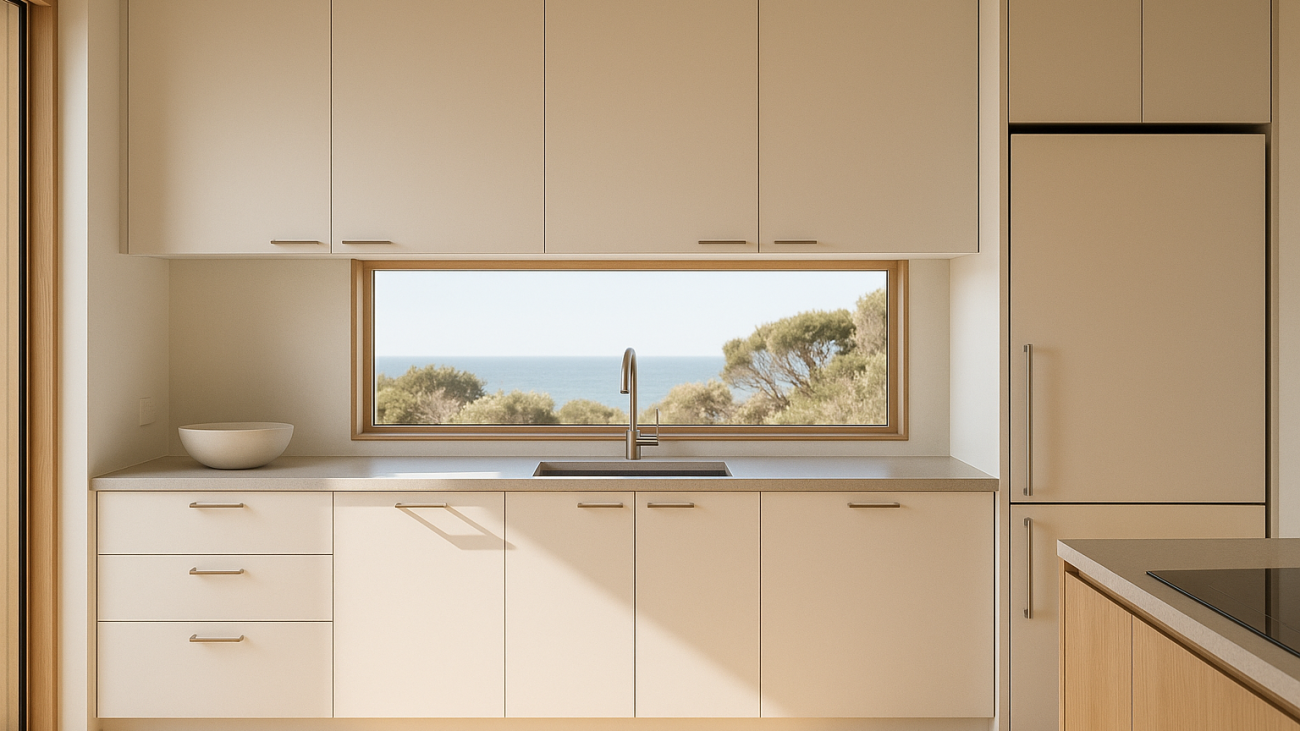
A good minimalist kitchen isn’t a blank room. It’s a kitchen where the bench stays clear because the storage, layout, and finishes do the heavy lifting.
If you cook most nights, have kids in and out, or you’re tired of visual clutter, minimalist kitchens make daily life easier. The trick is getting the details right so it stays practical on week three, not just on day one.
Below are the design rules we use when homeowners ask for a calm, clean kitchen that still works hard.
1) Start with function: the “clear bench” test
Minimalist kitchen design succeeds or fails on one question: where will everything live?
Run this quick test before you pick colours:
- Coffee and breakfast: kettle, toaster, mugs, cereals, lunch boxes
- Cooking: oils, spices, knives, chopping boards, pots
- Cleaning: bins, cleaning sprays, paper towel, dishwasher tabs
- Entertaining: platters, wine glasses, serving bowls
If these items don’t have a planned home, they end up on the benchtop. Your kitchen will feel busy, even with simple cabinetry.
Practical rule: plan storage for your real routines first, then choose the minimalist look.
2) Choose a layout that reduces “cross-traffic”
Minimalist kitchens look calm because movement is calm. A layout that causes people to squeeze past each other makes the space feel chaotic.
Use these guidelines:
- Keep the main walkway clear. Aim for comfortable passing space between benches.
- Separate cooking and cleaning where possible. The cooktop zone is busiest.
- Give the fridge breathing room so doors open fully without blocking the room.
For smaller homes and apartments, a clean galley (two parallel runs) often suits a minimalist kitchen. For family homes, an island can work well if it doesn’t become a dumping bench.
If you’re unsure what layout suits your home, our guide on building kitchens on the Gold Coast is a good companion read: building kitchens on the Gold Coast.
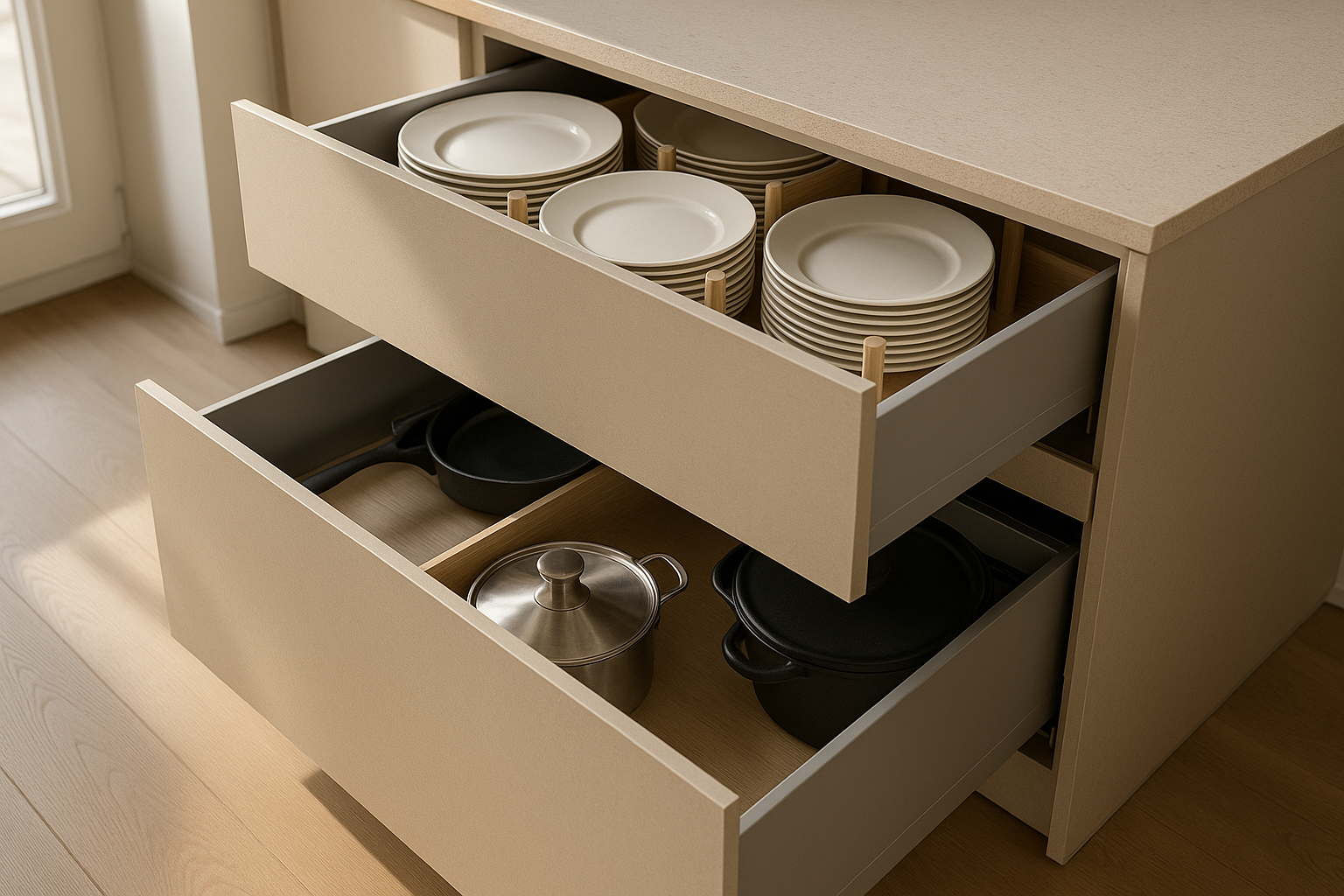
3) Use drawers more than cupboards (it’s the easiest win)
Minimalist design is about fewer visible items. Drawers help because you can store more in less space, and you can find things quickly.
Choose:
- Deep drawers for pots, pans, and small appliances
- Medium drawers for plates and bowls
- Shallow drawers for cutlery, utensils, wraps, tea towels
Avoid: a long run of base cupboards with shelves. Shelves turn into stacked piles, which leads to benchtop clutter.
Image idea for this section: organised deep drawers with dividers and soft-close runners.
4) Plan a pantry that actually stays tidy
A full-height pantry (cabinetry that runs to the ceiling) is a minimalist kitchen’s best friend. It stops visual noise and uses vertical space well.
Two pantry approaches that suit minimalist kitchens:
- Full-height pantry with internal drawers: best for families and heavy cooks. You can see everything at once.
- Butler’s pantry / walk-in pantry: great if you want appliances and groceries out of sight.
Quick decision: if you don’t have room for a butler’s pantry, don’t force it. A smart full-height pantry often works better.
5) Keep the appliance story consistent
Mixed appliance finishes are one of the fastest ways to break the minimalist look.
Aim for consistency:
- Match appliance finishes (black, stainless, or integrated)
- Align appliance edges with cabinet lines where possible
- Consider an integrated dishwasher for a cleaner run
If you want handleless doors, check appliance clearances early. Some layouts need a handle or finger pull for easy use.
6) Pick cabinetry details you can live with
Minimalist kitchen cabinets are usually flat-panel (slab) doors. The choices that matter are the details you touch every day.
Handles, finger pulls, or handleless?
- Slim handles: practical, easy to clean, still looks minimal.
- Finger pulls (integrated pulls): very clean look, more wiping in the groove.
- True handleless systems: clean lines, but needs careful planning and can affect cost.
If you have kids, cook often, or hate fingerprints, choose the option that’s easiest to wipe.
Gloss vs matte
- Matte hides small marks better and feels calm.
- High gloss reflects light and can show fingerprints more.
7) Choose a splashback that doesn’t fight the design
Your splashback is a big visual area. In minimalist kitchens, simpler usually reads more expensive because it looks intentional.
Strong minimalist options:
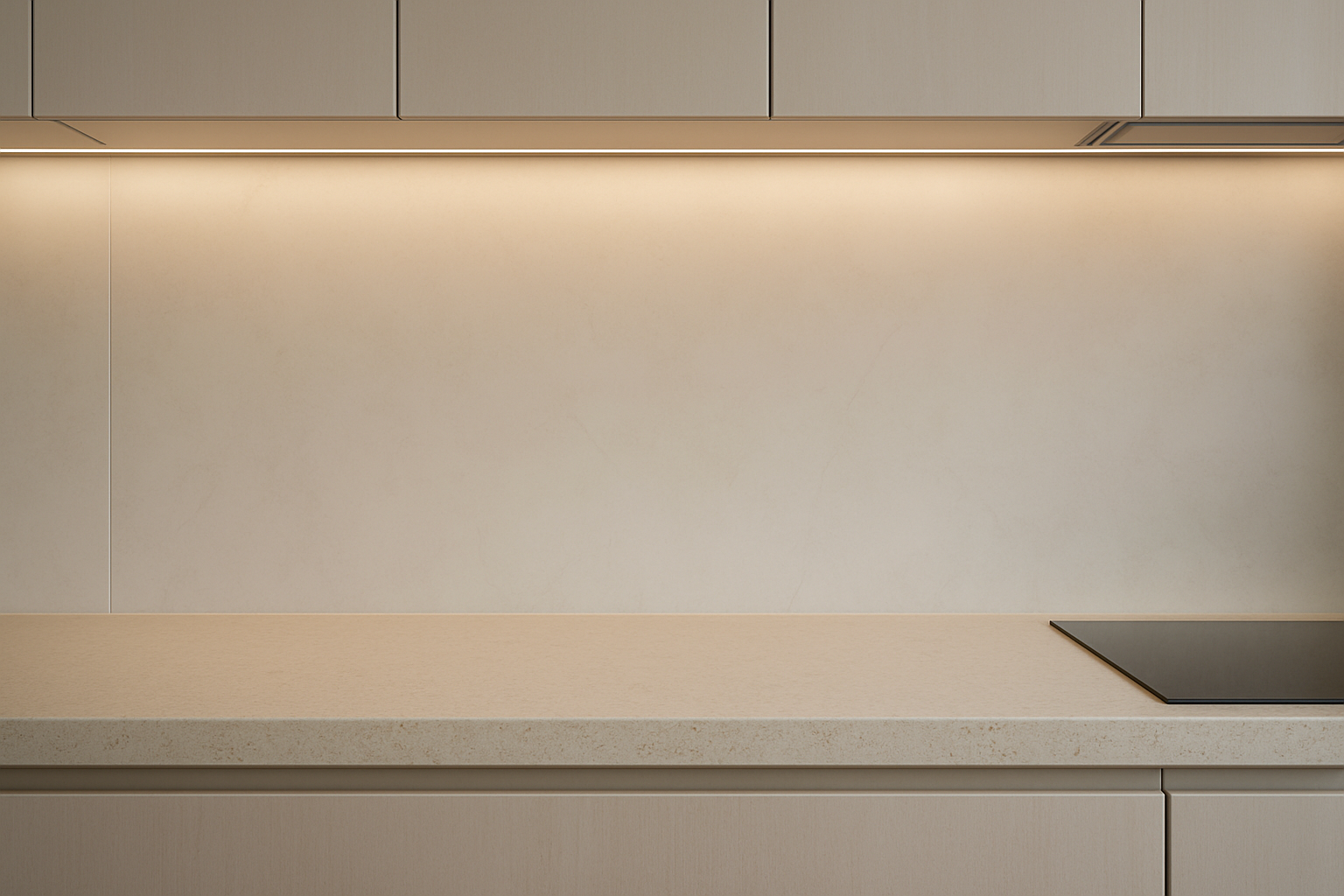
- Large-format panels (fewer joins, easy to wipe)
- Glass in a single colour
- Porcelain for a stone-like look with good durability
If you love tiles, use them carefully:
- Choose a simple tile shape
- Keep grout lines minimal
- Pick a grout colour that blends (contrast grout adds visual “busyness”)
For more detail on materials and cleaning, see: choosing your kitchen splash back.
Image idea for this section: a large-format, low-join splashback with under-cabinet lighting.
8) Lighting is what makes “minimal” feel warm
Minimalist kitchens can look cold if lighting is an afterthought.
Plan lighting in layers:
- Task lighting: under-cabinet lights over prep zones
- General lighting: ceiling lights that cover the whole room evenly
- Feature lighting (optional): simple pendants over an island, kept understated
Rule: if you have dark cabinets or a dark benchtop, under-cabinet lighting matters more.
9) Use one calm palette, then add texture
Minimalist kitchens don’t need to be all white. They need a controlled palette.
A reliable approach:
- One main cabinet colour
- One benchtop finish
- One hardware finish
- One accent material (often timber)
Texture is what stops minimalist kitchens feeling flat. Timber grain, honed stone, or a lightly textured laminate can add warmth without clutter.
If you want more inspiration that still fits real homes, see: modern kitchen designs and ideas.
10) Minimalist kitchens still need “mess management” zones
A minimalist kitchen stays minimalist because the messy parts are designed in.
Include at least two of these:
- Bin and recycling pull-out near the sink
- Appliance garage (a cupboard zone for toaster, air fryer, coffee machine)
- Charging drawer for phones and tablets
- Tray storage near the oven
- Linen cupboard or broom cupboard if space allows
If your current kitchen gets messy fast, it’s rarely your habits. It’s usually missing storage in the right places.
Local note: minimalist kitchen design for Gold Coast homes
Across Gold Coast kitchens, we see a mix of coastal family homes, unit renovations, and new builds. Minimalist kitchens suit all of them, but the details change:
- Coastal homes: choose finishes that are easy to wipe and don’t show every mark.
- Units and smaller spaces: storage needs to work harder—drawers and full-height cabinetry matter.
- Entertaining layouts: keep sightlines clean, and plan a spot for servingware and glassware.
People searching for new kitchens Gold Coast, custom made kitchens Gold Coast, or even comparing boutique kitchens often want the same outcome: a kitchen that looks calm and performs every day. The build quality and installation make a big difference to that crisp, straight finish.
DIY kitchens vs custom: what minimalist design demands
DIY kitchens can suit some projects. Minimalist kitchens are less forgiving.
Minimal designs highlight:
- uneven floors and walls
- gaps around appliances
- misaligned cabinet lines
- inconsistent handle placement
If you want that clean, continuous look, the safest path is a measured, custom plan and an experienced install team. It’s also the simplest way to avoid rework.
Ready to plan a minimalist kitchen that suits your home?
If you’re planning minimalist kitchens on the Gold Coast (or nearby areas like Palm Beach and Tweed), we can help you design a kitchen that looks clean and works properly.
Pinnacle Kitchens QLD designs, manufactures, and installs custom kitchens in South East QLD. You’ll see your design in 3D renders before anything is built, so the layout and finishes are clear.
CTA: Talk to Pinnacle Kitchens about a minimalist kitchen design consultation. We’ll step through your layout, storage plan, and finish selections, then quote based on your actual space and choices. If finance helps your timing, ask about 48 months interest-free (T’s & C’s apply).
If you’re still comparing options, these reads can help:
Quick FAQs about minimalist kitchens
What’s the simplest way to make a kitchen feel minimalist?
Reduce benchtop clutter by planning storage: deep drawers, a proper pantry, and a bin pull-out.
Are minimalist kitchens easy to keep clean?
Yes, if you choose wipe-friendly finishes. Matte doors and low-join splashbacks reduce visible marks.
Do minimalist kitchens suit apartments?
They suit apartments very well because simple lines make small spaces feel larger. Storage planning is the key.
Can a minimalist kitchen still feel warm?
Yes. Add warmth with timber accents, soft lighting, and a restrained colour palette.
What should I avoid in minimalist kitchen design?
Avoid open shelving as your main storage, busy splashback patterns, and mixed appliance finishes that compete visually.