
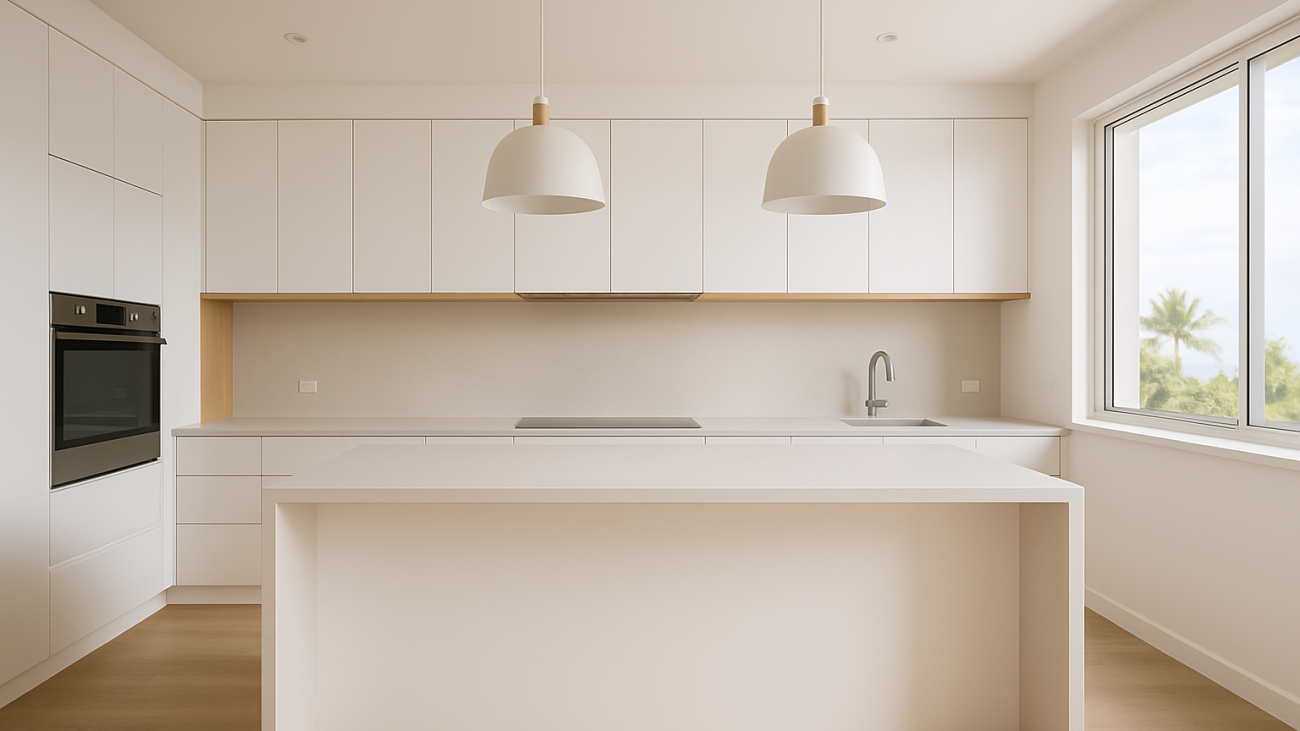
New Kitchens on the Gold Coast: plan it once, enjoy it for years
If you’re searching for new kitchens on the Gold Coast, you’re usually at one of two points.
You either know what you want and need help making it buildable, or you’re stuck between styles, layouts, and quotes that aren’t easy to compare.
This guide is for the second group as much as the first. It’s practical, based on what matters on site, and written to help you make confident decisions.
Step 1: Get clear on how you actually use your kitchen
A new kitchen looks great in photos. Your kitchen needs to work at 6:30pm on a weeknight.
Start with three quick questions:
- Do you cook most nights, or mostly reheat? Serious cooks need more clear bench space and better ventilation.
- How many people move through the kitchen at once? Families need wider paths and fewer pinch points.
- What’s driving the change? Storage, layout, ageing finishes, entertaining, accessibility, or all of the above.
Write your answers down. Take them to your kitchen showroom appointment. It stops you buying features that don’t help.
Step 2: Choose a layout that suits your room (not a trend)
Most Gold Coast kitchens fall into a handful of proven layouts. The right one depends on space, plumbing position, and how open your home is.
U-shape
Best for homeowners who want lots of storage and bench space. It can feel enclosed in open-plan homes unless the room is generous.
L-shape with island
A strong option for entertaining and family traffic. The island needs enough clearance for people to pass while drawers, oven doors, and the dishwasher are open.
Galley
Often the best performer in narrower spaces. Two long runs give you clean work zones, but you need comfortable width between benches.
Single-wall
Works in apartments and tight spaces. Storage and appliance planning becomes critical, because you’re limited to one run.
If you want more background on local build considerations, read: Building kitchens on the Gold Coast.
Step 3: Plan “zones” so the kitchen feels easy to use
A kitchen that looks tidy often has one thing in common: each task has a home.
Use these zones as your starting point:
- Food storage zone: fridge, full-height pantry (cabinetry that runs to the ceiling), snack drawers
- Prep zone: clear bench space near the sink, knife and board storage, bins close by
- Cooking zone: cooktop, oven, pots and pans drawers, spice storage
- Clean-up zone: sink, dishwasher, dish storage, cleaning products
Two simple rules help most homes:
- Keep the dishwasher close to where plates and glasses live.
- Put bins where you prep, not where you hope they’ll fit.
Step 4: Storage choices that change day-to-day living
If you’re comparing kitchen designs on the Gold Coast, storage is where the difference shows up after the excitement settles.
Prioritise these if you want a kitchen that stays organised:
- Deep drawers for pots, pans, and stacks of plates (easier than base cupboards)
- A proper pantry plan: shelves for groceries, drawers for snacks, and space for appliances
- A dedicated bin system: general waste and recycling, sized for your household
- Overhead cabinets to the ceiling where possible, to avoid dusty dead space
Corner storage needs thought. Some corner solutions look impressive but waste usable volume. Choose the option that fits what you store, not what looks clever.
Step 5: Pick materials that cope with real kitchens
There’s no single “best” finish. There is a best finish for how you live.
Cabinet finishes
- Laminate: hard-wearing and easy to clean. Great for busy family kitchens.
- 2-pack (painted): smooth and consistent, suits many minimalist kitchens. Treat it well around handles and high-touch areas.
- Timber look: adds warmth and hides fingerprints better than very dark, flat finishes.
Ask how edges are finished, especially near the sink and dishwasher. That’s where moisture finds weaknesses.
Benchtops
Your benchtop choice should match your cooking habits.
- If you cook often, choose a surface that handles heat, spills, and cleaning without fuss.
- If you want the look of stone, confirm care requirements and what’s recommended for your home.
Splashback
Splashbacks are a daily-clean surface. Choose for wipeability first, style second.
For a deeper guide, read: Choosing your kitchen splash back.
Step 6: Lighting and power points (the part people regret skipping)
Good lighting is practical, not decorative.
Plan for:
- Task lighting under overhead cabinets so your bench isn’t in shadow
- General lighting that doesn’t create glare on glossy surfaces
- Feature lighting only after the work lighting is sorted
Power points matter just as much:
- Put outlets where you use appliances (kettle, toaster, coffee machine).
- Allow for charging drawers or a hidden appliance garage if you want clear benches.
Step 7: Minimalist kitchens vs “family-proof” kitchens
Minimalist kitchens are popular for a reason: they look calm and clean.
They also need discipline in the design.
Choose a minimalist look if:
- you want integrated storage for small appliances
- you prefer fewer open shelves
- you’re happy to plan exactly where everything lives
If you have a busy household, keep the minimalist style but build in:
- bigger drawers
- a pantry that carries the clutter
- durable finishes in high-touch areas
If you want inspiration that still makes sense in real homes, see: Modern kitchen designs and ideas.
Step 8: Comparing quotes for Gold Coast kitchens (what to check)
Two quotes can look similar and deliver very different outcomes.
Use this checklist to compare properly:
- Is it custom design or a standard module system?
- Who measures on site, and when?
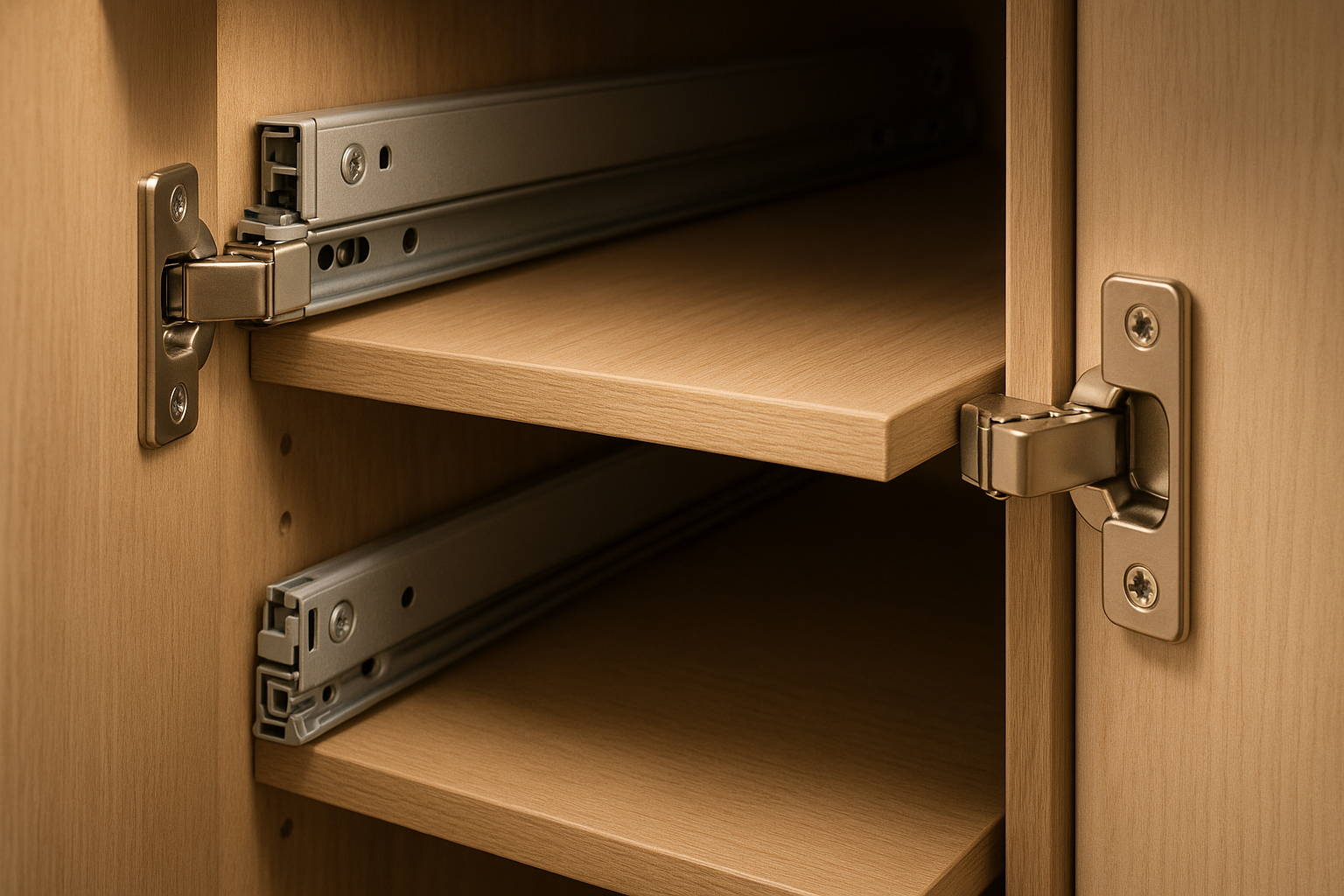
- What hardware is included? Soft-close drawers and hinges should be specified, not assumed.
- What’s the board and finish specification? Ask what’s used for cabinet carcasses and door faces.
- Who installs the kitchen? In-house licensed installers reduce handover gaps.
- What’s included and excluded? Demolition, plumbing, electrical, splashback supply, painting, flooring.
If you’re weighing up DIY kitchens, be honest about measurement risk and trade coordination. If something is 10mm out, it shows.
What a quality design-to-install process looks like
For a new kitchen, the process is your safety net.
A typical flow looks like this:
- Initial chat and showroom visit (if you’re comparing options and finishes)
- On-site measure to confirm dimensions and service locations
- Design development and selections
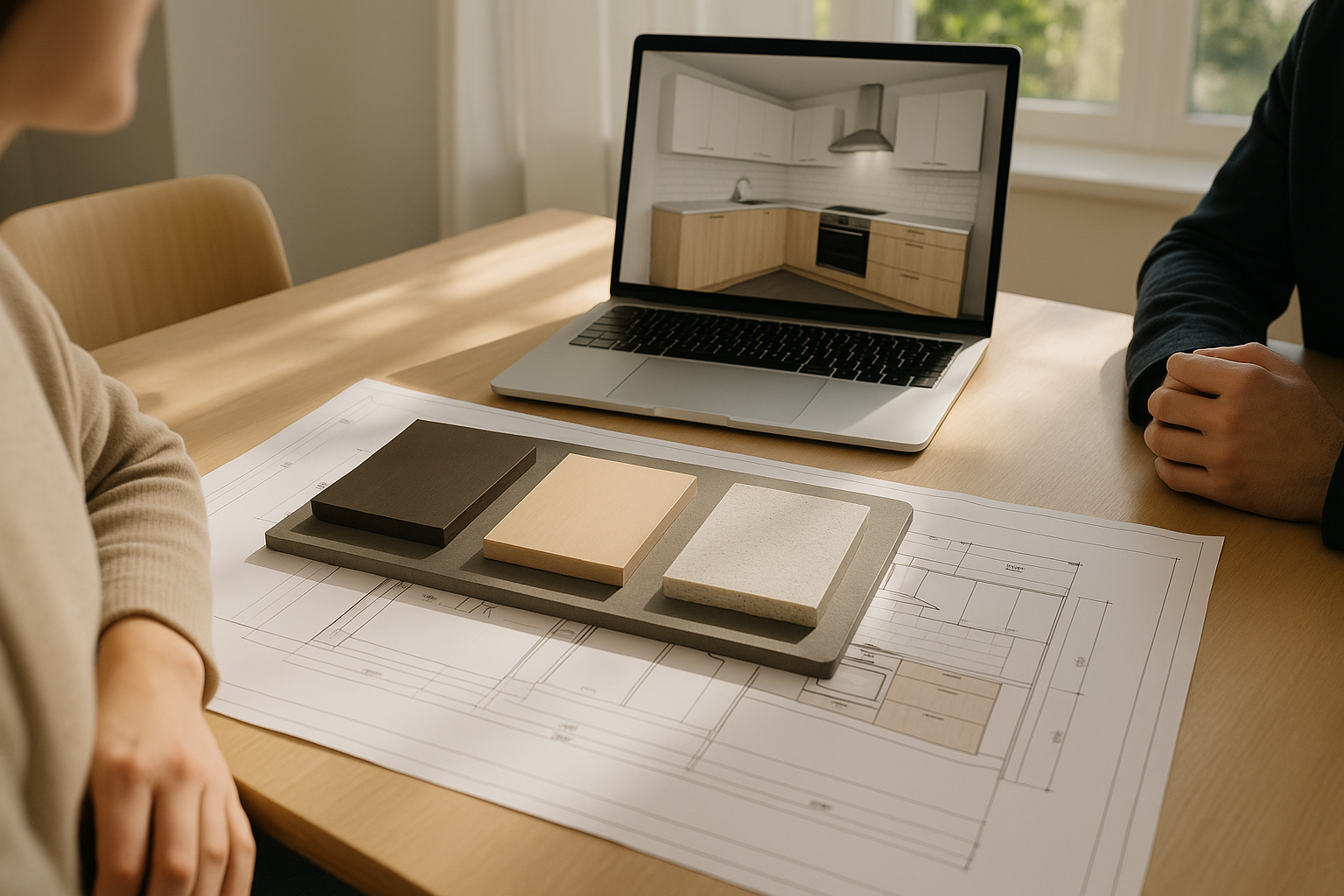
- 3D rendered drawings so you can see scale and layout before sign-off
- Final check and approvals (appliances, clearances, power and plumbing requirements)
- Manufacturing
- Installation and finishing details
This is the point where working with an accountable local team matters. It keeps the details connected.
Looking for a kitchen showroom on the Gold Coast?
A kitchen showroom visit is useful if you treat it like a decision session, not just a browse.
Bring:
- photos of your current kitchen
- appliance model numbers (or at least widths)
- a list of what annoys you daily
- 2–3 style references you genuinely like
Ask to see:
- door and drawer samples in the colours you want
- benchtop options you can touch
- hardware quality and how it feels in use
If you’re searching “kitchen showrooms Gold Coast”, aim for one that can explain the build details, not only the display look.
Local notes: planning across the Gold Coast and nearby
Many homeowners research across areas like kitchens Palm Beach and Tweed kitchens because styles, home ages, and budgets vary.
Keep your decisions anchored to your home:
- Older homes often need more planning around walls, floors, and service locations.
- Open-plan homes need careful island sizing and clear walkways.
- If you’re renovating to rent or sell, choose finishes that clean easily and don’t date fast.
Ready to plan a new kitchen on the Gold Coast?
If you want expert help with kitchen design on the Gold Coast, Pinnacle Kitchens can guide you from first layout ideas through to manufacturing and installation.
We design, manufacture in South East QLD, and install with licensed in-house installers. You’ll also see your kitchen before it’s built through 3D rendered drawings.
Call or enquire online to book a showroom appointment and design consult. If finance helps your timing, ask about 48 months interest-free (T’s & C’s apply).
If you’re comparing providers, this article helps explain our approach: Why Pinnacle Kitchens?.
FAQs about new kitchens on the Gold Coast
How long does a new kitchen take from design to installation?
A quality kitchen follows clear steps: measure, design and selections, approvals, manufacturing, then installation. The fastest projects have early decisions on appliances, finishes, and whether plumbing or electrical changes are needed.
Should I choose an island or a peninsula?
Choose an island if your room allows comfortable walkways and you want seating or a central prep zone. Choose a peninsula if space is tighter or you want to keep traffic out of the cooking area.
Are minimalist kitchens practical for families?
Yes, if you design storage properly. Minimalist kitchens work best with more drawers, a strong pantry plan, and durable finishes in high-touch areas.
What’s the biggest mistake people make when choosing a splashback?
Picking a material that looks great but is annoying to clean. Your splashback is a daily-wipe surface. Choose something that handles cooking splatter without special care.
What should I ask at a kitchen showroom?
Ask what’s included in the quote, who measures on site, who installs, what hardware is specified, and what the cabinetry and benchtop materials are. Also ask to see physical samples, not just photos.
Can Pinnacle Kitchens help if I’m still early in the planning stage?
Yes. A good early consult should focus on layout, storage, appliance sizes, and finish direction, then move into 3D renders and detailed planning once the fundamentals are right.
{“@context”:”https://schema.org”,”@graph”:[{“@context”:”https://schema.org”,”@type”:”BlogPosting”,”headline”:”New Kitchens on the Gold Coast: A Straight-Shooters Guide to Planning, Design and Installation”,”description”:”Thinking about a new kitchen on the Gold Coast? Learn what to plan first, how to choose layouts, materials and finishes, and what a quality design-to-install process looks like.”,”datePublished”:”2026-06-04T00:03:39.327Z”,”dateModified”:”2026-06-04T00:03:39.327Z”,”mainEntityOfPage”:{“@type”:”WebPage”,”@id”:”https://thepinnaclekitchen.com.au/new-kitchens-gold-coast-planning-design-installation/”},”url”:”https://thepinnaclekitchen.com.au/new-kitchens-gold-coast-planning-design-installation/”,”author”:{“@type”:”Person”,”name”:”Pinnacle Kitchens”},”image”:[“https://thepinnaclekitchen.com.au/wp-content/uploads/2026/06/featured-1-2.png”],”publisher”:{“@type”:”Organization”,”name”:”Pinnacle Kitchens”,”logo”:{“@type”:”ImageObject”,”url”:”https://thepinnaclekitchen.com.au/wp-content/uploads/2018/06/cropped-PINNACLE-KITCHENS-QLD-new-logo.png”}}},{“@context”:”https://schema.org”,”@type”:”FAQPage”,”mainEntity”:[{“@type”:”Question”,”name”:”How long does a new kitchen take from design to installation on the Gold Coast?”,”acceptedAnswer”:{“@type”:”Answer”,”text”:”Timeframes depend on design decisions, materials, and site readiness. A quality process follows clear steps: an on-site measure, design and 3D renders, final sign-off, local manufacturing, then installation. The fastest projects are the ones with early decisions on layout, appliance sizes, and finishes, plus a clear plan for plumbing and electrical changes.”}},{“@type”:”Question”,”name”:”What should I decide before I visit a kitchen showroom on the Gold Coast?”,”acceptedAnswer”:{“@type”:”Answer”,”text”:”Bring your room measurements (even rough), photos of your current kitchen, and a list of pain points. Decide how you cook (most nights, batch cooking, entertaining), the appliances you want to keep or replace, and any non-negotiables like a walk-in pantry, big island seating, or extra storage. Also note your preferred style direction, such as minimalist kitchens or classic shaker.”}},{“@type”:”Question”,”name”:”Is DIY kitchens a good idea if I want to save money?”,”acceptedAnswer”:{“@type”:”Answer”,”text”:”DIY kitchens suit confident renovators who already have accurate measurements, understand clearances, and can coordinate trades. The risk is expensive rework if cabinetry doesn’t fit, services are in the wrong place, or doors and drawers clash. If you want less risk and a cleaner finish, a design–manufacture–install service gives you one accountable team for measurements, cabinet build quality, and installation.”}},{“@type”:”Question”,”name”:”What kitchen layout works best for family homes?”,”acceptedAnswer”:{“@type”:”Answer”,”text”:”For busy family homes, aim for clear zones: food storage (fridge/pantry), prep space, cooking, and clean-up. Keep the main walkway clear of open ovens and dishwashers. If you want island seating, allow comfortable circulation so people can pass behind stools without squeezing.”}},{“@type”:”Question”,”name”:”What materials hold up best for Gold Coast kitchens?”,”acceptedAnswer”:{“@type”:”Answer”,”text”:”Choose finishes that handle daily cleaning, heat and moisture. For benchtops, engineered stone (where permitted and suitable) and quality laminates can both perform well when chosen for your use. For cabinetry, look for reliable board and edging, well-finished cut-outs around sinks, and hardware that stays aligned over time.”}},{“@type”:”Question”,”name”:”What’s included in a custom kitchen design service?”,”acceptedAnswer”:{“@type”:”Answer”,”text”:”A custom service usually covers site measurement, layout planning, detailed cabinetry design, product selection support, and documentation for manufacturing and installation. Many homeowners also benefit from 3D rendered drawings so you can see proportions, door profiles, and colour choices before anything is built.”}}]}]}